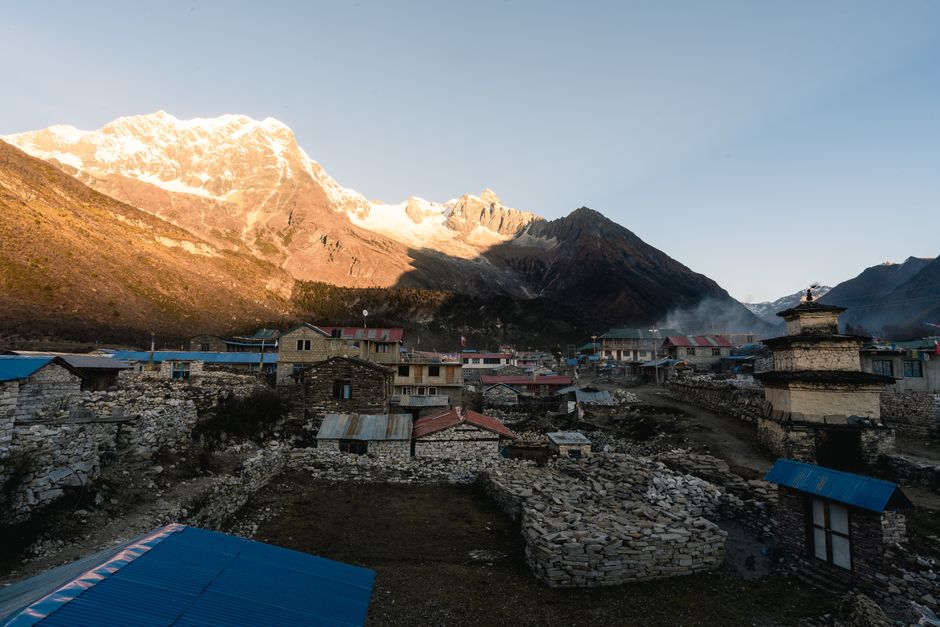
There is a particular kind of silence that exists only above a certain altitude — a silence with texture to it, made of woodsmoke and distant temple bells and the sound of a shutter being drawn back on a three-hundred-year-old window. You find it in very few places now. You find it in Bandipur.
Perched on a saddle of ridge at 1,030 metres, suspended between the roar of Kathmandu and the lakeside ease of Pokhara, Bandipur is the town that Nepal's modern century forgot to ruin. When the Prithvi Highway was cut through the valley below in the 1970s, the trade caravans and the traffic and the noise all migrated down to the roadside, and Bandipur — stranded on its hilltop, no longer convenient — was quietly left to keep its own counsel. What might have been a tragedy became a preservation. The Newari merchants' mansions were never torn down for concrete. The bazaar was never widened for buses. The cars never came, and they still do not come. And so today, when you step onto its single cobbled main street, you are not visiting a reconstruction of old Nepal. You are standing inside the real thing, still breathing.
This is why Bandipur has become, for the discerning traveller, the most compelling argument in the country for a different kind of luxury altogether — the luxury of the unhurried, the intact, the authentic. A Bandipur luxury retreat is not about thread counts and infinity pools, though refinement is certainly present. It is about the rarest commodity in the modern world: a place where nothing is performing for you, and everything is simply, magnificently itself.
A Town Sealed in Amber
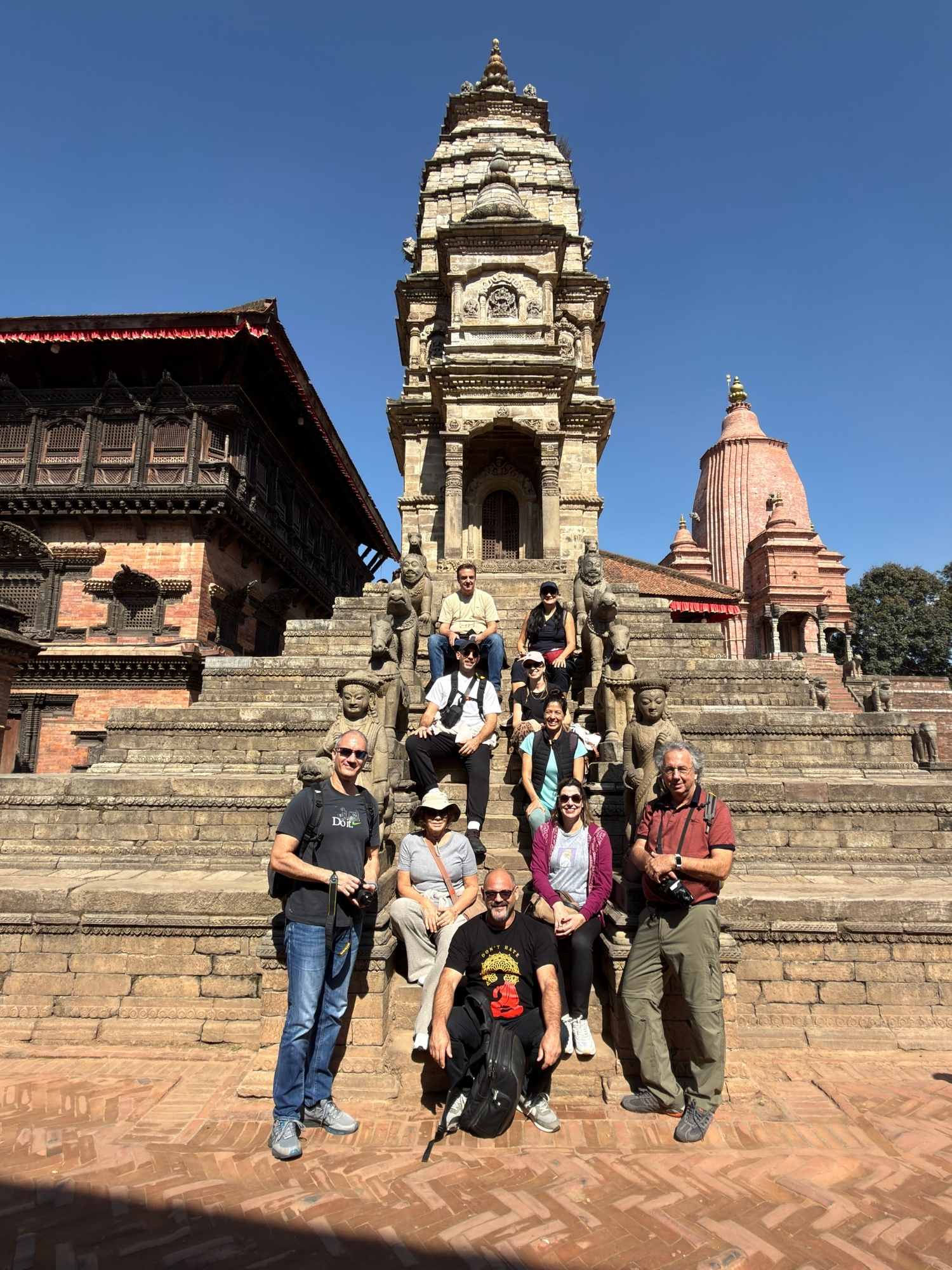
To understand why Bandipur feels so different, you have to understand who built it. In the early 19th century, this ridge became a strategic waypoint on the India–Tibet trade route, and the entrepreneurial Newars of the Kathmandu Valley — Nepal's master merchants, artisans and builders — migrated here to make their fortunes. They brought with them their extraordinary architectural genius: the intricately carved wooden windows, the sloping tiled roofs, the pagoda temples, the sense of a town composed like a piece of music.
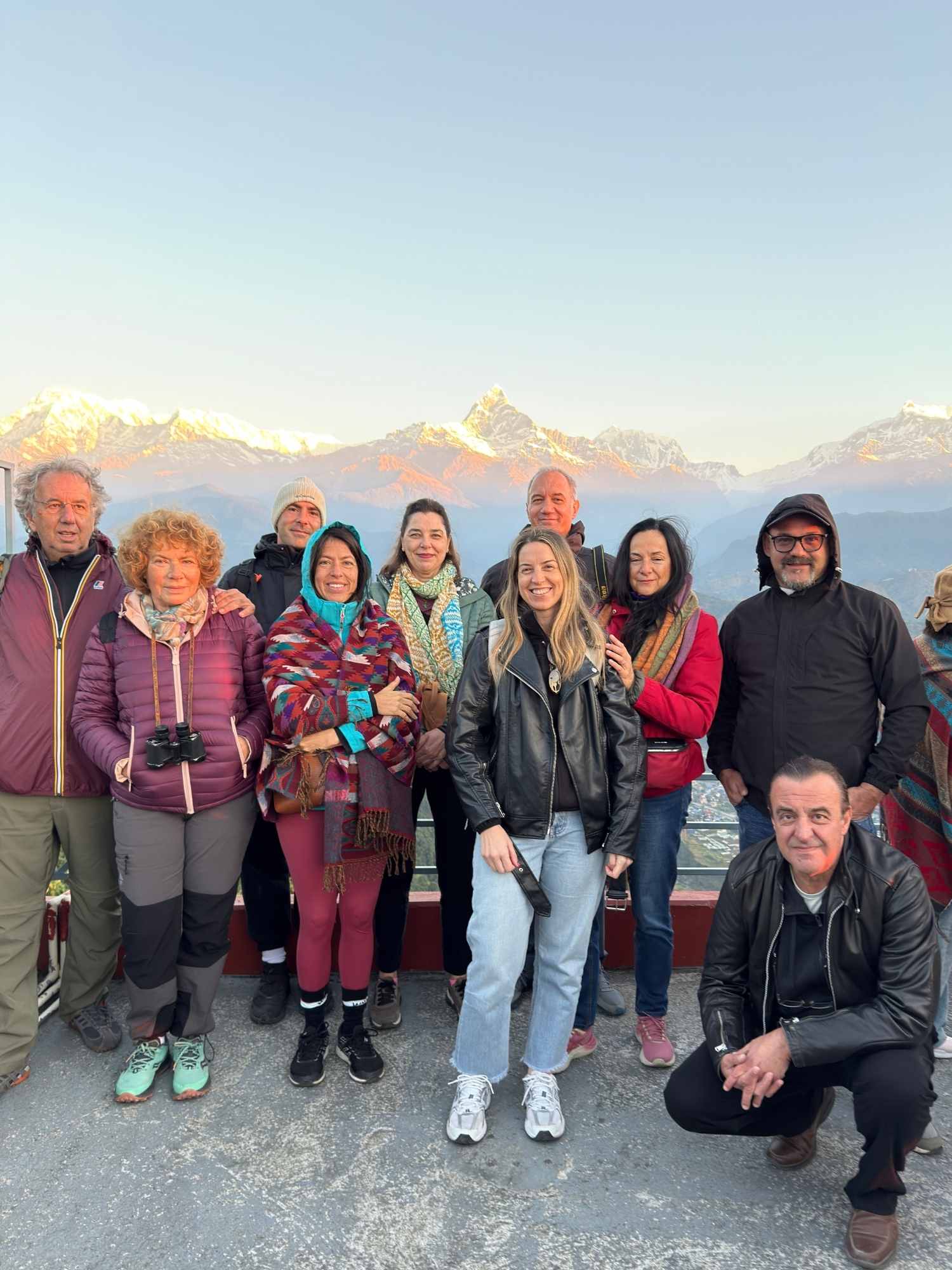
What they built has survived almost entirely intact. Walking the main bazaar today, you pass shuttered sattals (rest houses), Buddhist and Hindu shrines standing companionably side by side, and merchant houses whose latticed facades have not changed in two centuries. The Bindebasini Temple anchors the square; the Khadga Devi shrine holds a sword said to have been gifted by a Himalayan king. Above the town, a short climb through moss-hung oak forest brings you to the Thani Mai temple, where — if you rise before dawn — you will watch the sun ignite an unbroken wall of white peaks: Dhaulagiri, the Annapurnas, Machhapuchhre, Manaslu, Langtang, Ganesh Himal. Few sunrise viewpoints in all of Nepal are this generous, and fewer still can be reached without a single step of strenuous trekking.
There is also, extraordinarily, a world beneath the town. The Siddha Gufa, the largest cave in Nepal, opens a short walk away — a cathedral of stalactites nearly half a kilometre deep, lit by the beams of your guide's lamp and the flicker of resident bats. It is the kind of detour that, arranged privately and without another soul present, becomes something close to sacred.
The New Luxury: Restraint, Not Excess
For years, Bandipur's boutique guesthouses — restored Newari mansions with carved beds and rooftop terraces — were its only real accommodation, and their charm was precisely their modesty. That is changing. The Rs. 19 billion now flowing into Nepal's luxury-hospitality sector has begun to reach the hill towns, and a new generation of heritage properties is emerging: old merchant houses reimagined with underfloor heating, private libraries, spring-water bathing and kitchens serving heirloom Newari cuisine at a level no city hotel can match. The scale remains deliberately small. There will never be a three-hundred-room resort here, and that is the entire point.
This is the aesthetic that the most sophisticated travellers now seek — a philosophy we have long held at the heart of our own work, and one we explore in depth across our bespoke design approach. Luxury, properly understood, is not the accumulation of amenities. It is the removal of everything that stands between you and the place itself. In Bandipur, that removal has already been done for you. The cars are gone. The crowds never arrived. What remains is a town, a view, a way of living, and the quiet that lets you actually feel all three.
What a Bandipur Retreat Looks Like
A day here has a rhythm entirely its own. You wake before light and climb to Thani Mai for the sunrise, alone but for your guide and a monk or two. You descend to a breakfast of Newari bread and single-estate Nepali coffee on a terrace facing the Annapurnas. The middle of the day belongs to slowness — a private tour of the bazaar with a local historian, a visit to a weaver or a metalworker whose family has practised the same craft for generations, an afternoon in the Siddha Gufa. As the light softens, you take chiya on a rooftop while the peaks turn from gold to rose to indigo. There is no schedule that cannot be dissolved. There is nowhere you need to be.
For those who wish to weave Bandipur into a broader Himalayan narrative, its position is a gift. It sits precisely halfway between the cultural intensity of Kathmandu and the alpine glamour of Pokhara, making it the perfect contemplative pause in a longer itinerary — the exhale between two grand inhalations.
Bandipur in the Grand Design
At Elysian Himalaya, we have never believed that a journey should be a checklist of monuments seen from a moving vehicle. We believe in experiential wealth — the idea that the truest luxury is not what you own when you return, but who you have become. Bandipur is one of the very few places in Nepal engineered, almost by accident, to deliver exactly that transformation.
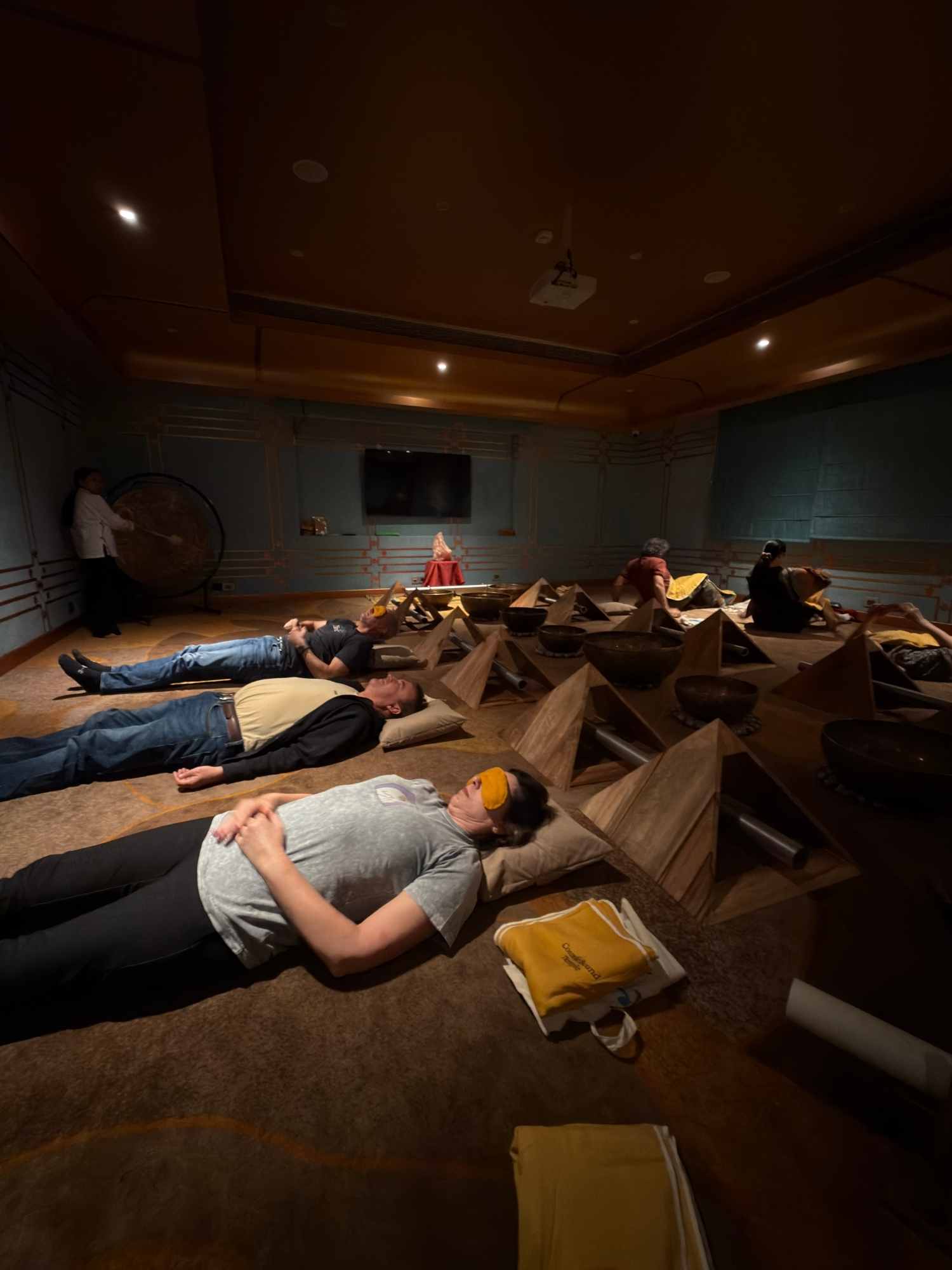
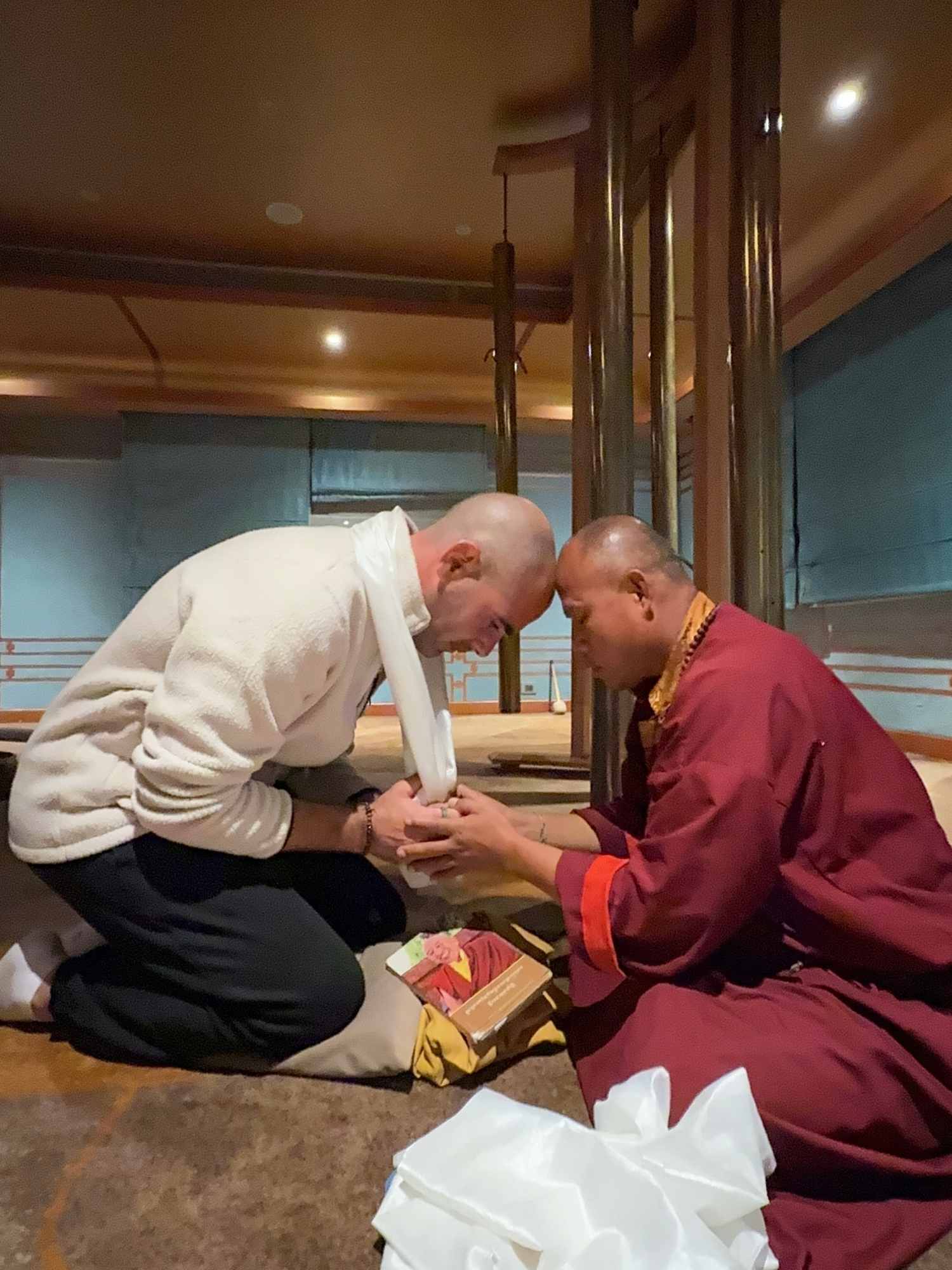
For travellers beginning their Himalayan story, our Elysian Classic journey can include Bandipur as a heritage interlude, a soft landing into the rhythms of old Nepal before the mountains rise in earnest. Those seeking a deeper immersion — private access to artisans, dawn ceremonies arranged exclusively, a chef brought in to compose a Newari tasting menu in a candlelit courtyard — will find their home in the Elysian Premium journey. And for the traveller who accepts no compromise, our Elysian Ultimate journey can deliver you to this ridge by private helicopter, the whole of the Annapurna range unrolling beneath you before you touch down to your restored mansion and a town that will belong, for a few golden days, entirely to you.
Each of these is a single thread in a wider tapestry of possibility. You can explore the full landscape of what a Nepal of this calibre offers across our destinations.
The Best Time to Come
Bandipur rewards the traveller who chooses the season with intent. The clearest, most transcendent mountain views come in autumn — October and November — when the monsoon has washed the sky to glass and the peaks stand impossibly close. Spring, from March to April, brings the rhododendron and a softer, greener beauty to the surrounding hills. Even the shoulder months have their argument: a winter morning in Bandipur, cold and crystalline, with the whole Himalaya sharp against a cobalt dawn, is among the most beautiful sights in Nepal, and you may well have the ridge to yourself.
How Long to Stay
Most itineraries grant Bandipur a single overnight, and most itineraries are wrong. This is not a place to be sampled between destinations; it is a place to be inhabited. Two nights is the minimum that allows the town to release its rhythm to you — one dawn on the ridge, one full day of unhurried immersion, one evening of watching the light die slowly over the peaks. Three nights, and something in you begins to reset. That resetting is the whole reason to come.
The Newari Table: A Culinary Inheritance
If the Newars gave Bandipur its architecture, they also gave it a table unlike any other in Nepal — and dining well here is one of the retreat's quiet revelations. Newari cuisine is among the most sophisticated and least-known culinary traditions in Asia: a genre built on fermentation, subtlety and ceremony, evolved over centuries by a merchant class with the means and the palate to refine it.
A private Newari feast in Bandipur is a form of theatre. It might open with chatamari, the delicate rice-flour crepe often called Nepali pizza, and move through bara (lentil cakes crisped on a griddle), choila (fire-seared spiced meat), fermented greens, and juju dhau — the "king of yoghurts," set in clay and sweet as custard. Each dish arrives with its own story, its own place in the calendar of festivals and rites. To eat this way, in a candlelit courtyard beneath carved eaves, with a historian to explain what each flavour once meant, is to understand a civilisation through its most intimate expression.
Beyond the Newari table, Bandipur's new heritage kitchens are quietly excellent, sourcing from the terraced farms that cascade below the ridge. Single-estate coffee, organic honey, heirloom rice, mountain herbs — the entire supply chain is visible from your terrace, and increasingly, sustainability is the differentiator that separates the finest properties from the merely comfortable.
Is Bandipur Worth Visiting? The Essentials
For those weighing Bandipur against Nepal's more famous names, a few clear answers.
Is Bandipur worth visiting?
Yes — emphatically, if what you seek is authenticity over spectacle. Bandipur offers a fully intact 18th-century Newari town, some of the most accessible Himalayan sunrise views in Nepal, and a car-free tranquillity found almost nowhere else. It is the antidote to over-touristed Nepal.
How do you get to Bandipur?
Bandipur sits directly between Kathmandu (about four hours by private car) and Pokhara (about ninety minutes), making it a natural and rewarding stop on any Himalayan itinerary. For Elysian travellers, private helicopter transfer is also available, delivering you to the ridge in a fraction of the time and with the whole Annapurna range as your approach.
What makes Bandipur a luxury destination?
Its luxury is one of scarcity and authenticity rather than scale: restored heritage mansions, private access to living artisans and dawn ceremonies, exceptional Newari cuisine, and above all the rarest amenity of all — genuine, uncrowded silence with a wall of eight-thousand-metre peaks on the horizon.
Why Bandipur, and Why Now
Nepal is changing quickly. The tourist arrivals projected for 2026 will surpass anything the country has seen, and the pressure on its most famous places grows each season. Bandipur remains, for now, a secret held loosely — protected by its hilltop remove, its ban on cars, its refusal to be convenient. That protection will not last forever. The luxury properties are coming; the word is spreading. To arrive now, while the silence is still complete and the mansions still outnumber the visitors, is to see something that may not exist in the same form a decade hence.
There is a Greek idea — one that has guided everything we do — that the finest journeys are not measured in distance but in the depth of what they awaken. Bandipur is not far, as Nepal reckons distance. But in what it awakens — the slowing of the pulse, the recovery of attention, the sense of having stepped sideways out of your own century — it may be the furthest you can travel in this country without leaving the ground.
Begin Your Bandipur Journey
A retreat of this nature cannot be booked from a menu. It must be composed — around your rhythms, your curiosities, the particular kind of quiet you are seeking. Every dawn ceremony, every private audience with an artisan, every candlelit courtyard dinner is designed for you alone.
If Bandipur speaks to something in you — the longing for a luxury that restores rather than merely indulges — we would be honoured to design your journey. Begin designing your bespoke Himalayan journey, and let us bring you to the ridge where Nepal remembers itself.