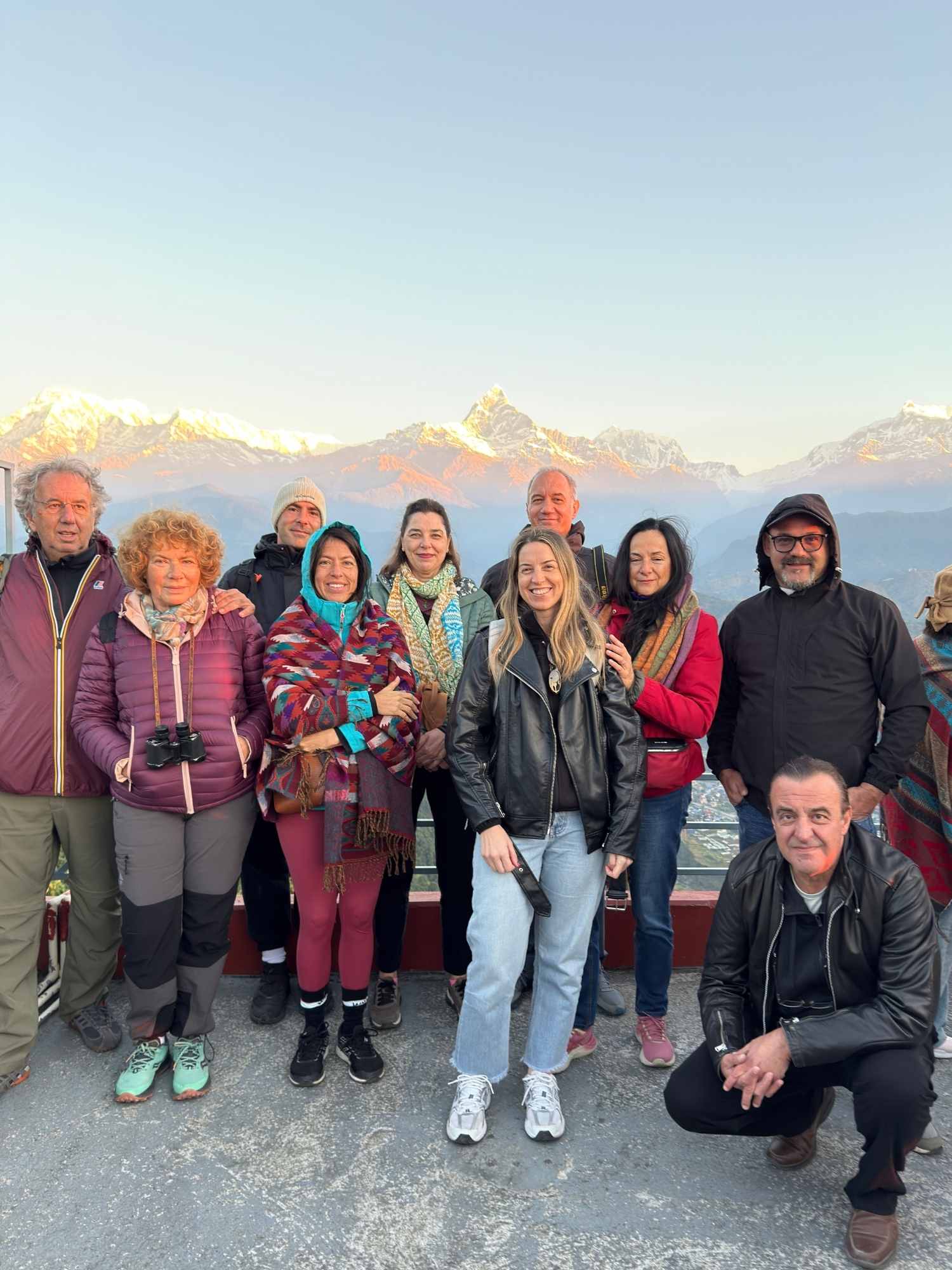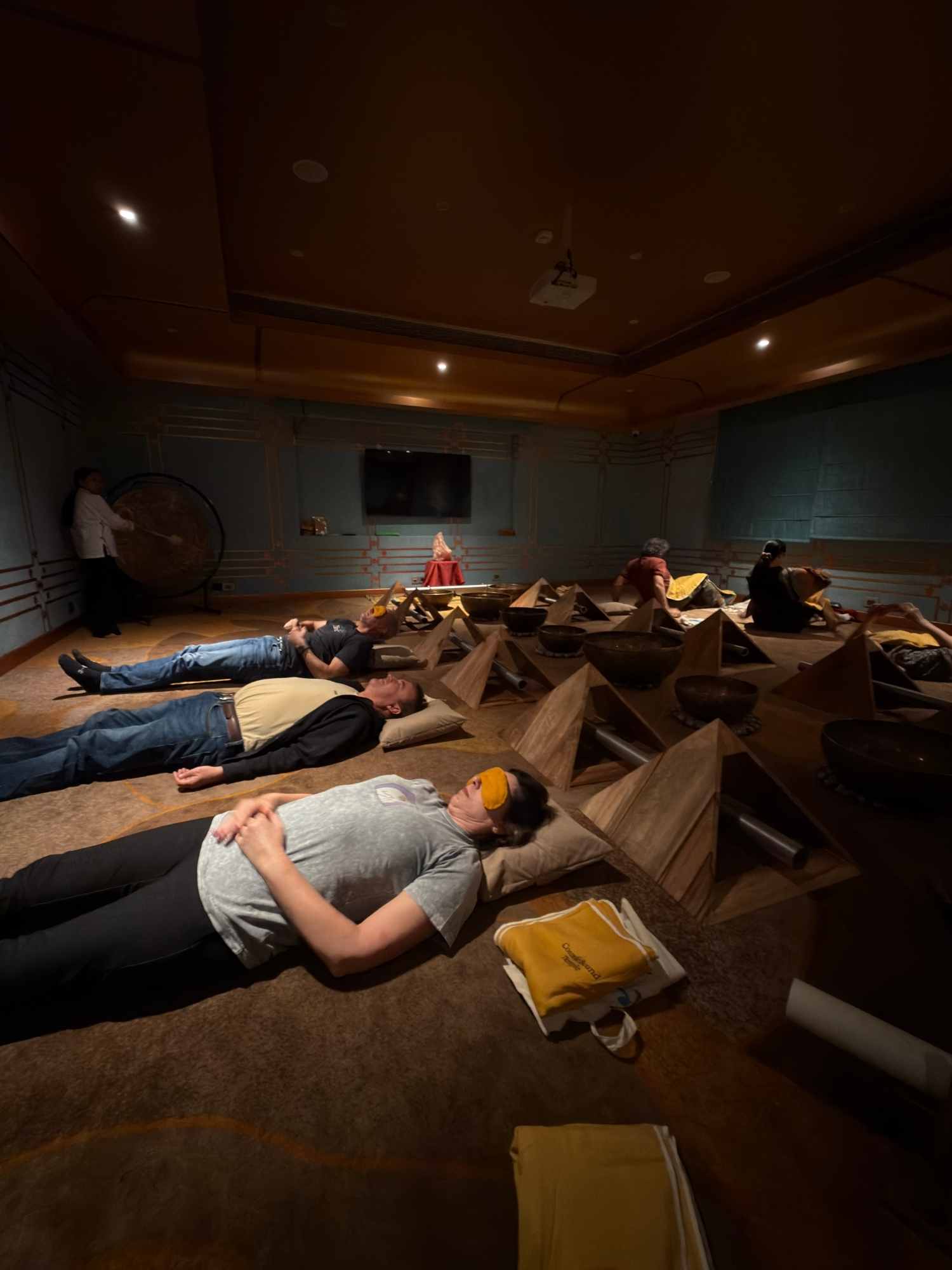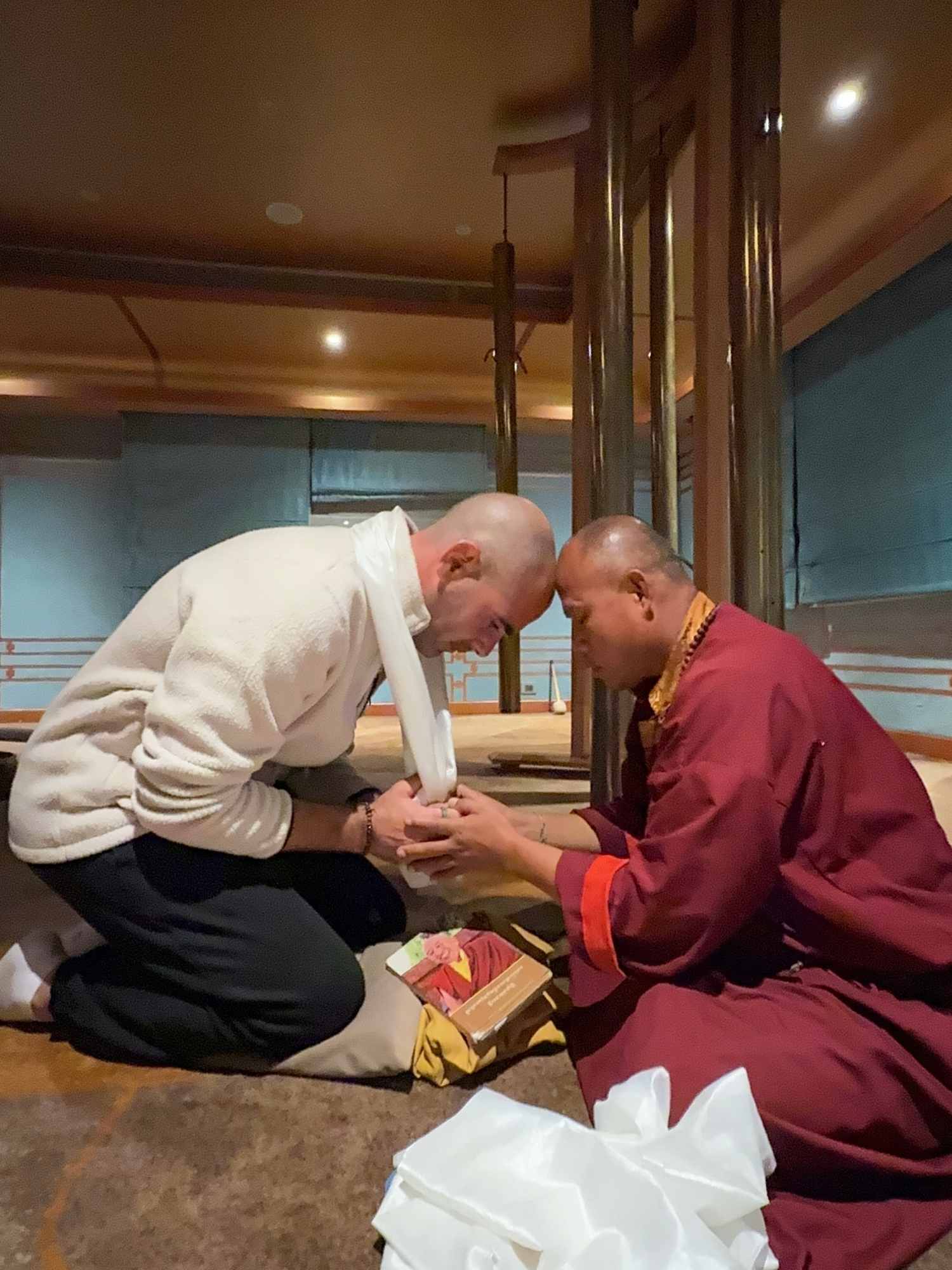
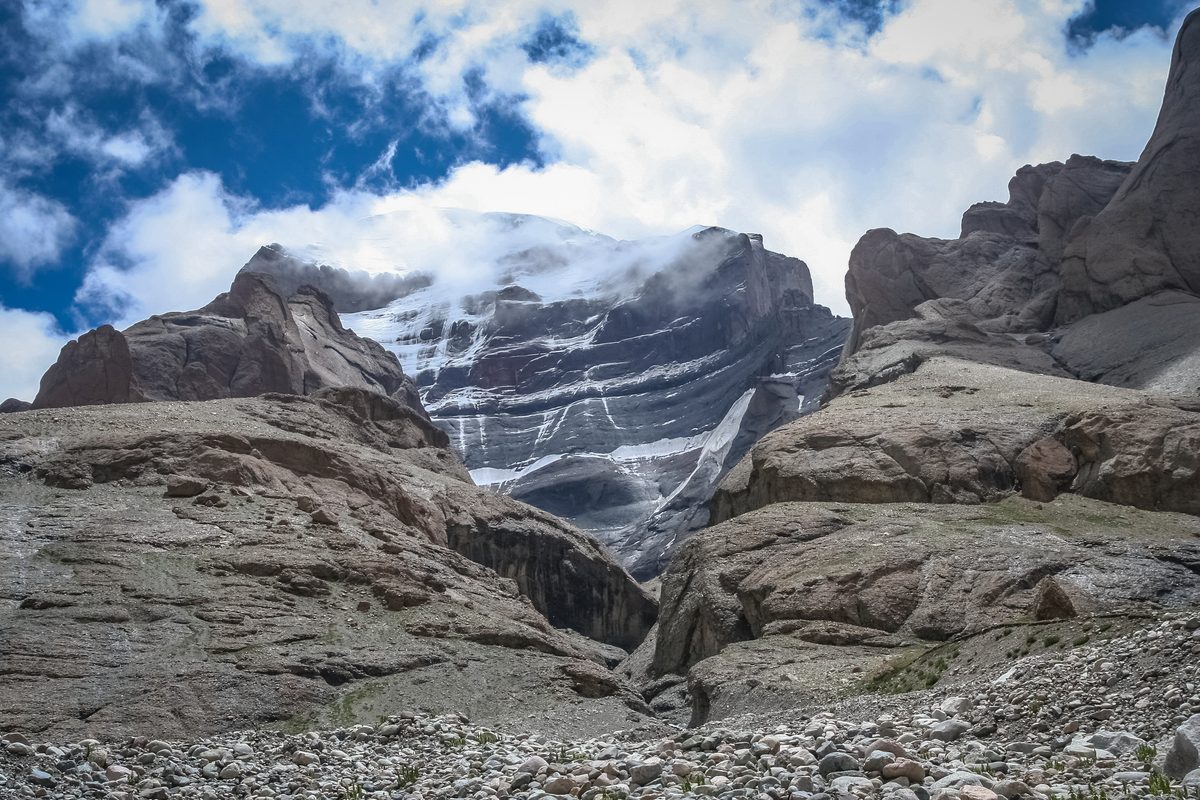
There are mountains one climbs, and there is a mountain one walks around. Kailash belongs to the second kind. No human foot has ever stood on its summit — by sacred law, none ever will — and that single restraint tells you everything about the place. This is not a peak to be conquered. It is a presence to be circled, slowly, on foot, in the thin gold light of the Tibetan plateau, while the most ancient instinct in you quietly rearranges itself.
For four faiths — Hindu, Buddhist, Jain and the pre-Buddhist Bön — Mount Kailash is the literal centre of the world. Shiva's throne. The axis around which existence turns. Pilgrims have walked the fifty-two kilometres of its kora for more than a thousand years, and in 2026 they will walk it in numbers not seen in living memory. Because 2026, in the Tibetan calendar, is the Year of the Horse — and in a Horse year, tradition holds, a single circuit of Kailash carries the merit of thirteen.
That is the headline. The deeper truth is quieter, and it is this: there is now a way to make this pilgrimage without surrendering your body to exhaustion or your nights to a cot in a cinder-block guesthouse. A way to arrive at the foot of the holiest mountain on earth rested, acclimatised and present — which is, after all, the only state in which a place like this can actually reach you. That is what a Kailash Mansarovar luxury tour makes possible, and it is the journey we want to walk you through here.
Why 2026 Is the Year to Go
Let us be precise about the astrology, because it matters and it is widely misunderstood.
In Tibetan Buddhism, Mount Kailash is associated with the horse — it is said that the Buddha Shakyamuni, in one telling, arrived at Kailash riding one. Every twelfth year, when the Year of the Horse returns, the mountain's spiritual potency is believed to multiply. A kora completed in a Horse year is held to equal thirteen circuits in any ordinary year. For the devout, this is not a marketing line; it is a once-in-a-cycle window that will not open again until 2038.
The practical consequence is simple. Demand for 2026 is extraordinary, the pilgrimage season runs only seven months — roughly April through October — and the genuinely refined operators close their books early. If Kailash has lived on your horizon as a someday, 2026 is the year that someday becomes a date.
When, within the season, to travel
- Late April to early June — crisp skies, fewer crowds, cold nights. The connoisseur's window.
- Mid-June to August — warmest temperatures and the most reliable mountain views, though it overlaps with peak demand.
- September to mid-October — luminous post-monsoon air and the clearest reflections in Lake Mansarovar, before the high passes begin to close.
The Mountain, the Lake, and the Meaning
No pilgrimage to Kailash is complete without Mansarovar, the turquoise lake that lies some thirty kilometres to the south at an altitude of 4,590 metres. If Kailash is the masculine axis, Mansarovar is its feminine counterpart — a body of water so still on a windless morning that the mountains hang inverted in it, and pilgrims bathe in its glacial edge to cleanse the accumulated weight of a lifetime.
To stand between the two at dawn is to understand why every map of the sacred world, drawn by cultures that never met, places its centre here. Four of Asia's greatest rivers — the Indus, the Sutlej, the Brahmaputra and the Karnali, a tributary of the Ganges — are born within sixty miles of this single mountain. The geography is, quite literally, the source. The pilgrimage is a return to it.
This is the heart of what we at Elysian Himalaya call experiential wealth: the idea that the rarest luxury is not a thread count or a vintage, but a moment that permanently changes the proportions of your inner life. Kailash deals exclusively in such moments. Our work is simply to remove everything that would otherwise stand between you and them.
What Makes a Kailash Tour "Luxury" — and What Does Not
The phrase luxury pilgrimage sits uneasily for some, and rightly examined, it should. The point of a luxury Kailash tour is not to upholster a spiritual experience in marble. It is to protect it. Above 4,500 metres, exhaustion is not a discomfort; it is a thief. It steals the very attention the journey asks of you. Done well, luxury here means one thing: you arrive at each sacred threshold with enough in reserve to actually be there.
Here is what that looks like in practice.
Helicopter transfers across the hardest ground
The overland route from Kathmandu to Kailash traditionally involves several gruelling days of driving across the Tibetan plateau. A refined itinerary replaces the worst of it with private helicopter transfers — most often from Kathmandu to Nepalgunj and Simikot, then onward toward the border and the Tibetan interior. You trade two days of jarring roads for an hour of the most spectacular flying on earth, and you save your strength for the kora itself.
Five-star anchors at altitude
Accommodation on the plateau has, until recently, meant the most basic guesthouses. That is changing. Properties such as the Himalaya Kailash Hotel and a small number of boutique establishments near Darchen and along the route now offer genuine comfort — proper bedding, reliable heating, hot water, and kitchens producing continental, Indian, Tibetan and Asian cuisine to a standard that would have seemed fantastical a decade ago. We anchor each night to the best available, and where nothing of standard exists, we bring it: heated dining tents, oxygen-enriched sleeping quarters, and a private medical professional travelling with the group.
Acclimatisation engineered, not endured
The single greatest cause of a failed pilgrimage is altitude sickness, and the single greatest defence against it is an intelligently paced ascent profile. Our itineraries build in graduated nights, monitored oxygen saturation, and the quiet luxury of never being rushed. This is the discipline that distinguishes a true Ultimate journey from a tour that merely sounds expensive.
The kora, walked your way
The three-day circuit crosses the Dolma La pass at 5,630 metres — the physical and spiritual climax of the pilgrimage. For those who wish to walk every step, we provide private guides, porters and a support yak train. For those who cannot, or should not, we arrange horses and attendants so that the kora remains open to you. No one is left at the trailhead.
A Sample Twelve-Day Arc
Every Elysian journey is composed from a blank page — we do not sell departures. But to make the shape of it tangible, here is how a refined Kailash pilgrimage tends to unfold.
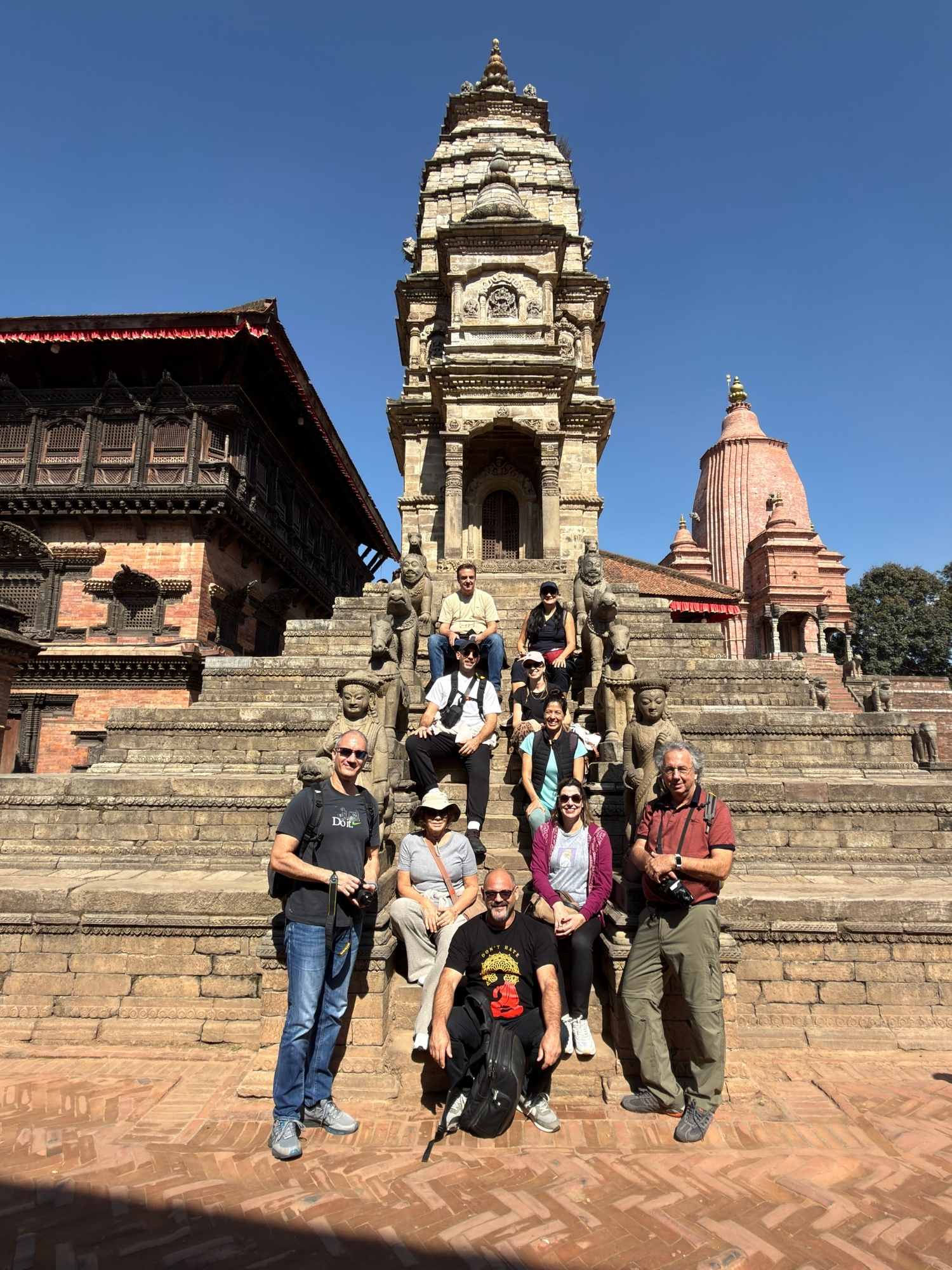
Days 1–2 — Kathmandu. Arrival, recovery, and a private day among the Kathmandu Valley's living temples to begin the inner turning before the outer one. A private guide opens doors that no group tour reaches. Days 3–4 — The flight west and the crossing. Helicopter and chartered flights carry you to Simikot and toward the Tibetan frontier, with a measured acclimatisation halt. Days 5–6 — Lake Mansarovar. Two nights at the sacred lake. A dawn ritual at the water's edge. The first, unhurried sight of Kailash across the plateau. Days 7–9 — The Kora. The three-day circuit, supported at every step, crossing the Dolma La at its heart. Days 10–12 — Return and integration. The journey back, and crucially, a day in Kathmandu to let what happened settle before you re-enter the world. The integration is part of the pilgrimage; we never end it at the airport.What a Kailash Mansarovar Luxury Tour Costs
Refined Kailash itineraries from Nepal generally begin around USD 4,500 to 5,000 per person and rise considerably with private helicopter charters, single-occupancy arrangements, and the level of medical and personal support you choose to travel with. A fully bespoke, privately guided Elysian pilgrimage is priced individually, because no two are alike. For a broader sense of how Himalayan journeys are costed, our guide to Premium and Ultimate experiences offers useful context.
What you are paying for, ultimately, is not a string of hotels. It is the assurance that on the morning you stand at 5,600 metres in the thin air below the holiest mountain on earth, in the rarest year of the cycle, you will have the strength and the stillness to receive it.
Who This Journey Is For
Kailash does not ask for athleticism, but it does ask for intention. This is a pilgrimage, not a sightseeing tour, and it rewards those who come with a question they are willing to carry around the mountain. We have designed Kailash journeys for those marking a milestone birthday, for those navigating a threshold — a loss, a beginning, a long-deferred promise to themselves — and for the simply, profoundly curious. What they share is a readiness to be changed.
If that describes the season you are in, then the rarest window in twelve years is open, and it is open now.
Begin the Journey
A Kailash pilgrimage cannot be bought from a catalogue; it must be composed, carefully, for the person making it. That composition is what we do. Tell us who is travelling, what you are walking toward, and when — and we will design a journey to the sacred centre of the world that protects your strength, honours the mountain, and leaves room for the only thing that matters once you are there: presence.
Begin designing your Kailash Mansarovar journey → Elysian Himalaya crafts singular, private journeys across Nepal, Tibet and the greater Himalaya. To understand the philosophy behind our work, meet our founder.