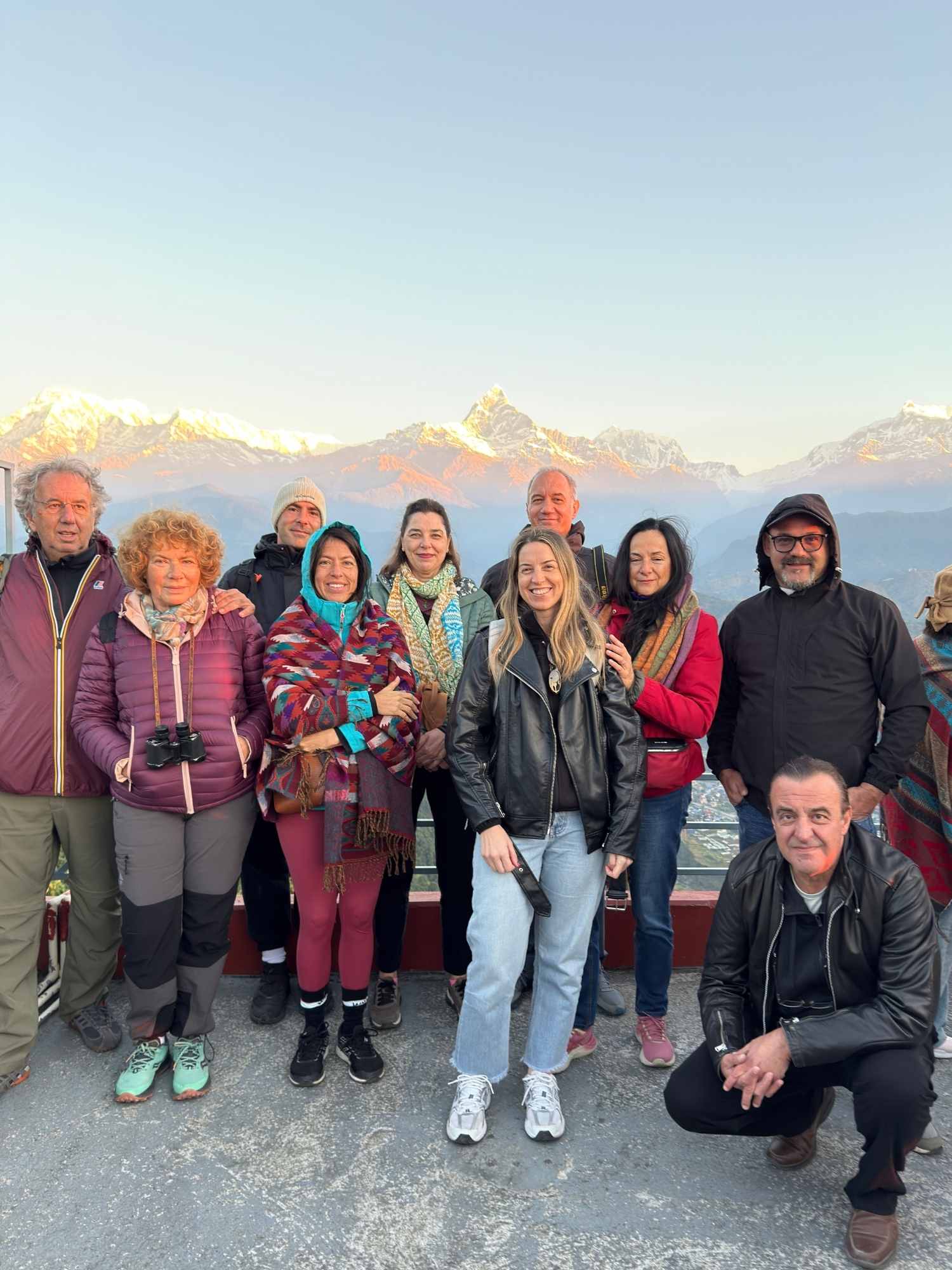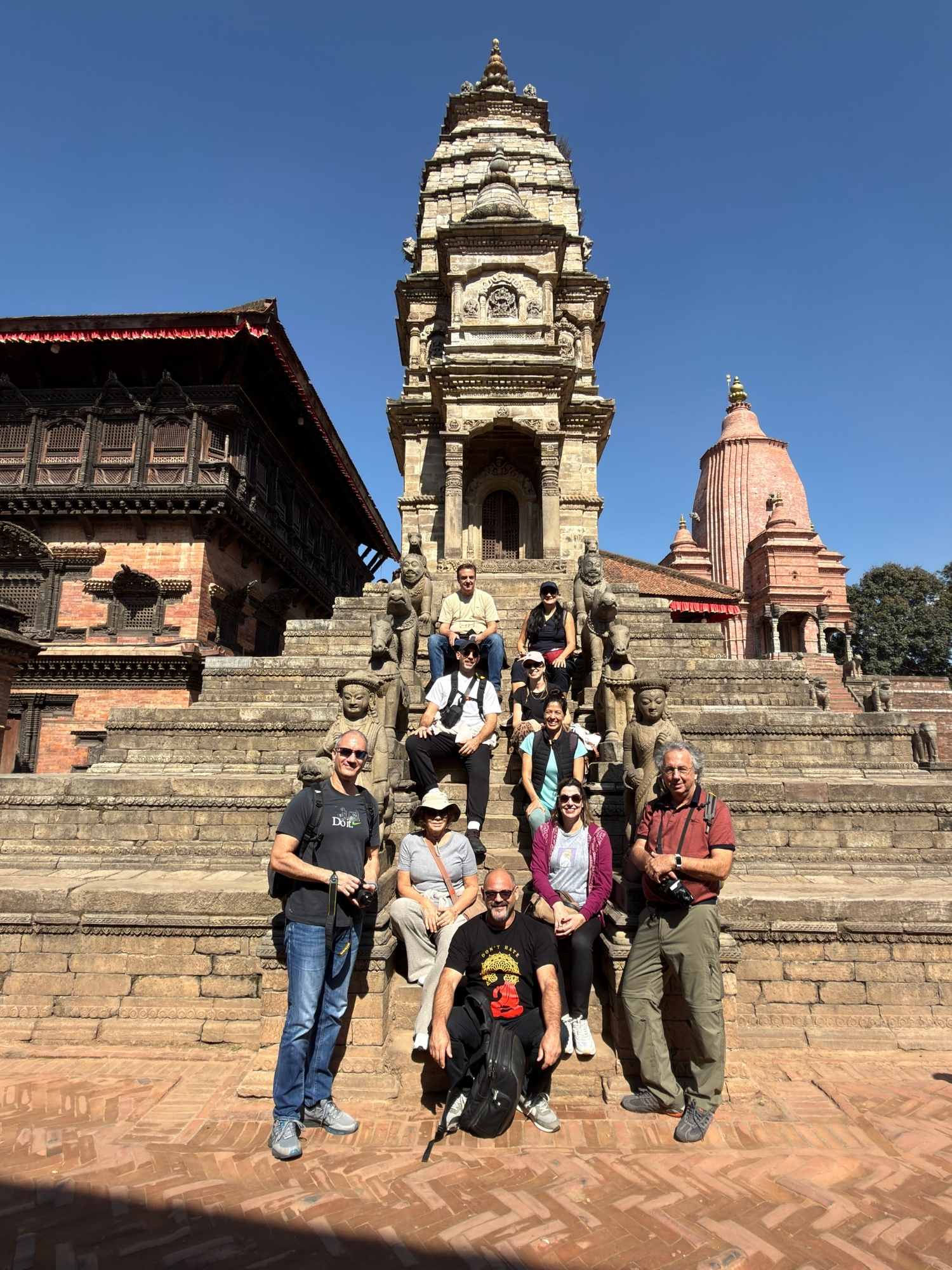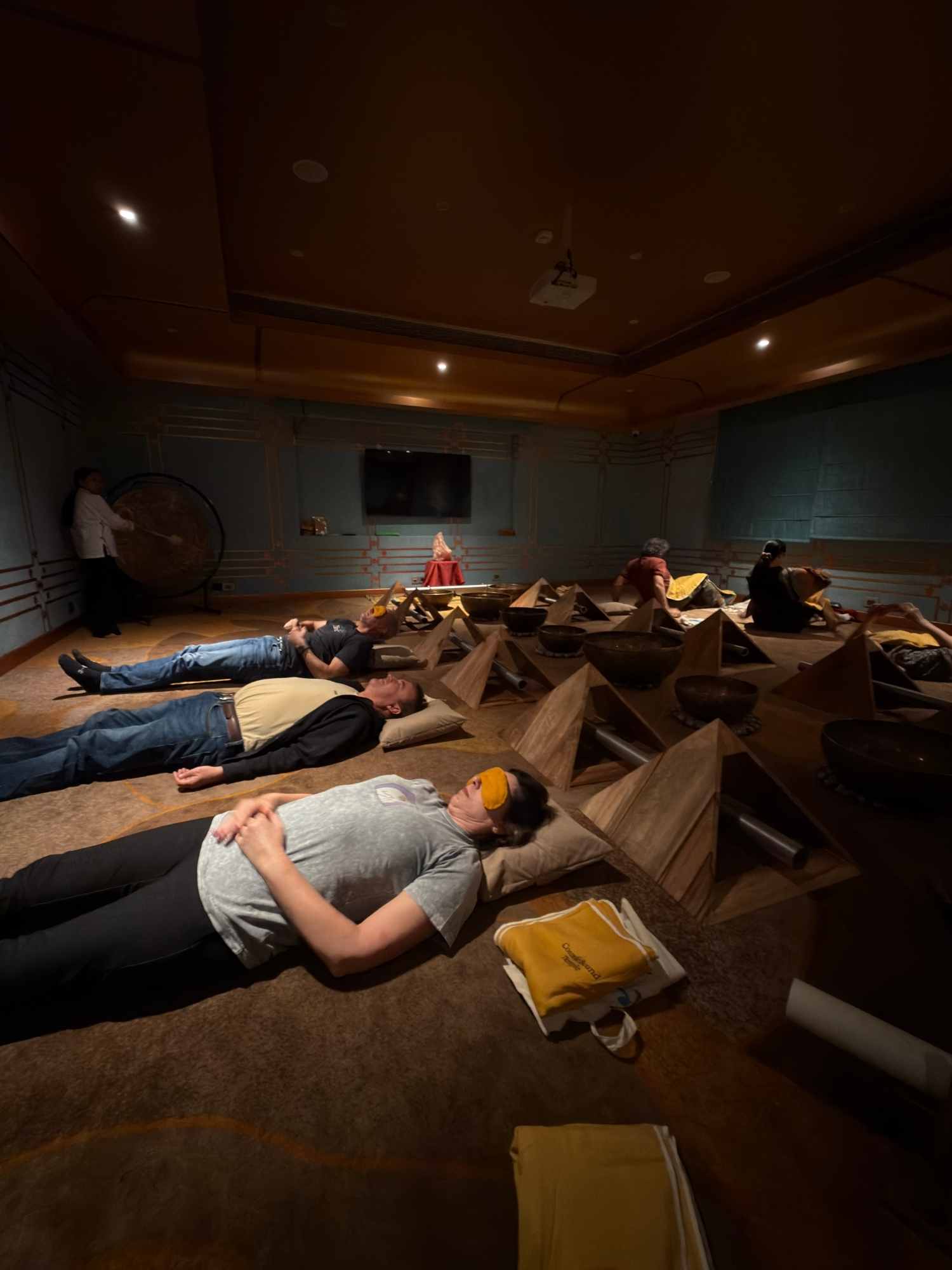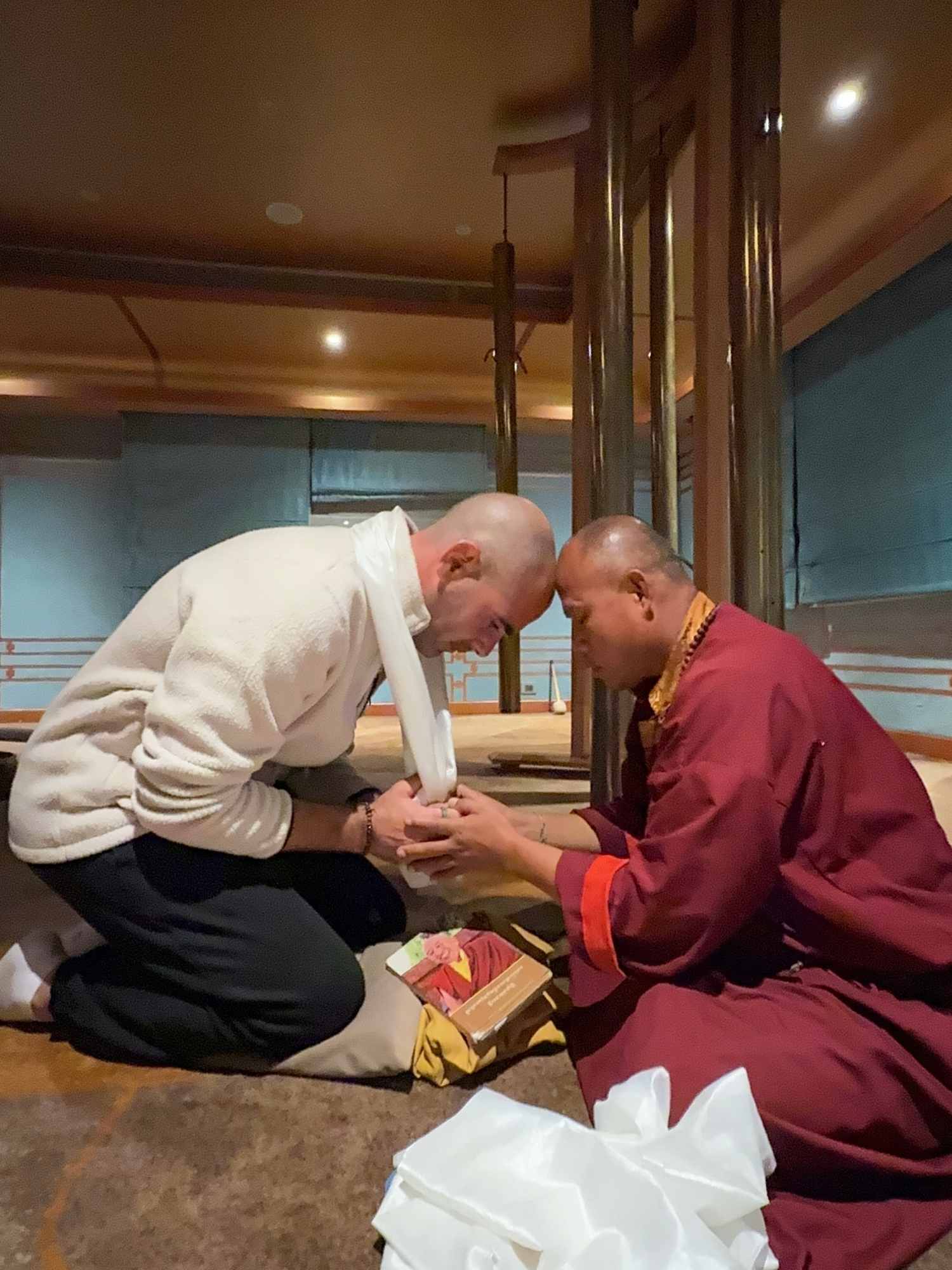
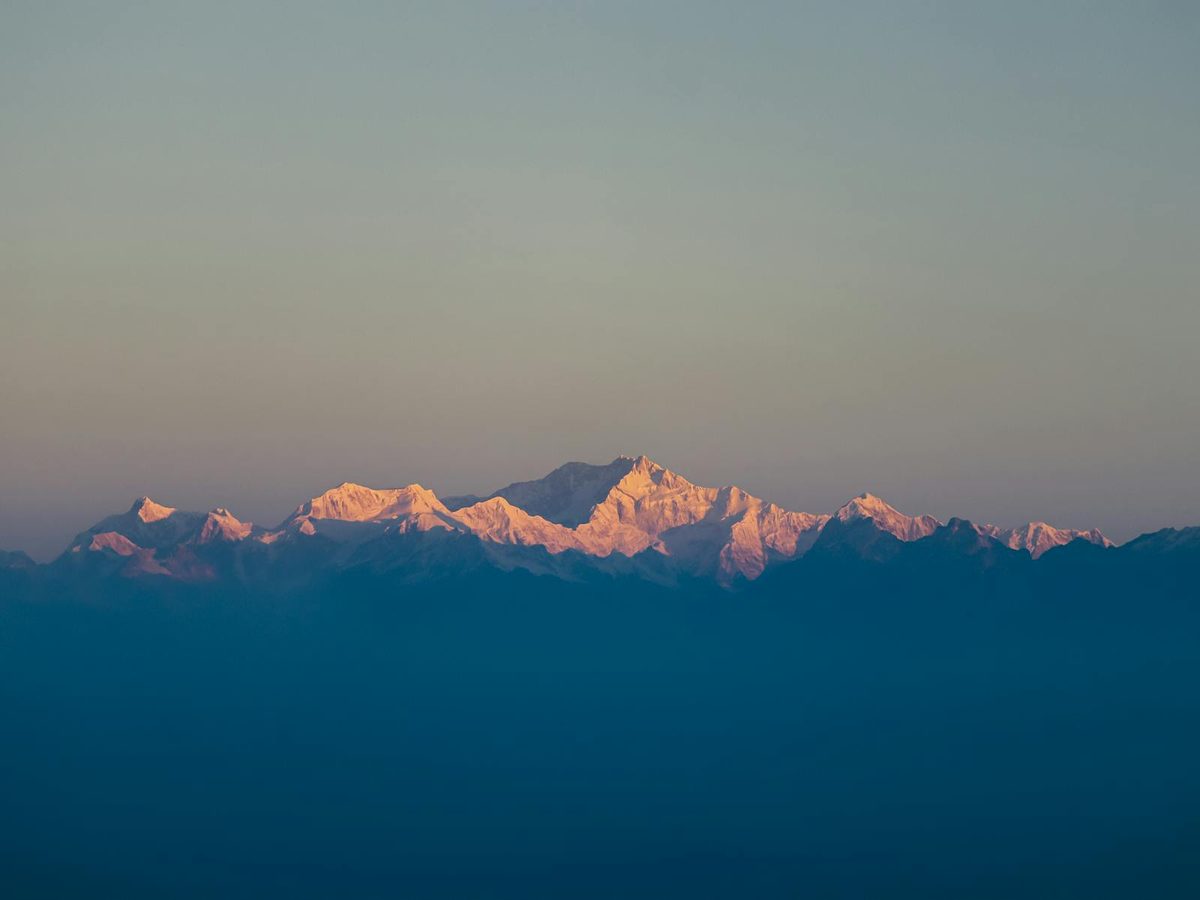
There is a difference between a mountain you visit and a mountain that visits you. Everest, for all its grandeur, has been photographed into familiarity. Annapurna has its devotees. But Kanchenjunga — the third highest peak on earth, 8,586 metres of ice and granite that rise on Nepal's far eastern frontier — remains, even now, almost impossibly remote. It is a mountain that asks something of you. And, for those willing to answer, it gives back the rarest of Himalayan gifts: solitude on a scale that is no longer easy to find anywhere on this overcrowded planet.
The Kanchenjunga luxury trek is not designed for the traveller in a hurry. It is not even designed for the traveller in pursuit of the obvious. It exists for those who have already done the famous routes — who have stood at Everest Base Camp, who have circuited Annapurna, who have ridden helicopters into Mustang — and who now want something different. Something quieter. Something the algorithms have not yet found.
This is the journey we design for them.
Why Kanchenjunga, Why Now
For most of the modern era, Kanchenjunga has been a closed mountain. It was scaled in 1955 by a British expedition who, on agreement with the Sikkimese, stopped a few metres short of the true summit out of respect for the deity believed to dwell there. To this day, the peak itself is treated as sacred — climbed only with permits and only with the understanding that the final steps are not taken. It is a mountain that has refused to be conquered in the conventional sense, and in that refusal, it has retained a dignity the famous peaks have largely surrendered.
Nepal opened the Kanchenjunga region to foreign trekkers only in 1988, and even now access requires a restricted-area permit, a registered guide, and a minimum group size of two. There are no commercial flights nearby. The nearest airstrip — Suketar, near Taplejung — receives only a handful of light aircraft per week, weather permitting. The trailheads are reached by a long, winding journey through tea estates and cardamom forests. None of this is convenient. All of it is the point.
In 2026, with the rest of Nepal's premium trails now drawing year-round international demand, Kanchenjunga has become something almost paradoxical: the rarest authentic experience in a country built on adventure. For a certain kind of traveller — the one who has read our guide to luxury travel in Nepal and is ready for its furthest edge — it is the most honest answer to the question: where can I still go to feel small in the right way?
The Geography of Refinement
Most Kanchenjunga itineraries are spoken of in two halves: the South Base Camp at Oktang, and the North Base Camp at Pangpema. A circuit trek connects both via the high pass of Mirgin La and Sinion La — a journey of roughly 22 to 26 days, depending on acclimatisation pace. For our Ultimate-tier travellers, we typically design a 19-day bespoke version that retains the full circuit while integrating helicopter support for ingress and emergency egress.
What changes when you add luxury logistics to a journey like this? Not the mountain. Not the silence. Not the rhododendron forests that bloom crimson on the lower slopes in April. What changes is the way your body and mind are allowed to receive it.
The journey begins, for most of our Greek and international clients, with a private transfer from Tribhuvan International Airport to the Dwarika's Hotel in Kathmandu — a property whose preserved Newari woodwork is itself a study in what Nepal can do when given time and devotion. From here, two acclimatisation nights, a private chef-led tasting of Newari cuisine, and a quiet morning at Boudhanath set the rhythm. By the time we depart for the east, you have already begun to slow down.
A short charter flight to Bhadrapur, then a Land Rover transfer through the tea-stepped hills of Ilam, brings the team to Suketar. Here the journey divides: light kit and porters move ahead by foot; the guests, when conditions allow, fly directly by helicopter to Tortong or Tseram. This single decision — to skip the first three trekking days, which are largely transit through villages already familiar in lower Solu Khumbu — is what unlocks the trek's deeper rewards within a 19-day window.
For those who prefer the long way in, walking from Suketar through the cardamom-scented forests of the lower Tamur valley is also possible. We have designed it both ways. The choice is yours.
A Day in the Quiet Country
There is a particular morning, somewhere around day eight or nine, that almost every Kanchenjunga traveller remembers afterward. You are at Ramche, perhaps, at 4,580 metres. The lodge — and it is a lodge in the Kanchenjunga sense of the word, which is to say a stone-walled structure with proper bedding and a wood-fired stove — sits in a hanging valley beneath Yalung Glacier. The first light arrives slowly at this altitude, a kind of staged unveiling. First the ridgelines of Rathong and Kabru, then the shoulder of Jannu — perhaps the most architecturally improbable mountain in the Himalayas — and finally, last of all, Kanchenjunga itself.
There is no one else there.
This sentence, simple as it is, has become almost impossible to write about Everest. It is becoming difficult to write even about Annapurna. About Kanchenjunga, in 2026, it remains true. On a typical morning at South Base Camp, you may share the view with three or four other people. On many mornings, with no one. The teahouse owner, perhaps, brings a flask of butter tea. Your guide points out the route by which Doug Scott and his companions made their celebrated north-face attempt. You eat warm porridge with cardamom honey. You take photographs that your friends will later refuse to believe.
This is the quality the Kanchenjunga luxury trek offers that no other Himalayan circuit can match: the preservation of solitude as a luxury good.
What Luxury Means Here
It is worth being precise about what luxury can and cannot mean on a route like this. There are no five-star resorts at 4,500 metres. There will not be any, in our lifetimes. The lodges of the Kanchenjunga region are modest by the standards of European hospitality — mostly family-run, often heated only by a single iron stove, with shared bathrooms in the highest sections and a menu built around dal bhat, fresh vegetables grown in the lower valleys, and the occasional tin of imported coffee.
What we add, with care, is the layer that transforms modest into refined.
We pre-position our own bedding — high-thread-count linens, down-filled duvets, silk pillowcases — in advance of the trekking party, transported by porters whose families have walked these routes for generations. We bring our own kitchen kit and a private chef trained in adapting Newari and continental dishes to the constraints of altitude cooking. We carry oxygen at all times, monitored daily by a registered guide with wilderness medical certification. We design rest days into the itinerary that other operators omit, because we understand that altitude is not a problem to be solved with willpower; it is a process to be respected.
We also build in the option of helicopter extraction at any point on the trail, regardless of weather forecast at the time of departure. This is the single greatest peace-of-mind feature of our Ultimate journey tier, and the one that makes the Kanchenjunga route accessible to travellers in their fifties, sixties and beyond — provided their cardiology permits.
The rest is what the mountain itself provides: the sound of glacial ice releasing in the afternoon sun, the soft step of blue sheep on a far slope, a Tibetan trader's bell heard from a path you cannot see. These things cannot be staged. They simply happen, when you are still enough to receive them.
The Cultural Weave
The Kanchenjunga region is also a Limbu and Sherpa heartland — and, on the Tibetan side of the watershed, the original homeland of the Bon religion that predates Buddhism in this part of the world. To trek Kanchenjunga without engagement with these communities is to miss most of what the journey actually is.
In the village of Ghunsa, on the north side of the circuit, we maintain a long-standing relationship with a family who run what is locally regarded as the finest teahouse in the upper Kanchenjunga area. They host our travellers for two nights — one of acclimatisation, one of cultural immersion. The grandmother of the household, who learned hospitality during the years when Ghunsa was a stop on the trans-Himalayan trade route between Tibet and Sikkim, prepares a single dish each evening: thukpa with hand-rolled noodles, served at the family hearth. The simplicity of it is not poverty. It is a form of refinement that European luxury, in its hurry to refine, has largely forgotten.
We have written elsewhere about the deeper art of cultural immersion as a luxury experience in Nepal. Kanchenjunga is, in our judgement, where this principle is most fully realised — because there is so little tourism to dilute it.
The Practical Architecture of the Journey
For travellers considering the Kanchenjunga luxury trek as a serious option, the planning windows are tighter than for the famous routes, and the decisions are more consequential. A summary of what we typically advise during the design conversation:
Best seasons. Autumn (mid-October to late November) offers the clearest skies and the most stable weather windows. Spring (late March to mid-May) brings the rhododendron bloom and longer days, with slightly higher cloud frequency. Winter is possible for the lower portions but not advised for the full circuit. The monsoon months are not viable. Physical preparation. This is a serious high-altitude journey. We require all clients to undertake a structured pre-departure programme of cardiovascular conditioning, hill walking, and altitude familiarisation. Six months is the typical lead time we recommend. Permitting. Restricted-area permits, conservation area entry, and TIMS card issuance are handled entirely by our operations team in Kathmandu. Travellers do not interact with permitting offices. Insurance. Comprehensive high-altitude insurance with helicopter evacuation cover is mandatory and arranged before final booking confirmation. Group size. Our Kanchenjunga journeys are bespoke and private. We do not run group departures. Most parties are between two and four guests, accompanied by a registered lead guide, an assistant guide, a private chef, and a porter team.For those who want the foundational understanding of how a journey of this calibre is built, we have written at length about the philosophy of bespoke design that informs every aspect of our work, and about the origins of the brand that drives it.
A Word on Cost, Honestly
A Kanchenjunga luxury trek of the kind described here is not an inexpensive proposition. The full 19-day Ultimate-tier itinerary, including private helicopter logistics, pre-positioned amenities, full chef and guide team, and post-trek recovery at Dwarika's Resort in Dhulikhel, falls in the upper range of our journey pricing. We are transparent about why: the operational costs of running luxury logistics in restricted areas are simply higher than on the established commercial routes.
What we can promise — and what every traveller who has completed this journey has reported back to us — is that the cost-to-rarity ratio is unusually favourable. For roughly the price of a comparable bespoke African safari, you receive a Himalayan experience that perhaps fewer than two thousand people in any given year are accessing in this manner. There are not many products like that left in the world.
For those weighing this against other Himalayan options, our definitive 2026 cost breakdown for luxury Nepal travel provides further context.
What You Bring Home
Most of our clients return from Kanchenjunga having taken fewer photographs than they expected. They remark on it themselves, often with surprise. There is a particular quality to remoteness — when it is real, when no satellite signal reaches the lodge, when the only sound for hours is wind through prayer flags — that defeats the impulse to document. You stop trying to capture and start trying to remain.
This is, in our view, the deepest form of experiential wealth. It cannot be transferred, copied, or communicated to those who were not there. It is yours, and only yours, for as long as you carry it.
The mountain remains. The mountain has remained, indifferent to traveller and trekker, for several million years. To have stood for a few mornings beneath it, and to have stood there well — with health intact, attention fully present, and the small kindnesses of a guide team who became, by week three, friends — is to have completed something that very little else in modern luxury offers.
Begin the Conversation
If the Kanchenjunga luxury trek has been waiting in some quiet part of your imagination for the right moment, we would be honoured to design it for you. Every itinerary we build is a collaboration — between you, your circumstances, and the country itself. The mountain decides much of what is possible. We decide the rest.
To begin, tell us about the journey you are imagining. The conversation that follows is unhurried, considered, and entirely without obligation. As with all things at this altitude, what matters most is how you arrive.
Some peaks are climbed. Others — the rare ones — are listened to.