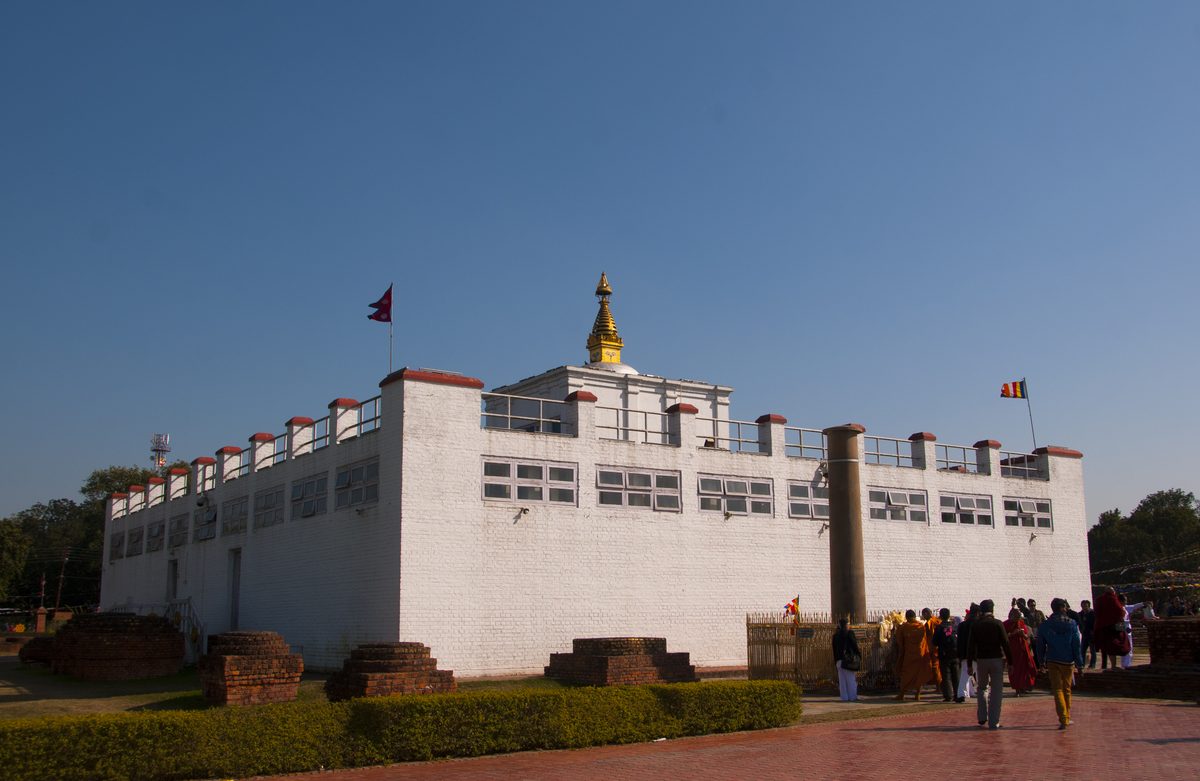
There are places on this earth that hold memory — not in stone or script, but in the quality of silence that inhabits them. Lumbini, in the southern Terai plains of Nepal, is one such place. Here, beneath the shade of a sal tree sometime around the sixth century BCE, a queen named Maya Devi gave birth to Siddhartha Gautama, the man who would become the Buddha. And here, more than two and a half millennia later, that original act of emergence still pulses through the landscape like a heartbeat beneath soil.
This is not a destination you visit. It is one you receive.
Why Lumbini Demands a Different Kind of Journey
Most travellers who arrive at Lumbini come as tourists. They photograph the Ashoka Pillar, walk through the monastic zone, and leave within hours. They see the place, but they do not feel it. The difference between seeing Lumbini and experiencing it is the difference between reading about meditation and sitting in silence until the mind finally, mercifully, surrenders.
A bespoke spiritual journey to Lumbini — the kind we design at Elysian Himalaya — is built around the understanding that sacred ground requires sacred time. You cannot rush enlightenment's birthplace. You must let it unfold around you like dawn breaking over the Terai, slow and absolute and quietly overwhelming.
The Sacred Garden: Where History Breathes
The Maya Devi Temple sits at the heart of the Sacred Garden, marking the precise spot where the Buddha was born. The temple itself is modest — a white structure housing the nativity stone and ancient ruins dating back to the third century BCE. But modesty is the point. In a world addicted to spectacle, Lumbini offers something far more rare: authenticity that has survived intact for millennia.
The Ashoka Pillar, erected by Emperor Ashoka in 249 BCE, still stands. Its inscription — confirming this as the Buddha's birthplace — is one of the oldest historical records in South Asia. To stand before it at dawn, when the mist lifts off the surrounding ponds and the only sound is birdsong and the distant murmur of monks chanting, is to understand why certain places become pilgrimage sites. They do not advertise their power. They simply hold it, patiently, for those willing to be still.
Designing the Bespoke Lumbini Experience
Day One: Arrival and Attunement
We arrange private transfers from Kathmandu — either by domestic flight to Bhairahawa (thirty minutes in the air, a world away in spirit) or, for our Ultimate Journey guests, by private helicopter that traces the Himalayan foothills before descending into the warm, lush Terai.
The first evening is deliberately unhurried. Your private guide — a scholar of Buddhist philosophy, not merely a licensed tour operator — meets you at your accommodation for a preparatory conversation. Over locally sourced tea and the sounds of the settling evening, they introduce the historical and spiritual context of what you will encounter. This is not a briefing. It is an invitation to approach the coming days with the openness they deserve.
Day Two: The Sacred Garden at Dawn
The Sacred Garden is best experienced in the first light. We arrange early access, before the day's visitors arrive, so you can walk the grounds in something approaching the solitude that Siddhartha himself must have known. Your guide leads you through the Maya Devi Temple, the Ashoka Pillar, the sacred pond where Maya Devi bathed before giving birth, and the network of ancient ruins that archaeologists continue to excavate.
What makes this experience distinct from ordinary tourism is the interpretive depth. Your guide does not simply recite dates and facts. They contextualise each site within the broader arc of Buddhist philosophy, drawing connections between what happened here 2,500 years ago and what it means for a thoughtful person today. The questions they raise — about impermanence, about the nature of suffering, about the possibility of liberation — are not academic. They are personal.
The Monastic Zone: A Living Tapestry of Devotion
Lumbini's monastic zone is extraordinary. Spread across three square kilometres, it contains monasteries built by Buddhist communities from more than twenty-five countries. The architectural diversity is staggering — from the stark minimalism of the Japanese monastery to the ornate splendour of the Myanmar temple, from the Chinese pagoda to the German meditation centre.
Walking through this zone with a knowledgeable guide is like traversing the entire Buddhist world in an afternoon. Each monastery represents a distinct tradition, a different cultural interpretation of the same fundamental teachings. The experience is both intellectually stimulating and emotionally moving — a physical demonstration of how one man's insight beneath a tree rippled outward to reshape civilisations.
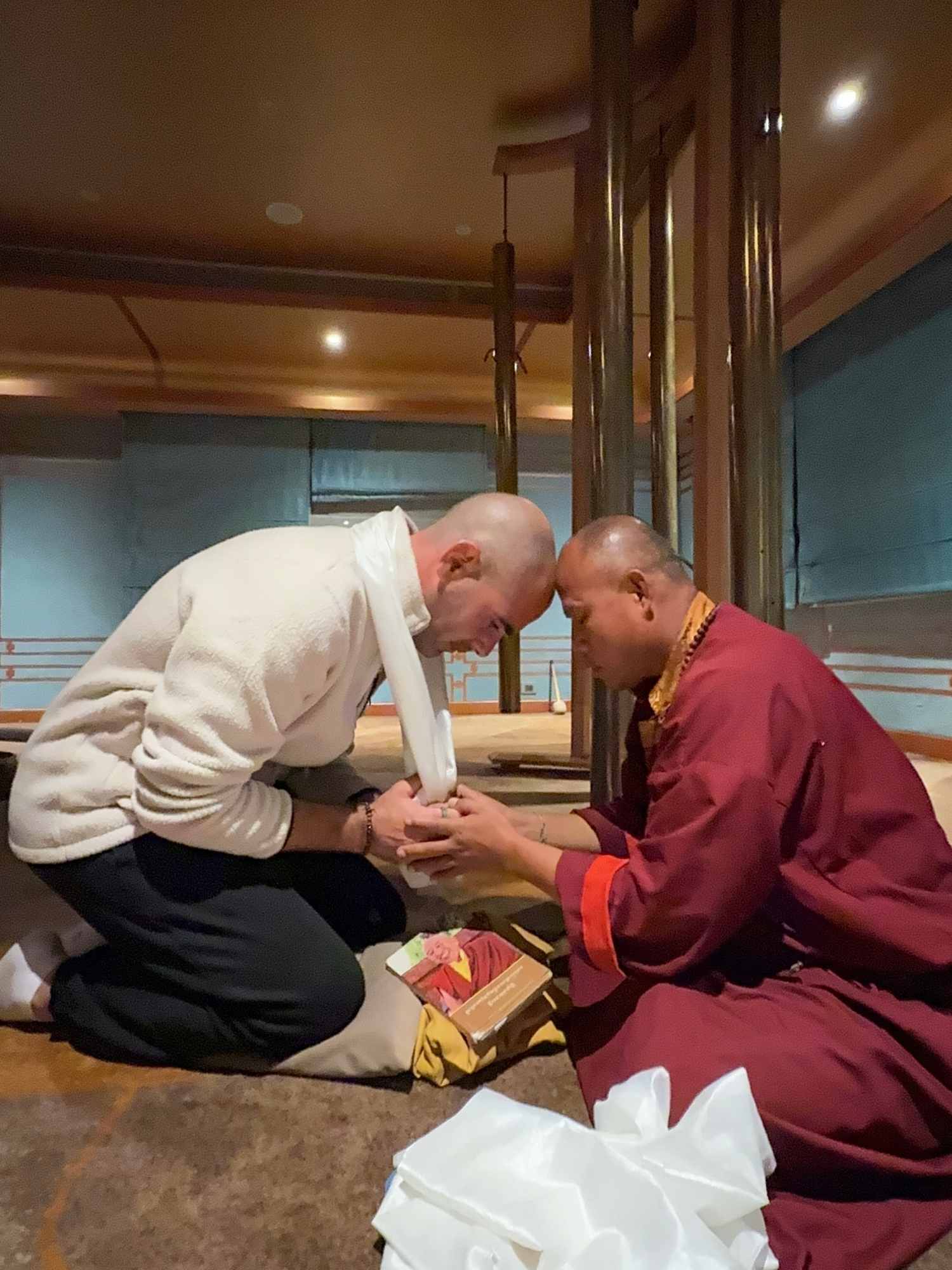
For our guests, we arrange private audiences with resident monks in selected monasteries. These conversations — conducted over tea, in unhurried settings — offer something no guidebook can provide: direct access to living wisdom traditions, shared by practitioners who have devoted their lives to the path the Buddha outlined.
The Terai: Nepal's Hidden Landscape
Most visitors to Nepal never see the Terai. They fly into Kathmandu, trek the mountains, and depart without ever experiencing the subtropical lowlands that constitute the country's agricultural heartland and cultural foundation. This is a significant oversight.
The Terai surrounding Lumbini is profoundly beautiful in its own way — flat, fertile, and alive with a different kind of Nepali life. Rice paddies stretch to the horizon. Villages of Tharu people, the indigenous inhabitants, maintain traditions that predate both Hinduism and Buddhism. The birdlife is spectacular, with the wetlands around Lumbini supporting species you will see nowhere else in Nepal.
A bespoke Lumbini journey with Elysian Himalaya includes curated excursions into this landscape. We organise private visits to Tharu villages, where guests can observe traditional dance, sample indigenous cuisine, and learn about a way of life that has persisted, remarkably, into the modern era. These encounters are arranged with deep respect for the communities involved — we work with local partners who ensure that tourism benefits are shared equitably.
Tilaurakot: The Palace Where Siddhartha Grew Up
Twenty-seven kilometres west of Lumbini lies Tilaurakot, identified as the ancient city of Kapilavastu — the palace complex where Siddhartha spent the first twenty-nine years of his life before renouncing his princely existence. The ruins here are still being excavated, and the site receives a fraction of Lumbini's visitors, which gives it a quality of intimate discovery that the main site sometimes lacks.
Walking through Tilaurakot's ancient gates — the very gates through which the future Buddha is said to have departed on his great renunciation — is one of those rare travel moments that collapses time. The moat, the fortification walls, the palace foundations: they are all here, quietly archaeological, undeniably powerful.
The Inner Journey: Meditation and Mindfulness
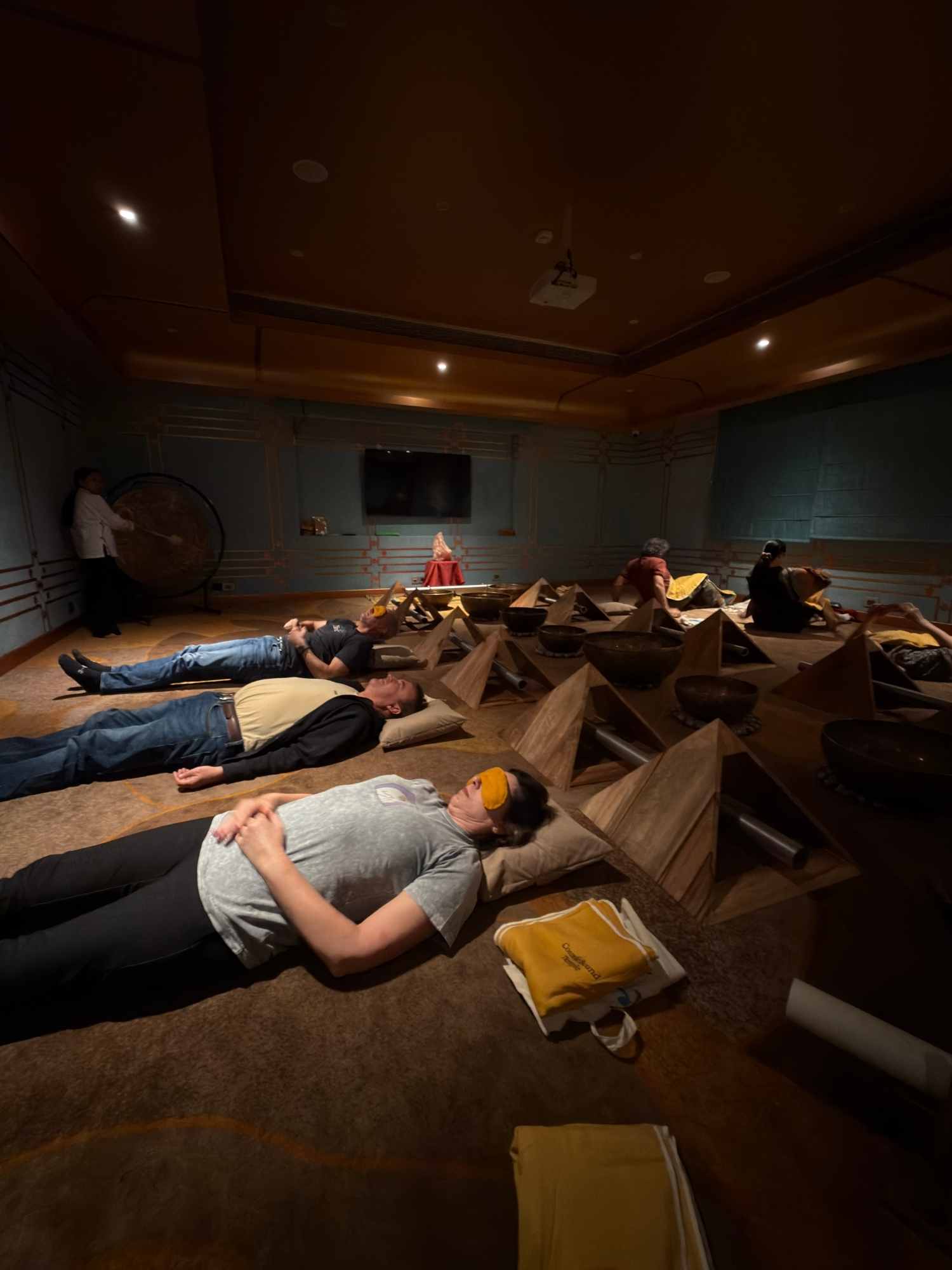
A luxury spiritual journey to Lumbini is not complete without inner work. We incorporate meditation sessions led by experienced practitioners — not the performative fifteen-minute sits offered by wellness resorts, but genuine contemplative practice suited to each guest's experience level.
These sessions take place in carefully selected settings: beside the sacred pond at dawn, in the courtyard of a monastery during the quiet afternoon hours, or in the privacy of your accommodation as the day draws to a close. The instruction is personalised — beginners receive patient, foundational guidance, while experienced practitioners are offered silence, space, and the rare opportunity to sit in a place where meditation has been practised without interruption for thousands of years.
For those drawn to deeper exploration, we can arrange multi-day silent retreats at monasteries within the Lumbini complex. These are not tourist experiences; they are genuine immersions in monastic life, offered only to guests who demonstrate sincere interest and appropriate preparation.
Where You Stay: Refined Comfort in Sacred Surroundings
Lumbini's accommodation options have transformed in recent years. Where once there were only basic guesthouses, there now exist properties that offer genuine comfort without compromising the contemplative atmosphere. We select accommodations that balance refined amenities with the simplicity that Lumbini's spirit demands — places where the thread count is high but the noise level is low, where the cuisine is exceptional but the television is deliberately absent.
Our Premium and Classic journey packages include stays at the finest available properties, with rooms arranged to overlook gardens or the surrounding countryside. The atmosphere is one of elegant retreat — a place to process the day's experiences in comfort, to journal, to read, to simply be.
When to Visit Lumbini
The optimal seasons for a Lumbini journey are October through March, when the Terai's heat subsides and the air carries a pleasant coolness. November and February are particularly beautiful — clear skies, comfortable temperatures, and the landscape at its most photogenic.
During Buddha Jayanti (typically in May), Lumbini comes alive with thousands of pilgrims from across the Buddhist world. This is a spectacular time to visit if you wish to witness the site at its most vibrant, though the crowds require a different kind of journey planning — one that emphasises private spaces and carefully timed visits.
Connecting Lumbini to Your Greater Nepal Journey
Lumbini is most powerful when experienced as part of a broader Nepal itinerary that balances spiritual depth with the country's other extraordinary offerings. Many of our guests combine two or three days in Lumbini with time in Kathmandu, where the spiritual exploration continues in the Boudhanath and Swayambhunath stupas, or with a luxury trek in the Annapurna region that provides a physical counterpoint to Lumbini's contemplative stillness.
The journey from Lumbini to the mountains — from the birthplace of the Buddha to the abode of the gods — mirrors an internal arc that many guests describe as the most meaningful aspect of their entire Nepal experience. It is this kind of thoughtful sequencing, this attention to the emotional and philosophical architecture of a journey, that distinguishes what we do at Elysian Himalaya from conventional luxury travel.
This Is Not Tourism. This Is Pilgrimage.
There is a Greek word — metanoia — that means a fundamental change of mind, a transformative shift in how one sees the world. It shares territory with the Buddhist concept of bodhi, awakening. At Lumbini, standing in the place where the most famous awakening in human history began, both concepts feel less like abstract philosophy and more like an invitation.
We do not promise enlightenment. We promise the conditions in which something profound can happen — if you are open to it. The sacred ground, the expert guidance, the thoughtful design of every moment, the space for silence and reflection: these are the ingredients. What you make of them is entirely, beautifully, yours.
Begin designing your Lumbini journey →