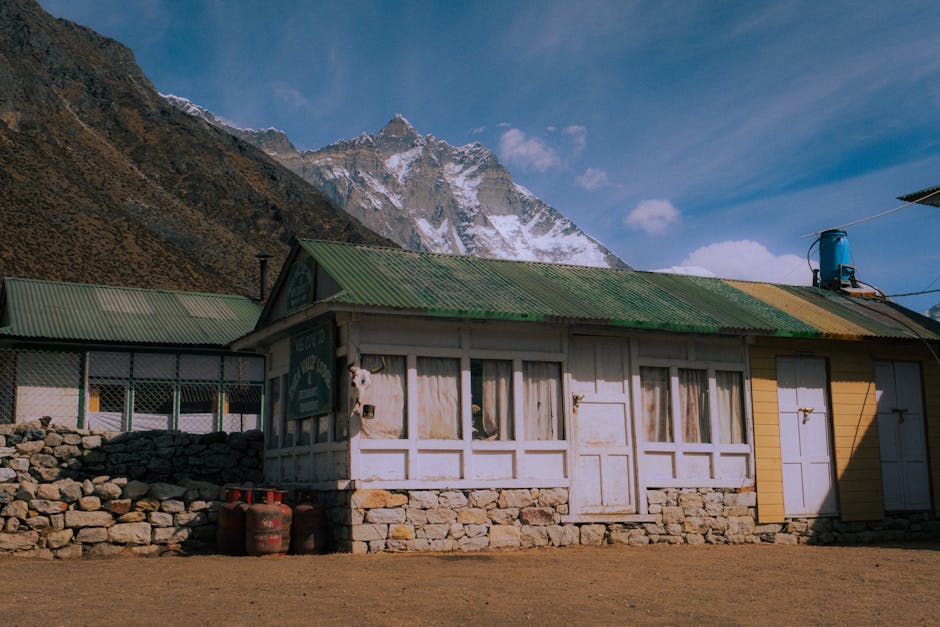
There is a particular silence that settles over the Annapurna foothills at dusk. The kind that only exists at altitude, where the air thins and the world seems to hold its breath between day and night. It is in that silence, through the amber window of a stone-built tea house, that you begin to understand what a Himalayan journey was always meant to be.
For the better part of a century, the tea house was Nepal's most democratic institution — a wooden hearth where sherpas, shepherds, monks, and the occasional foreign mountaineer shared the same steaming bowl of dal bhat under the same flickering lantern. It was never luxurious. It was something better: it was real. And for those who came seeking the Himalayas at their most intimate, that reality was the entire point.
Today, a quiet revolution is unfolding along Nepal's most storied trails. A new generation of boutique tea houses has emerged — lodges that honour the hearth-fire tradition of mountain hospitality while offering the kind of refinement that a discerning traveller has come to expect. Heated floors beneath hand-knotted rugs. Egyptian cotton sheets above down duvets. Private chefs coaxing Michelin-grade tasting menus out of wood-fired kitchens at four thousand metres.
This is the luxury tea house trek. And in 2026, it is redefining what it means to walk the Himalayas.
What a Tea House Trek Actually Is (And What It Has Become)
To trek in Nepal in the traditional sense meant to move from one tea house to the next — a chain of simple, family-run lodges strung along the high passes like a necklace of lanterns. You would arrive as the sun sank behind some nameless ridge, unlace your boots by a yak-dung stove, eat whatever the family was cooking, and sleep beneath thin wool blankets with your breath visible in the cold.
The charm was undeniable. The discomfort, equally so.
What has changed is not the soul of the tea house, but its vocabulary of comfort. A handful of visionary Nepali hoteliers — often families whose ancestors opened the very first lodges along the Everest and Annapurna trails — have quietly rebuilt their properties to an entirely different standard. The structure remains traditional: stone walls, beams of local pine, slate roofs that have seen a thousand storms. But step inside and you find underfloor heating, en-suite bathrooms with rainfall showers, curated libraries, oxygen-enriched sleeping suites, and dining rooms where the views compete honestly with what is on the plate.
These are not hotels pretending to be tea houses. They are tea houses that have grown up — without forgetting where they came from.
Why the Luxury Tea House Trek Makes More Sense Than Ever
There was a time, not long ago, when luxury travel in Nepal demanded compromise. You could have the helicopter transfer, the five-star Kathmandu hotel, the private guide — but the moment you stepped onto the trail itself, the experience became spartan. The contrast between the pre-trek indulgence and the on-trek austerity was often jarring, and for many seasoned travellers, it was the single reason they never attempted the Himalayas at all.
The luxury tea house trek dissolves that contradiction. It allows you to walk into the mountains without walking out of your standards — to carry refinement into altitude rather than leaving it at the trailhead.
For our clients at Elysian Himalaya, many of whom are Greek entrepreneurs and collectors accustomed to the villas of Mani or the discreet elegance of Cycladic estates, this alignment matters enormously. They are not asking for ostentation. They are asking for coherence — for the quality of the journey to match the quality of every other detail in their lives. The new tea houses deliver exactly that.
The Trails That Best Reward the Experience
Not every Himalayan route has caught up to this new standard. The luxury tea house trek is, for now, concentrated along three routes where the infrastructure has evolved most gracefully.
The Everest Panorama — Namche to Tengboche
The classic Khumbu corridor remains the most developed of Nepal's luxury tea house trails. The route from Namche Bazaar to Tengboche — traversed over four or five unhurried days — passes through a string of boutique lodges that have been painstakingly renovated by families who have hosted mountaineers since the first British expeditions. Expect a private guide, a private porter team, and evenings that begin with hot towels and end with a single-malt nightcap beside the stove. Ama Dablam hangs in the window like a painting that never tires.
Our clients who choose this route are often those who want the idea of Everest — the altitude, the monastic silence, the sense of being exactly where the mountaineering mythology was written — without committing to the full rigours of Base Camp. A four-day boutique Khumbu journey can touch 3,900 metres and return to Kathmandu without a single compromise to personal comfort.
The Annapurna Sanctuary — Ghandruk to Poon Hill and Beyond
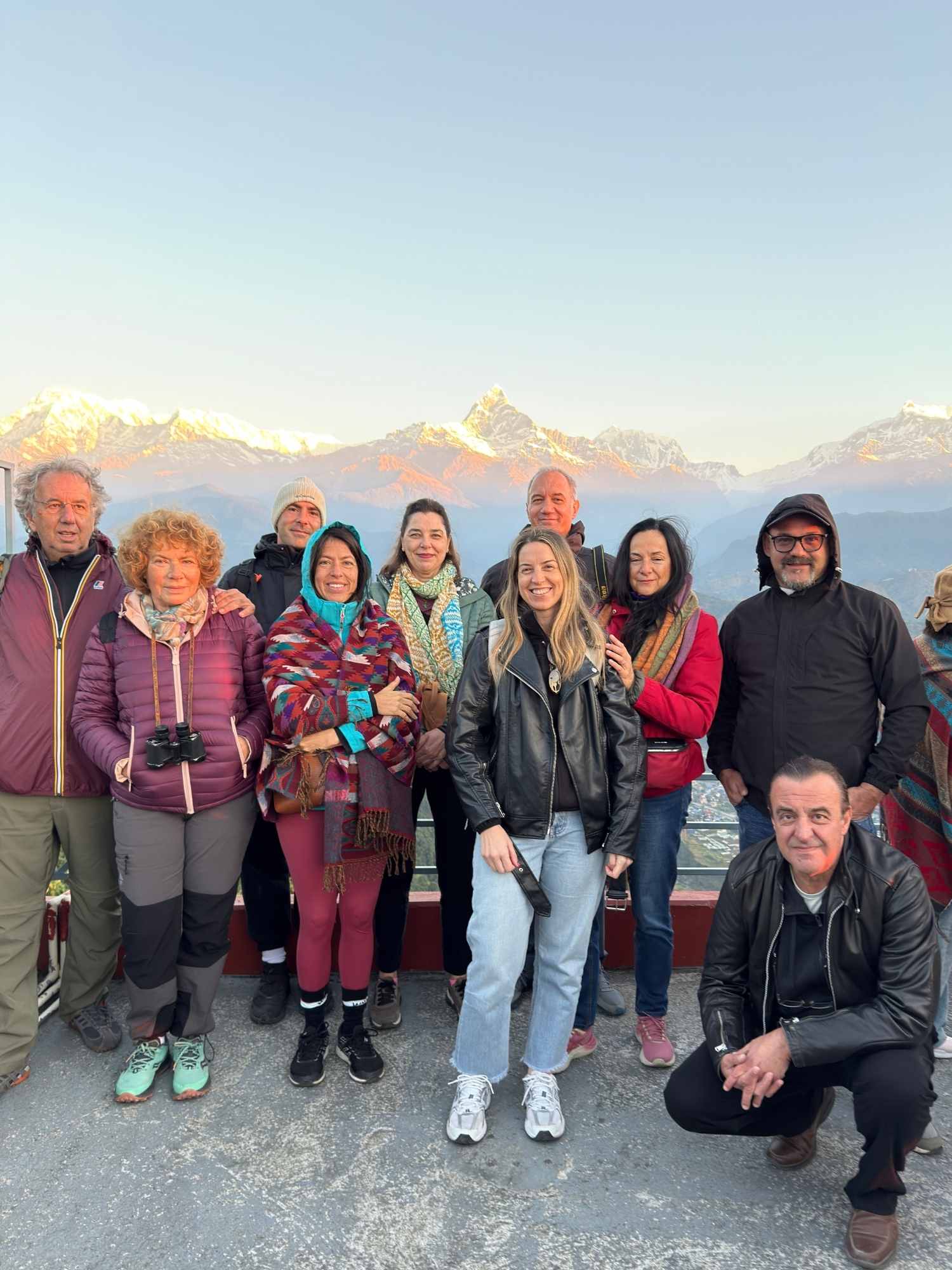
Softer, greener, more lyrical than Khumbu, the lower Annapurna region has quietly become the heartland of the new luxury tea house. The stone villages of Ghandruk and Ghorepani have been transformed into something approaching an alpine paradores — a network of owner-operated lodges where traditional Gurung architecture houses genuinely refined interiors. The walking is gentler. The panoramas, when they arrive, are arguably more dramatic than Everest's: Machapuchare and Annapurna South stand so close you feel you could reach out and touch them.
This route appeals especially to couples, small families, and those combining a shorter trek with time in Pokhara — a natural pairing, explored in depth in our guide to luxury travel in Pokhara.
The Tsum Valley and Upper Manaslu — Where Silence Still Lives
For travellers who have already tasted the Himalayas and want something less frequented, the emerging boutique lodges of the Tsum Valley represent perhaps the most exclusive tea house experience in Nepal. The valley was closed to foreigners until 2008. The few lodges that have opened since are often converted farmhouses operated by Buddhist families whose ancestors kept the door of the valley for centuries. Nothing here is crowded. Nothing here is scripted. It is the last place in Nepal where a luxury trek still feels like a true expedition.
What Separates a True Luxury Tea House Trek From a Clever Impersonation
Not every operator promising a "luxury tea house experience" is actually delivering one. As the category has grown, so too has the temptation to overpromise. For those considering their first high-altitude journey, there are a handful of details that distinguish genuine refinement from marketing gloss.
The ownership matters. The finest tea houses are almost always family-run, often by the third or fourth generation. They are not outposts of international hotel chains. Their character is inherited, not manufactured. The kitchen matters more. In the Himalayas, where ingredients must be carried in by porter or yak, the quality of the kitchen is an exacting test of an operator's seriousness. The best luxury tea houses employ chefs trained in Kathmandu's finest hotels — or in Paris, Tokyo, and Mumbai — and build menus around a dialogue between Newari tradition and global sensibility. The air in the room matters most of all. At altitude, oxygen is a luxury more valuable than linen thread count. Serious luxury tea houses now offer oxygen-enriched sleeping suites — a feature that has entirely reshaped what is possible for clients whose schedules do not permit gradual acclimatisation. A well-engineered room at 3,500 metres can simulate the oxygen profile of 2,000 metres, which is the difference between sleep and insomnia at altitude. The team in the background matters always. The magic of a luxury tea house trek lies in what you do not see: the team of private guides, medics, porters, and cultural interpreters who move quietly around each journey. At Elysian Himalaya, we assemble these teams personally for every client, drawing from a roster of long-term collaborators whose judgment has been tested across hundreds of journeys. This is the quiet architecture of a journey that feels effortless.How Elysian Himalaya Designs the Luxury Tea House Trek
Our approach begins, always, with a conversation. We ask what you want to feel at the end of the journey, not merely what you want to see during it. From that starting point, we construct routes that balance altitude, rest, culture, and spectacle in proportions unique to you.
For some clients, the tea house trek is the centrepiece of a longer Himalayan journey — paired with time in a heritage Kathmandu property and perhaps a helicopter detour to Upper Mustang. For others, it is a four-day meditation, deliberately contained, designed to allow silence to do its work. We have designed treks that ended in weddings. We have designed treks that began as sabbaticals and became second careers. The framework is the same: the execution is entirely personal.
Learn more about how we build journeys at our design journey page, or explore the three tiers of our signature offerings — Classic, Premium, and Ultimate — each adapted to a different rhythm of travel.
When to Go — And How Long to Stay
The luxury tea house trekking season divides cleanly into two windows. The autumn months of October and November offer the most reliable weather in the Himalayas — cloudless skies, sharp mountain light, cool but not cold nights. The spring window of March through May is almost as fine, with the added theatre of rhododendron forests in bloom at lower altitudes.
For the length of a journey, we generally recommend a minimum of seven days on the ground in Nepal — ideally twelve or more. A three-day trek feels rushed. A five-day trek is the sweet spot for most first-time visitors. Seasoned trekkers often extend to seven or nine days in the mountains, particularly on the Manaslu or Makalu routes where the landscape takes longer to unveil itself.
If the timing of your trip is flexible, our full season-by-season guide to Nepal offers a more detailed breakdown of when to visit and why.
A Word on Cost, and on What Cost Actually Means
A bespoke luxury tea house trek designed by Elysian Himalaya typically ranges from €800 to €1,400 per person per day, depending on route, group size, and the degree of private helicopter integration. At first glance, that figure sits above what many expect Nepal to cost. On closer inspection, it sits well below what the same level of access and refinement would cost in the Alps, the Dolomites, or Patagonia.
More importantly, what is being paid for is not merely accommodation and logistics. It is a network of trust built over years — with lodge owners, local guides, and mountain doctors — that cannot be replicated by a first-time operator or an online booking platform. It is also the thousand invisible decisions that make a journey feel inevitable rather than arranged. That is the difference experienced travellers learn to pay for, quietly and without ceremony.
For a fuller picture of pricing across all our offerings, see our comprehensive 2026 cost guide.
The Return
There is a moment, on every luxury tea house trek, when a client — usually on the third or fourth evening — turns toward a window framing some impossible Himalayan silhouette and says, almost to themselves, I had no idea this was still possible.
That is the moment we design for. Not the Instagram photograph, not the helicopter arrival, not the tasting menu — though all of those have their place. But the unguarded second in which a traveller, steeped in comfort and surrounded by a landscape that has humbled emperors and mountaineers alike, realises that refinement and adventure were never meant to be opposing principles. That luxury, at its highest form, is the simple privilege of being exactly where you are.
That is the promise of the luxury tea house trek. It is, we think, the truest luxury Nepal has to offer.
Ready to begin your own Himalayan journey? Every Elysian Himalaya trek is designed from a blank page, for one client at a time. Begin designing your journey →