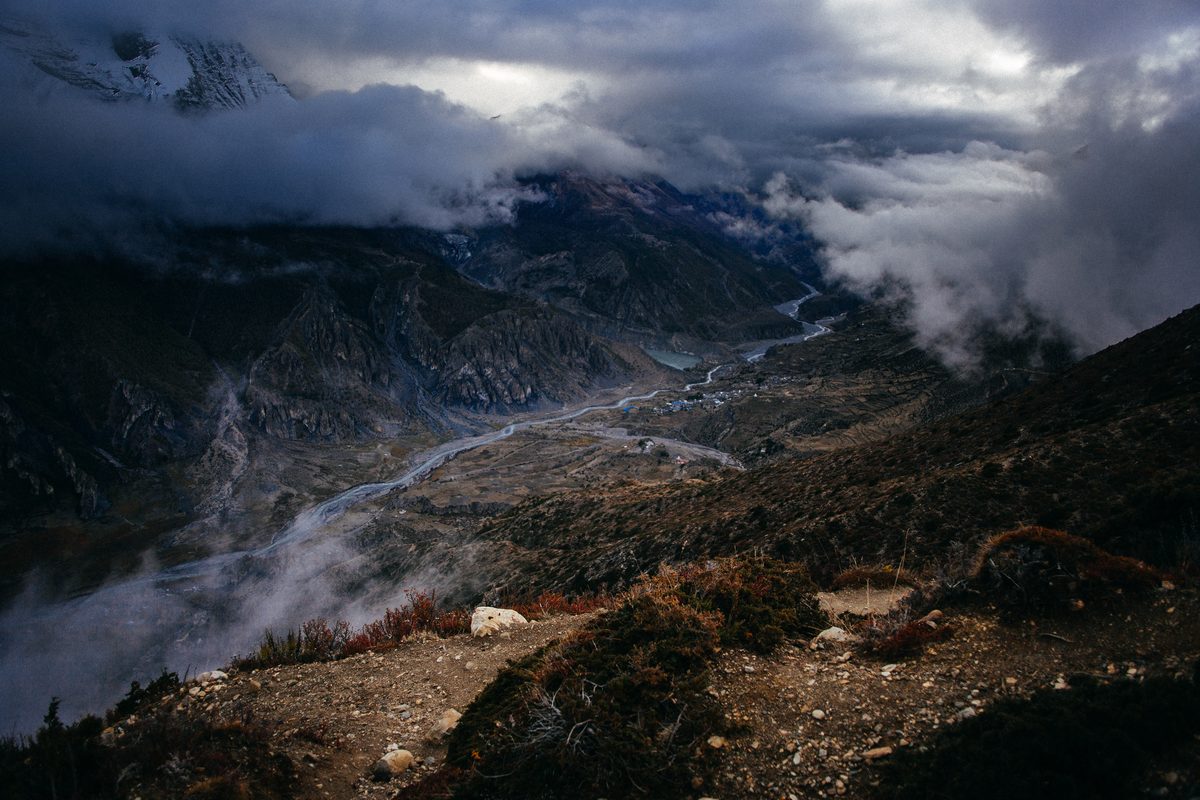
There is a number that explains everything about Makalu.
Each year, something in the order of fifty thousand people walk the Everest and Annapurna trails. In the same year, a few hundred — often fewer — reach Makalu Base Camp. Yet Makalu is the fifth-highest mountain on earth, 8,485 metres of near-perfect pyramid, and it stands only nineteen kilometres from Everest itself. You can see it from the Everest trail. You can photograph it from a mountain flight. What you almost certainly have not done is stand beneath it.
That gap — between proximity and presence, between seeing a mountain and being received by it — is the entire subject of this journey.
I have designed a great many itineraries in Nepal, and I have come to believe that the country's most valuable commodity is no longer altitude or difficulty. It is solitude. Everest has been photographed to exhaustion. Annapurna now has a road running through much of its circuit. The scarcity has quietly migrated east, into a valley that most maps of Nepal render as an empty green space, and that the people who know it call the last intact place.
Why Makalu Is Different
Makalu is not a mountain you stumble upon. It is guarded — by geography, by weather, and by a sheer lack of infrastructure — in a way that no other 8,000-metre peak in Nepal now is.
The approach begins in the Arun Valley, cut by a river older than the mountains themselves. The Arun is what geologists call an antecedent river: it was already flowing when the Himalaya began to rise, and it simply kept cutting, holding its line while the range lifted around it. Standing at the confluence at Num and looking up at the gorge walls, you are looking at a piece of the world that refused to be rearranged.
From there the route climbs into the Makalu Barun National Park, established in 1992 and, by any serious measure, one of the most extraordinary protected areas on the planet. Its elevation range runs from roughly 400 metres to 8,485 — one of the greatest vertical spans of any conservation area anywhere. Within that single park you pass through subtropical forest, temperate oak and rhododendron, alpine meadow, moraine, and finally high glacial desert. Botanists have counted over three thousand species of flowering plant here, including sixty-seven varieties of rhododendron and forty-seven orchids. Snow leopard and red panda both live in the valley. So do Himalayan black bear and musk deer.
The Barun Valley itself — the inner sanctum — is frequently described by conservation biologists as one of the last pristine mountain ecosystems remaining on earth. That is not marketing language. It is a technical assessment of a place that has never been logged, never been roaded, and never been developed.
The Consequence of Remoteness
Here is the honest part, and it matters more than any superlative.
Makalu has no luxury infrastructure. There is no Everest-style lodge circuit with hot showers and espresso machines. Above Tashigaon — the last permanent settlement, at around 2,100 metres — the accommodation thins to seasonal herders' shelters and basic huts, and beyond that there is nothing at all but what you carry with you.
This is precisely why most operators do not sell Makalu, and precisely why it remains worth going. But it also means the trek cannot be softened with a booking. It has to be built. The comfort on this route is not found; it is constructed, night after night, by a team that arrives ahead of you and leaves after you.
That distinction — between a journey you purchase and a journey that is assembled around you — is the whole philosophy behind our Ultimate journey tier, and Makalu is perhaps its clearest expression.
The Route: Arun to Barun
The classic itinerary runs eighteen to twenty-two days. It divides cleanly into three acts.
Act One — The Forest (Days 1–6)
A flight from Kathmandu to Tumlingtar, then a drive up to Num or Chichila, and the walk begins with a long descent to the Arun River followed by an equally long climb to Seduwa. This is subtropical Nepal: terraced millet, cardamom groves, Rai villages, leeches in the monsoon shoulder, butterflies the size of a hand.
You reach Tashigaon on day three or four. It is the last village. Everything after it is wilderness in the literal sense — no permanent human habitation until you return.
Act Two — The Passes (Days 6–10)
From Tashigaon the trail climbs hard to Khongma Danda, and then crosses two passes — Shipton La at roughly 4,216 metres and Keke La at around 4,127 — that transfer you from the Arun watershed into the Barun. This is the threshold. On the far side, the forest gives way, the valley opens, and Makalu's outer ramparts appear for the first time.
The crossing days are demanding: long, with significant ascent and descent, often in cloud. They are also, in my experience, the days guests remember with the most feeling — because you can physically sense the world thinning out behind you.
Act Three — The Barun (Days 10–14)
Then the valley. Yangle Kharka, Langmale Kharka, Shershong, and finally Makalu Base Camp at approximately 4,870 metres, set on a glacial shelf beneath the mountain's colossal south face.
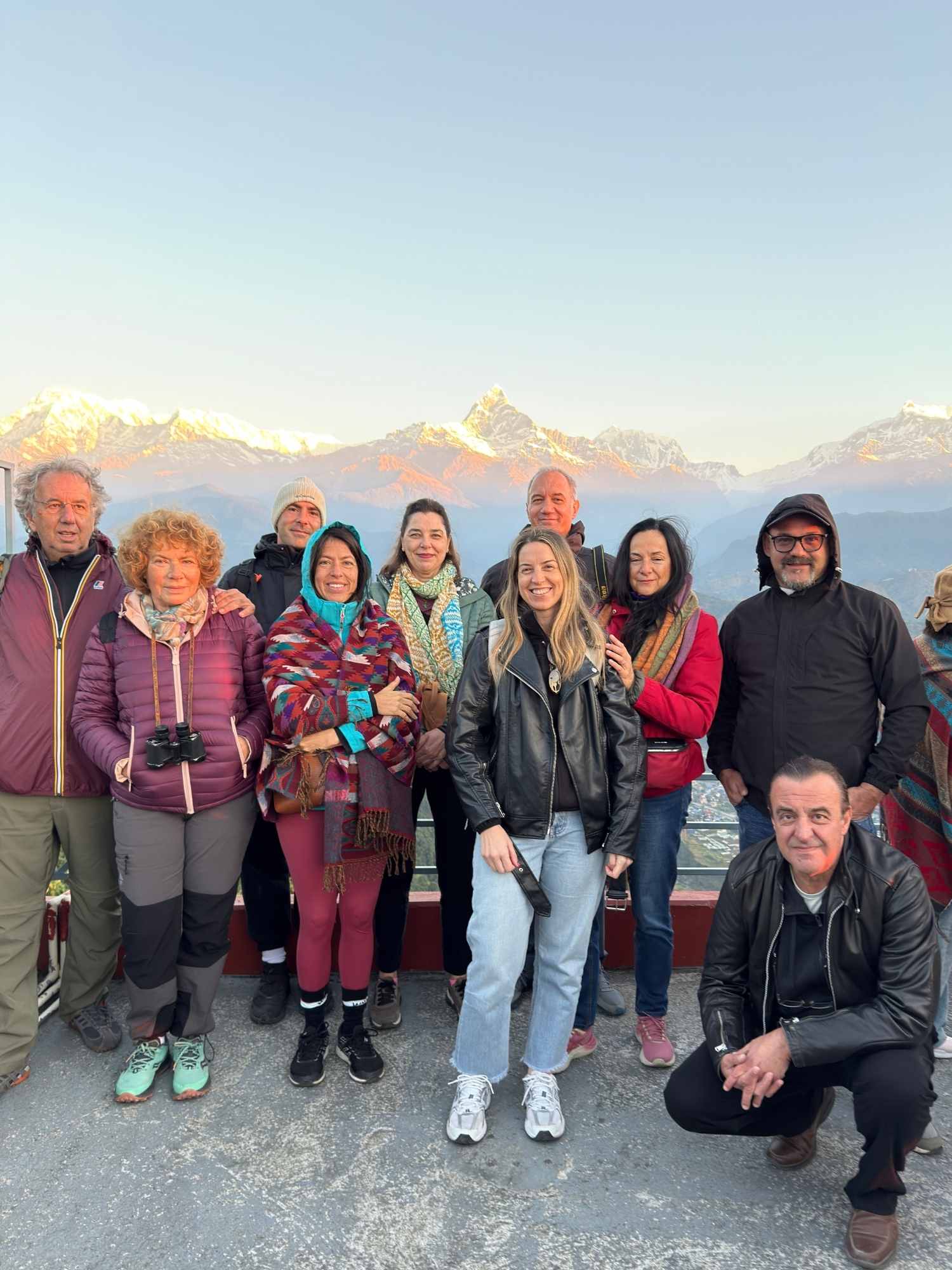
The Barun is a hanging valley of a kind that photographs poorly and experiences overwhelmingly — sheer granite walls, waterfalls falling hundreds of metres in a single thread, yak pasture, and a river the colour of milk glass. Chamlang and Baruntse close the southern flank. From the base camp and the ridges above it, on a clear morning, you can look north-west and see Everest and Lhotse from an angle that perhaps a few thousand people in history have witnessed.
And there is the silence. I do not use that word loosely. On the Everest trail there is always sound — porters, aircraft, other groups, generators. In the upper Barun there are days when the loudest thing you hear is your own breathing and, occasionally, ice releasing somewhere high on the face.
What "Luxury" Actually Means at Makalu
The word requires redefinition here, and I would rather redefine it honestly than pretend.
It does not mean marble bathrooms. It cannot. Anyone who tells you otherwise has not been. It does mean a private mobile camp of genuine quality. Insulated single-occupancy sleeping tents with proper cots and full-length mattresses rather than foam pads. A heated dining tent with a table, chairs, and lighting. Private toilet and hot-shower tents erected at every camp. Down bedding rated well beyond what the night will actually demand. It means the kitchen travels with you. A dedicated cook team, fresh produce carried and resupplied, bread baked at altitude, meals that reflect the fact that appetite is the first casualty of elevation and the most important thing to protect. Greek guests are frequently — and pleasantly — surprised by what appears on a table at 4,300 metres. It means ratios. One guide to two guests. A sirdar who has done this valley repeatedly, not once. Enough staff that no one is under-supported, and enough redundancy that a single illness does not compromise the itinerary. It means medical seriousness. Portable altitude chamber, comprehensive oxygen, a satellite communications system that works, and — this is the part that matters most — a standing helicopter evacuation arrangement with insurance pre-cleared before departure. In a valley this remote, that provision is not a luxury. It is the precondition for going at all. And it means the option to compress. A private helicopter can lift you from Makalu Base Camp directly, turning a twenty-two-day expedition into something closer to twelve. For guests with real constraints on time, this single decision is what makes Makalu possible rather than theoretical. It is also, incidentally, one of the most spectacular flights in the Himalaya — down the Barun, over the Arun gorge, with the whole eastern range standing to the north.Who Should Go — and Who Should Not
I would rather lose a booking than place someone badly, so let me be direct.
Makalu suits you if you have trekked at altitude before and know how your body responds; if you can walk seven to nine hours on consecutive days; if the absence of comfort infrastructure reads to you as an attraction rather than a deficiency; and if what you are chasing is not a summit photograph but a genuine encounter with a place that has not been arranged for visitors. Makalu does not suit you if this is your first Himalayan journey, if your schedule cannot absorb weather delays at Tumlingtar, or if you would be unhappy without a hot shower on demand. There is no shame in any of that — it simply points you elsewhere. The Everest View trek or the refined Annapurna routes deliver extraordinary mountains with a far gentler support structure, and our Premium journeys are built precisely for travellers who want the Himalaya at that register.When to Go
Spring, mid-March to late May, is the connoisseur's season. The rhododendron forests between Seduwa and Khongma Danda bloom in a way that genuinely startles people — sixty-seven species, layered by elevation, red giving way to pink giving way to white as you climb. Days are longer. The valley is at its most alive. Autumn, mid-October to late November, offers the sharpest air and the most reliable summit views, with post-monsoon clarity that makes the south face look close enough to touch. It is colder at base camp, sometimes considerably.Avoid the monsoon entirely — the Arun gorge becomes genuinely hazardous — and avoid deep winter, when the passes are unreliable.
The Real Reason to Walk It
I designed the first Makalu itinerary in our portfolio after a conversation with a guest in Kathmandu who told me, with visible frustration, that he had done Everest Base Camp and felt he had queued for a mountain.
That phrase stayed with me. It describes something true about how Himalayan travel has evolved — and something that the philosophy of experiential wealth exists to correct. What is scarce now is not the peak. Anyone with sufficient fitness and a fortnight can stand near Everest. What is scarce is the unmediated mountain: the one that has not been prepared for you, that does not know you are coming, and that gives back exactly in proportion to what you are willing to bring.
Makalu gives that. There is a moment — usually on the second or third morning in the upper Barun, when the cloud lifts off the south face before dawn and the whole 3,000-metre wall simply appears — where guests stop talking. Not out of politeness. Because there is nothing available to say.
That moment cannot be bought as a product. It can only be arrived at, on foot, after two weeks of deliberate effort, in a valley that almost no one has bothered to reach. Which is, I think, the entire point.
I have spent years learning why certain journeys transform people and others merely entertain them, and my conclusion — which shapes everything we build, and which I have written about at length in my own story — is that transformation requires resistance. Makalu supplies it generously, and then rewards it in a currency nothing else accepts.
Begin the Conversation
A Makalu journey is not selected from a catalogue. It is designed around your fitness, your calendar, your tolerance for austerity, and how much of the walk you want to trade for helicopter time. Some guests want the full twenty-two days on foot. Others want six days in the Barun and a flight out. Both are legitimate, and they are entirely different expeditions.
If the fifth-highest mountain on earth — and the valley that guards it — is somewhere you would like to stand while it is still this quiet, let us design your journey. Tell me what you want the fortnight to do to you, and I will build the route that does it.