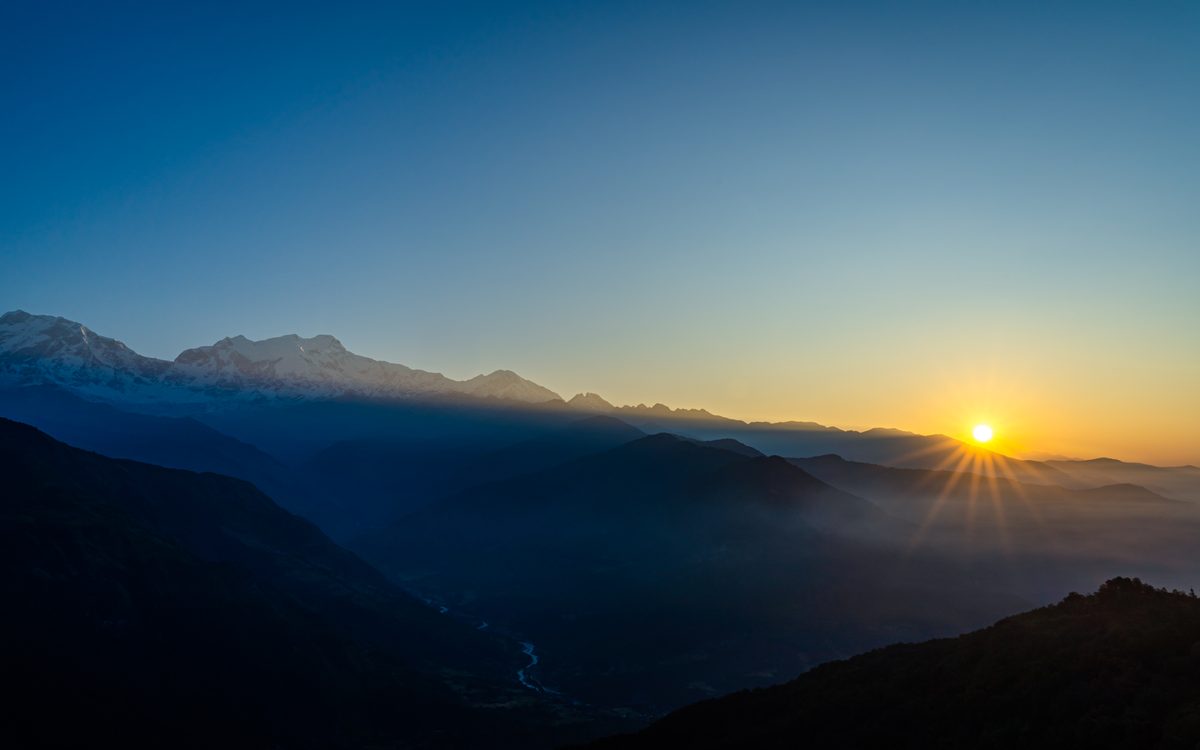
There is a particular kind of silence that exists only on a ridge. Not the silence of an empty room or a sleeping house, but something older and more complete — the silence of altitude, where the wind has thinned and the valleys have fallen away beneath you and there is nothing left between your eyes and the mountain but clear, cold morning light. I have stood in that silence more times than I can count across two decades of walking the Himalayas. And of all the places I have found it, none has surprised me quite like the ridge of Mardi Himal.
For years, the Annapurna region kept this trail to itself. The crowds went to Poon Hill for the sunrise and to Annapurna Base Camp for the amphitheatre of peaks, and almost no one looked up at the slender spine of forest and grassland that climbs directly beneath Machhapuchhre — the sacred fish-tail summit that no human has ever been permitted to climb. The Mardi Himal trail was only officially opened in 2012. Even now, fewer people walk its full length in a week than pass through Poon Hill in a single morning. That obscurity is precisely its gift.
A Ridge Instead of a Valley
Most Himalayan treks follow valley floors. You walk beside a river, between walls of rock, and the great peaks reveal themselves only at the end, like a curtain finally drawn. Mardi Himal does the opposite. From almost the first day it lifts you onto a high ridgeline and keeps you there, so that the mountains are not a destination but a constant companion — a presence at your shoulder from breakfast to dusk.
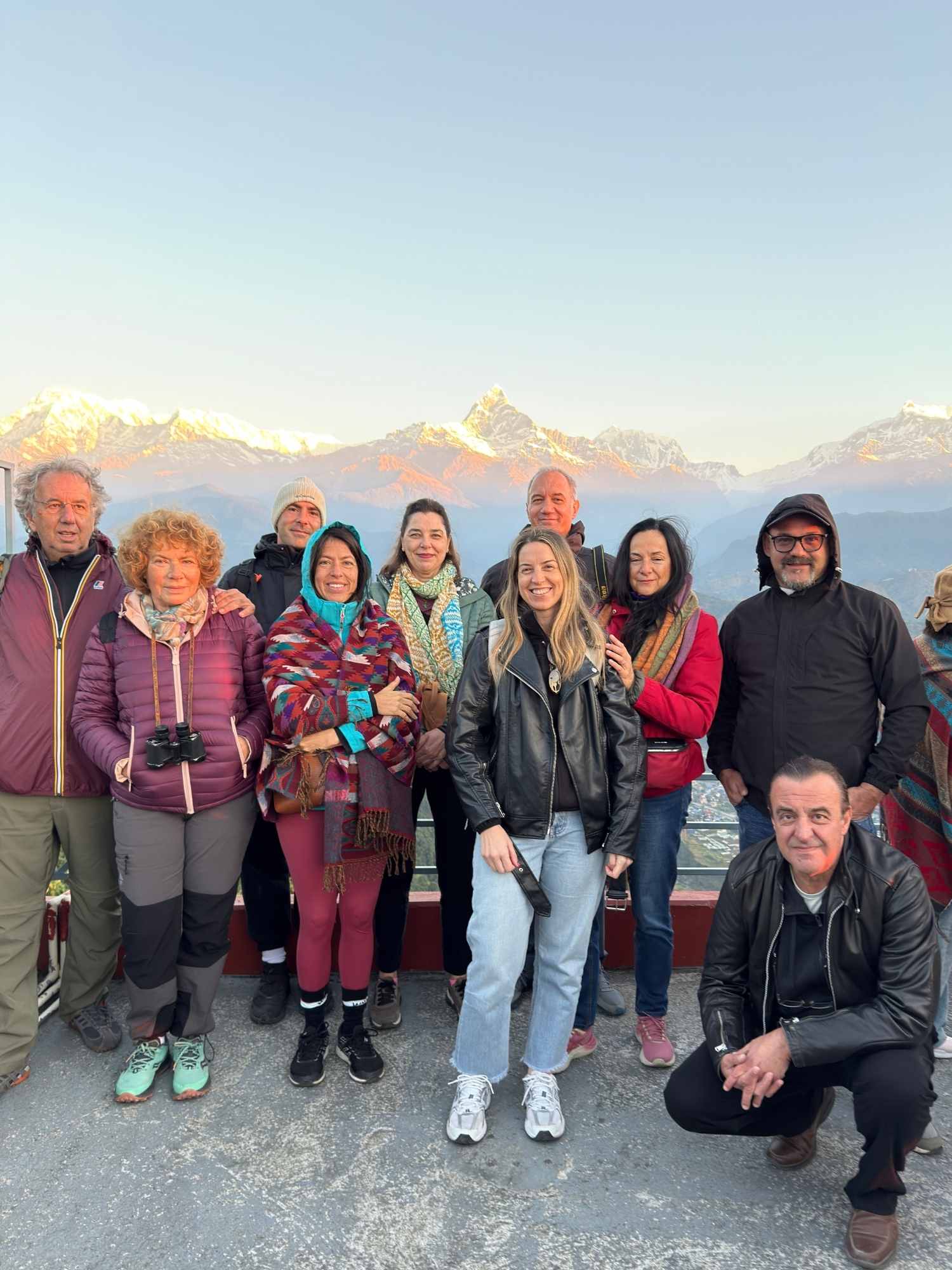
This is what makes Mardi Himal extraordinary, and it is why I include it among the journeys I design for travellers who have already seen the obvious and now want the intimate. The trail moves from dense, dripping rhododendron forest — impossibly green, hung with moss and birdsong — up through a transition zone of twisted trees and drifting cloud, and finally out onto open alpine meadow where the world simply opens. Machhapuchhre fills the sky ahead of you, so close it seems unreasonable. Annapurna South and Hiunchuli line up to the west. Behind, the green valleys of the middle hills roll away toward the haze of the lowlands.
It is a short trek by Himalayan standards — four to five walking days to the High Camp and the viewpoint at roughly 4,500 metres. But brevity here is not a compromise. It is a luxury in itself. Mardi Himal gives you the full grammar of a great Himalayan journey — forest, ridge, meadow, summit panorama — without demanding three weeks and a tolerance for hardship. For the discerning traveller with limited time and uncompromising standards, that equation is close to perfect.
What "Luxury" Truly Means at Altitude
I want to be precise about a word that the travel industry has worn almost to meaninglessness. When I speak of a mardi himal luxury trek, I am not describing a marble bathroom carried up a mountain. Luxury at altitude is something subtler and, frankly, harder to deliver.
It is the private guide who has walked this ridge two hundred times and knows exactly which morning the cloud will lift and which it will not — and adjusts your entire day accordingly. It is the porter team that moves ahead so that you carry nothing but your own curiosity. It is the boutique lodge in Pokhara with a view of Phewa Lake on the night before and the night after, so that the trek is framed by genuine comfort rather than a grim bus station. It is the dedicated cook who travels with you, preparing fresh, beautifully presented meals at 3,500 metres while you watch the alpenglow fade from the peaks.
And on the highest nights, where the simple ridge lodges reach the limits of what a building can offer, it is the option of a fully serviced mobile camp — heated sleeping tents, proper bedding, en-suite facilities, a dining marquee lit against the dark — so that the one element most travellers accept as the price of altitude, discomfort, is quietly removed. This is the philosophy that runs through every itinerary I create: that the mountains should be met from a place of ease, because only then is the mind free to actually receive them.
This is what I call experiential wealth. Not the accumulation of comfort for its own sake, but the use of comfort to make profound experience possible. The two are not in opposition. Done well, they are the same thing. You can read more about how I think about this in the story behind Elysian Himalaya.
The Journey, Day by Day
Every Elysian journey is bespoke, and I never run the same trek twice in exactly the same way. But the architecture of a Mardi Himal luxury trek tends to follow a rhythm I have refined over many seasons.
The Approach: Pokhara and the Forest
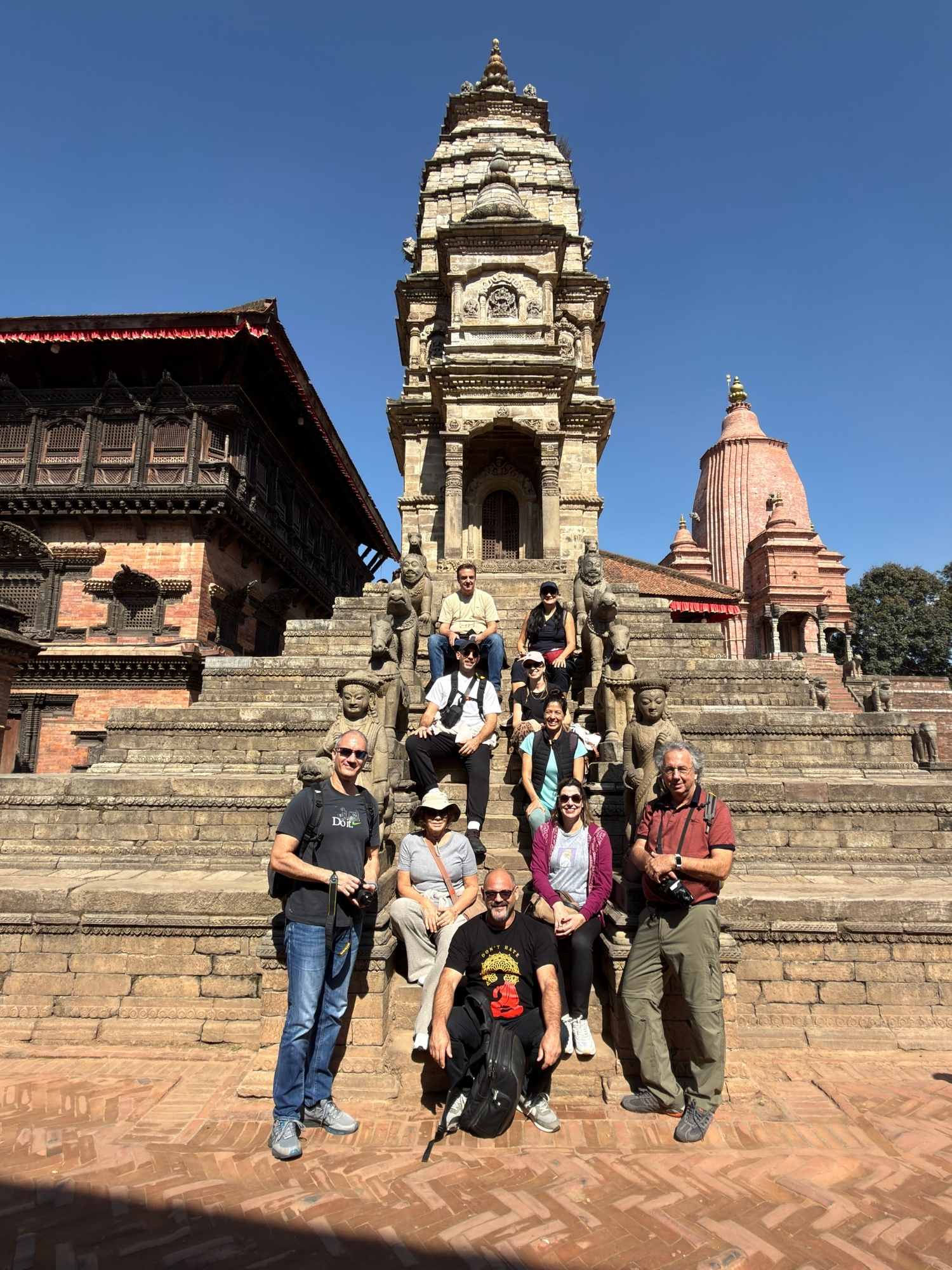
It begins in Pokhara, the lakeside city that is Nepal's gentlest place to acclimatise to the idea of the mountains. A night in a boutique property above Phewa Lake. A slow morning. Then a short private transfer to the trailhead, where the forest closes around you almost immediately.
The first day belongs entirely to the rhododendron forest, and in spring it is one of the most beautiful walks in Nepal — the canopy ablaze with red and pink and white blossom, the light falling green and gold through the leaves. You climb steadily but never brutally, and you sleep that first night at a forest camp where the only sounds are insects and the distant complaint of a river.
The Ridge: Into the Light
The second and third days are the heart of the journey. The forest thins, the trees grow stunted and strange, and then, without much warning, you step out of the trees and onto the open ridge — and the entire western Himalaya is simply there.
This is the moment I live for as a designer of journeys. I have watched travellers fall completely silent at this point, and I have learned never to fill that silence. We move from Low Camp to High Camp slowly, with time built in for the body to adjust and for the eye to learn the mountains' names. Machhapuchhre dominates everything — the fish-tail peak, sacred to the Gurung people, perpetually forbidden to climbers, and all the more magnificent for being untouched.
The Summit Viewpoint: First Light
The final ascent to the Mardi Himal viewpoint begins in darkness. You walk by headlamp along the narrowing ridge, the cold sharp and clean, the stars still hard overhead. And then the sky behind Machhapuchhre begins to pale, and the first light strikes the summit, and for perhaps twenty minutes the entire range burns gold and rose before settling into the white of full day.
There is no photograph that does it justice. I have stopped trying to take them. It is a thing to be stood inside of, not captured — and it is the single reason I send travellers up this particular ridge rather than any of the more famous ones.
Who Mardi Himal Is For
I am careful about who I recommend this journey to, because matching the traveller to the mountain is the whole of my craft. Mardi Himal is, in my view, the ideal first serious Himalayan trek — and also a connoisseur's choice for those who have done the famous routes and want something quieter and more refined.
It suits the traveller who values privacy over prestige, who would rather have an empty ridge at sunrise than a crowded base camp, and who has perhaps a week to give to Nepal rather than a month. It rewards reasonable fitness without demanding the punishing endurance of an Everest or Kanchenjunga expedition. And because it can be tailored so completely, it works beautifully as a couples' journey, a milestone celebration, or a personal threshold — the kind of trip people take when something in their life is turning over.
If you are weighing it against the region's other great walks, my Annapurna luxury trek offers the deeper, longer immersion, while Mardi Himal is the precise, jewel-like alternative. Many of my travellers, having walked one, return for the other.
The Elysian Difference
What separates a Mardi Himal luxury trek from a standard teahouse trek is not a single grand feature. It is a hundred small decisions, each made in the traveller's favour.
It is choosing the boutique lodge over the convenient one. It is the private guide rather than the group leader shepherding fifteen strangers. It is the flexibility to wait an extra hour for the cloud to clear, or to leave an hour early to have the viewpoint to yourselves. It is the seamless logistics that mean you never queue, never wait at a permit office, never wonder where tonight's bed will be. And it is the curation of the whole experience — from the helicopter return option that spares you the long descent and delivers you to Pokhara in twenty extraordinary minutes, to the spa treatment waiting at the end, to the dinner that celebrates what you have just done.
I build all of this myself, for each traveller, by hand. I have walked these trails, slept in these lodges, eaten at these tables, and I will not put a traveller anywhere I have not been. That is the promise. You can see the full range of journeys I design across our destinations, and for those who want the absolute pinnacle of Himalayan travel — private helicopters, the most exclusive lodges, access ordinary itineraries cannot reach — there is the Ultimate journey.
The Best Time to Walk the Ridge
Mardi Himal has two seasons of real magic. Spring, from March to early May, brings the rhododendron forests into full, riotous bloom and offers warm days and generally clear mornings. Autumn, from late September through November, delivers the crispest air and the sharpest mountain views of the year, the monsoon dust washed entirely from the sky.
I tend to steer travellers toward the shoulders of these seasons — late March, or mid-November — when the trail is at its emptiest and the light at its most generous. Winter is possible for the hardy and well-supported, with snow on the high ridge and a profound stillness, but it asks more of the traveller. The monsoon months are best avoided; the views vanish into cloud, and the forest paths turn to mud.
A Personal Word
I came to Nepal from Greece, and like many before me I expected to visit and instead found a place I could not leave. The Himalayas rearrange your sense of scale — of what a mountain is, of what a day can hold, of what matters. Mardi Himal, more than almost any trek I know, distils that into something a traveller can receive in a single, unhurried week.
It is not the highest trek, nor the most famous, nor the most demanding. It is something rarer: the most quietly perfect. A ridge, a sacred peak, a sunrise, and the kind of silence you carry home and keep for years.
Walk the Hidden Ridge
If something in this has reached you — if you can already feel the cold morning air and see the first light on Machhapuchhre — then let us begin. Every journey I create starts with a conversation, not a brochure: who you are, what you are seeking, and how you want to feel when it is over.
Begin designing your bespoke Mardi Himal journey, and let me build for you the most refined walk in the Annapurnas — a week on the hidden ridge that you will measure other journeys against for the rest of your life.