Nepal Cultural Immersion: The Art of Experiencing a Living Civilisation in Extraordinary Comfort
There is a particular kind of silence that settles over Bhaktapur's Durbar Square just before dawn. The pigeons have not yet stirred. The brass bells of the temples hang motionless. And then — a single oil lamp appears in a doorway, carried by hands that have performed this same ritual for forty years, lighting the way to a shrine that has stood for six centuries.
This is Nepal at its most profound. Not the Nepal of summit flags and adventure brochures, but a Nepal that breathes through its ceremonies, its woodcarvings, its hand-ground spice pastes, its thangka paintings executed with brushes made from a single sable hair. It is a civilisation that never stopped living — and experiencing it from the inside, with the depth and access that only bespoke travel can provide, is what transforms a journey from impressive to indelible.
Why Cultural Immersion Is the Future of Luxury Travel
The global conversation around luxury travel has shifted decisively. The most discerning travellers no longer measure a journey by thread count or star ratings. They measure it by transformation — by what they understood afterwards that they could not have understood before.
Nepal is uniquely positioned for this shift. Unlike cultural destinations that have been preserved under glass for tourist consumption, Nepal's heritage is stubbornly, magnificently alive. The Newari metalworker casting a Buddha statue in the lost-wax method is not performing for visitors. He is fulfilling an order for a monastery in Lumbini. The Tharu grandmother preparing dhikri in her Chitwan kitchen is not running a cooking class. She is feeding her family the way her grandmother taught her.
The luxury, then, is not in observing. It is in being invited inside.
The Kathmandu Valley: A Living Museum You Can Step Into
Bhaktapur — The City That Time Chose to Keep
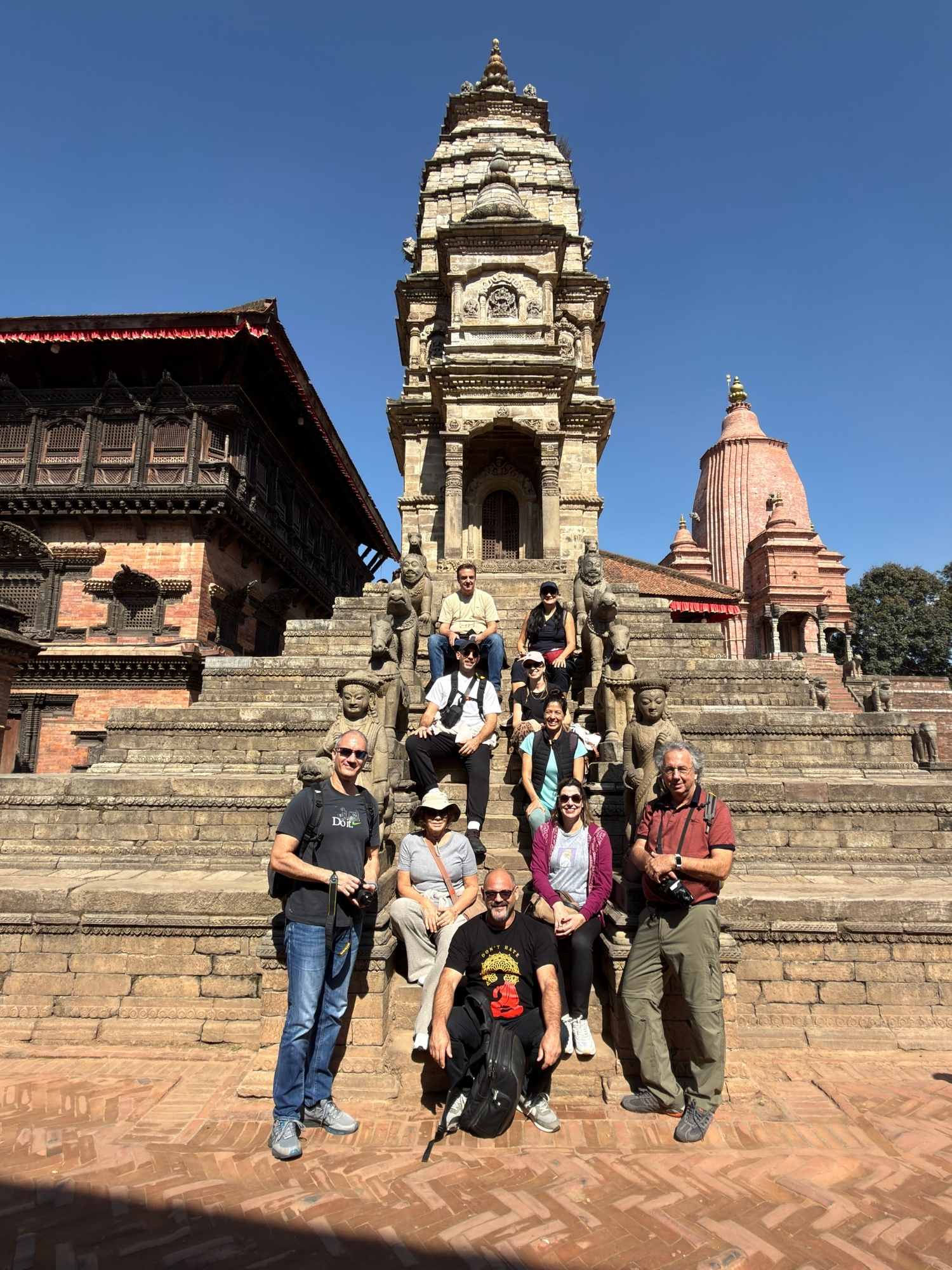
Bhaktapur is often called a living museum, but that phrase undersells it. A museum is static. Bhaktapur is an ongoing argument between the 15th century and the 21st — and the 15th century is winning.
With a private cultural guide arranged through Elysian Himalaya, you don't merely walk past the Peacock Window or the Nyatapola Temple. You sit with the master woodcarvers of Tachupal Tole and watch them work — not as a spectator behind a rope, but as a guest in their workshop. You learn that the 56 carved struts of Dattatreya Temple each tell a different story, and your guide knows every one.
In the evening, a private dinner is arranged in a restored Newari courtyard. The menu is not fusion or hotel-adapted: it is authentic Newari cuisine — choila, bara, yomari — prepared by a family that has been cooking these recipes for generations. The brass plates are hand-hammered. The rice wine is home-brewed. The conversation, if you're fortunate, turns to the old festivals, and suddenly you understand that every dish on this table has a story older than most European nations.
Patan — Where Art Is Not Decoration but Devotion
Patan (Lalitpur) is the artistic heart of the Kathmandu Valley, and its metalwork tradition is considered among the finest in Asia. The statues of Patan are not souvenirs. They are devotional objects of extraordinary technical sophistication, cast using techniques that have been refined over a thousand years.
An Elysian Himalaya cultural immersion includes a private session with a master patan metalsmith — a "repoussé" artisan whose family has been creating sacred statuary for generations. You watch as molten metal becomes, over hours and days, a Tara or Avalokiteshvara of breathtaking precision. This is not a demonstration. This is a window into a lineage.
For those who wish to go deeper, we arrange private access to the Patan Museum — after hours, with a curator who can decode the iconography of every piece.
Kathmandu's Hidden Temples and Private Ceremonies
The Kathmandu experience through Elysian Himalaya includes access to ceremonies and sites that most visitors never encounter. A private puja at a family shrine in the old city. A dawn visit to Pashupatinath's inner sanctum areas typically reserved for Hindu devotees, arranged through our long-standing relationships with the temple community. An evening of classical Newari music performed in a private bahal (courtyard) by musicians who play at the national level.
These are not add-ons. They are the substance of the journey.
Beyond the Valley: Cultural Depth Across Nepal
Upper Mustang — Tibetan Culture Preserved in Amber
The Ultimate Journey to Upper Mustang is, at its heart, a cultural immersion of the highest order. The walled city of Lo Manthang is one of the last places on earth where Tibetan Buddhist culture survives intact and uninterrupted.
Here, behind medieval walls that still function as they were designed to, you encounter sky-blue monasteries where monks chant texts that were old when Columbus sailed. You see cave complexes with 12th-century murals that rival anything in the Sistine Chapel for spiritual intensity, if not for scale. And because the Ultimate Journey includes private helicopter access, you arrive not exhausted from a ten-day trek but fresh, alert, and ready to absorb.
The King of Mustang — the Gyalpo — still holds court. An audience, arranged privately, is one of the most singular cultural experiences available anywhere in the world.
The Tharu Culture of the Terai
While the mountains dominate Nepal's cultural narrative, the Terai lowlands harbour their own ancient traditions. The Tharu people, indigenous to the region, have a cultural heritage that includes stick dancing, unique architectural styles, and a cuisine entirely distinct from the hill and valley traditions.
A luxury cultural stay in Chitwan combines the safari experience with genuine Tharu immersion — private evenings with Tharu elders, cooking sessions using ingredients foraged that morning, and performances of the Tharu stick dance that carry genuine ritual significance rather than tourist-show energy.
Lumbini — The Birthplace of Buddha
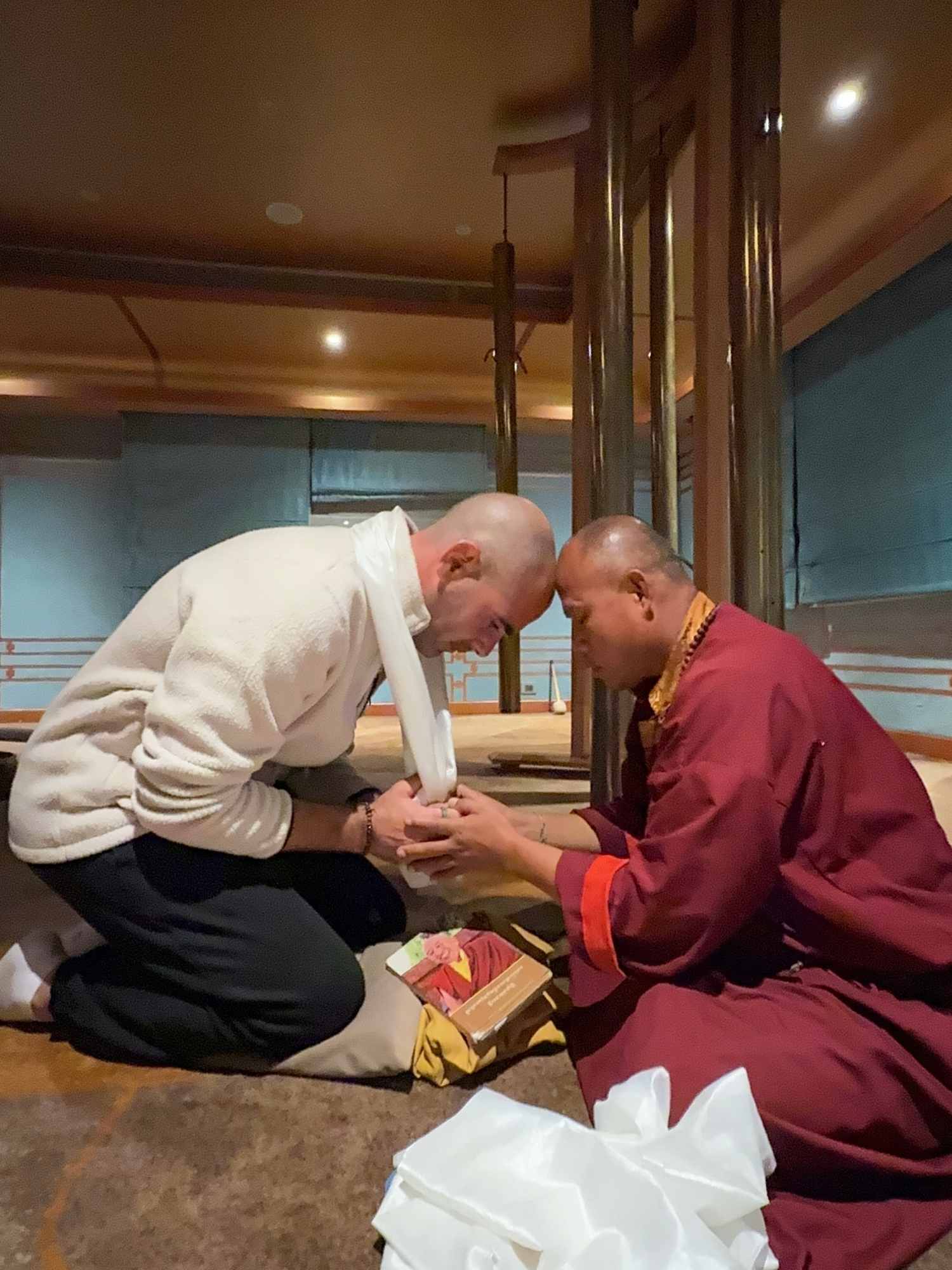
Lumbini deserves more than a checkbox visit. It deserves contemplation. Our cultural immersion programme includes a full day at the sacred garden, guided by a Buddhist scholar who can place each monument, each archaeological layer, in its proper historical and spiritual context. The experience extends to a private meditation session guided by a monk from the Theravada tradition — not performative mindfulness, but genuine practice.
The Art of Nepal: Hands-On Access to Living Traditions
Thangka Painting — Meditation Made Visible
Thangka painting is not merely art. It is a meditative practice, a form of devotion expressed through mineral pigments and gold leaf on cotton canvas. The finest thangka painters train for a decade before producing work independently.
Through Elysian Himalaya, guests receive a private masterclass with a thangka artist of national renown. Not a tourist workshop where you daub paint on a pre-drawn outline, but a genuine encounter with the philosophy, the technique, and the patience that this art form demands. You learn to grind the pigments — lapis lazuli, malachite, cinnabar. You learn why the proportions of a Buddha figure follow mathematical ratios established in ancient Indian texts. And if you wish, you begin your own small piece, which the master will complete and ship to your home.
Nepali Paper — The Medium of the Himalayas
Lokta paper, handmade from the bark of the Daphne bush at altitudes above 2,000 metres, has been Nepal's writing surface for over a thousand years. In Baglung, papermakers still follow traditional methods — soaking, beating, and sun-drying each sheet by hand.
A visit to a lokta paper workshop reveals an industry that is simultaneously ancient and thriving. The paper is exported worldwide for archival use, luxury stationery, and art prints. Guests can participate in the process and commission custom sheets.
Singing Bowls and Sound Healing
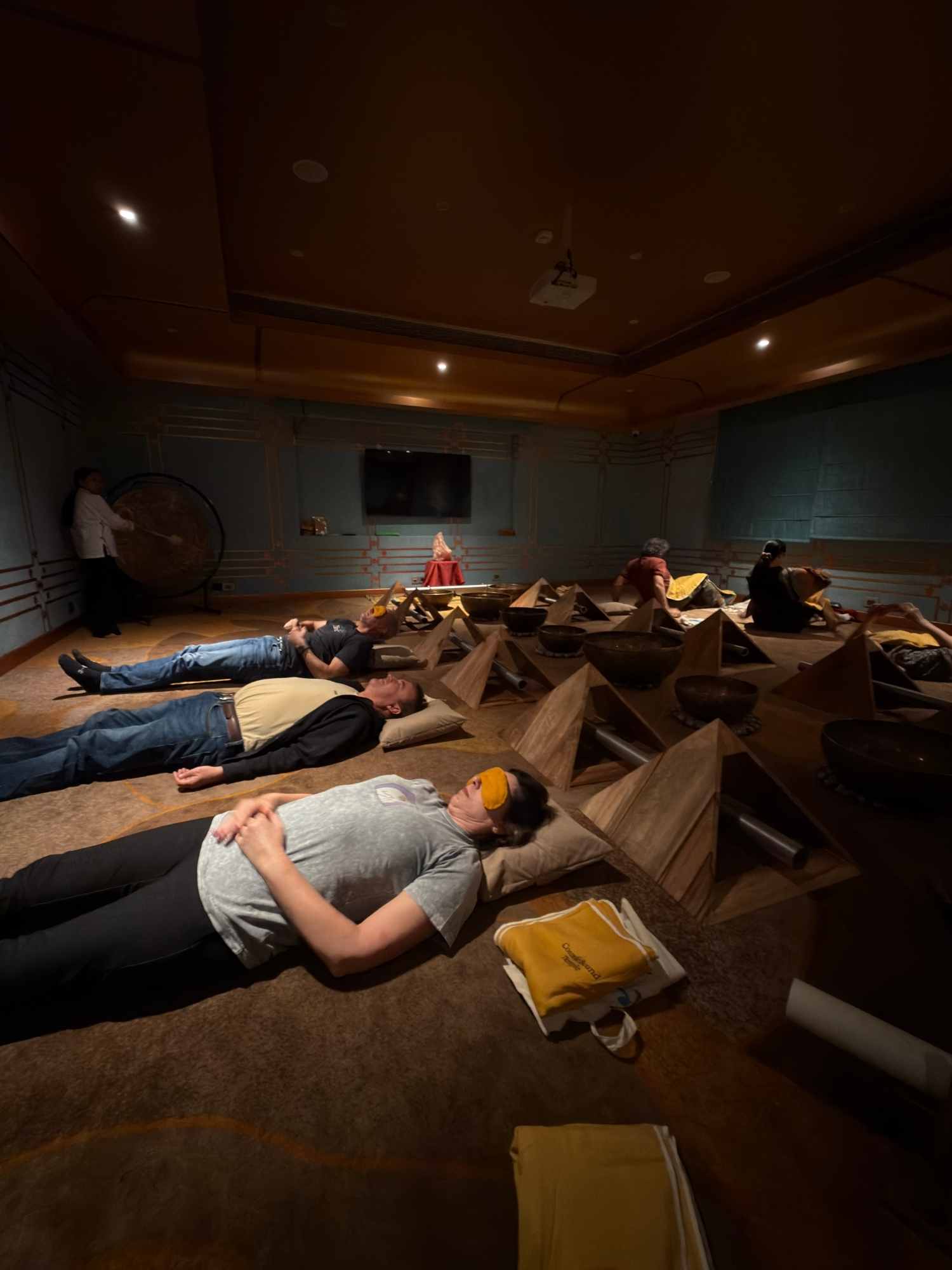
Nepal's singing bowls are not the mass-produced tourist items sold in Thamel. The authentic hand-hammered bowls — made from seven metals corresponding to the seven planets — produce overtones of extraordinary complexity. A private sound healing session with a master practitioner, conducted in a temple or monastery setting, is one of the most physically and emotionally affecting experiences available through our bespoke journey design.
Festivals: The Beating Heart of Nepali Culture
Nepal's festival calendar is among the richest in the world. Dashain, Tihar, Holi, Bisket Jatra, Indra Jatra — each offers a window into the country's living spiritual traditions.
Experiencing Festivals as an Insider
The difference between witnessing a Nepali festival as a tourist and experiencing it as a guest of a Nepali family is the difference between watching a film and living the story. Through our network of cultural hosts, Elysian Himalaya arranges festival immersions that place you inside the celebration — receiving tika during Dashain, lighting oil lamps during Tihar, being showered with colour during Holi.
These are not staged. These are real families opening their homes. The protocol is genuine. The emotions are genuine. And the memories are the kind that reshape your understanding of community, devotion, and joy.
Bisket Jatra — Bhaktapur's New Year Spectacle
For those whose timing allows it, Bisket Jatra in Bhaktapur (typically in April) is one of Nepal's most dramatic festivals. A massive chariot is pulled through the ancient streets in a tug-of-war between the upper and lower city, accompanied by nine days of ceremony, ritual, and exuberant celebration. Experiencing it from a private vantage point — a restored Newari house overlooking the processional route — is unforgettable.
Designing Your Cultural Immersion
No two cultural journeys through Nepal should be alike, because no two travellers bring the same curiosity.
Some guests are drawn to the spiritual dimension — the monasteries, the meditation, the philosophical conversations with scholars and monks. Others are captivated by the artistic traditions — the metalwork, the painting, the textiles. Still others want to understand Nepal's cultural landscape through its cuisine, its agriculture, its family structures.
The Design Your Journey process at Elysian Himalaya begins with understanding what moves you. From there, we build an itinerary that weaves cultural encounters into every day — not as scheduled "cultural activities" but as organic, flowing experiences that arise naturally from the places you visit and the people you meet.
This is what we mean by experiential wealth. Not the accumulation of sights seen, but the deepening of understanding gained. Nepal's culture is not a product to be consumed. It is a living conversation to be joined — and joining it, in comfort and with genuine access, is perhaps the most rewarding form of travel that exists.
Your Invitation
Nepal's living culture has been waiting for millennia. It will wait a little longer. But you — your time, your curiosity, your capacity for wonder — these are finite.
Begin designing your cultural immersion journey with Elysian Himalaya. Tell us what fascinates you, and we will open the doors that matter.