The Luxury Food Experience in Nepal: A Gastronomic Journey Through the Roof of the World
There is a particular kind of silence that falls over a private dining terrace in Kathmandu's Dwarika's Hotel when the last course arrives — a deconstructed yomari, its rice-flour shell impossibly delicate, filled with chaku and sesame and a whisper of Himalayan honey. Below, the courtyard's medieval woodwork glows amber in the lantern light. The Himalayas are somewhere out there in the darkness, invisible but felt, the way you feel the bass note of a cathedral organ in your chest before you hear it.
This is Nepal's culinary revelation. Not the dal bhat of the trekking lodge — though that, too, has its honest dignity — but something altogether more layered, more intentional, more alive. Nepal is rewriting its gastronomic identity, and for the discerning traveller willing to look beyond the obvious, the rewards are extraordinary.
Why Nepal's Culinary Scene Is the World's Best-Kept Secret
For decades, Nepal existed in the global imagination as a destination for altitude and adventure. The food was fuel — necessary, sometimes wonderful, but rarely the point. That era is ending.
What's emerging in its place is a culinary ecosystem of staggering depth, built on foundations that most food destinations would envy: over a hundred ethnic groups, each with distinct culinary traditions. Ingredients that grow nowhere else — Timur pepper from the middle hills, yarsagumba harvested at 4,000 metres, wild Himalayan oregano, and cheeses aged in mountain caves. A farm-to-table reality that isn't a marketing phrase but the default state of affairs in a country where smallholder farming remains the backbone of life.
The luxury food scene in Nepal isn't trying to replicate Paris or Tokyo. It's doing something more interesting: it's taking ingredients and techniques that have existed for centuries and presenting them with the care and intention they deserve.
The Newari Feast: Nepal's Most Sophisticated Culinary Tradition
If you come to Nepal and eat only one extraordinary meal, it should be Newari. The Newar people of the Kathmandu Valley have developed what is arguably South Asia's most intricate food culture — a cuisine of layered flavours, precise techniques, and deep ritual significance.
A proper Newari feast — a bhoye — is not a meal. It is an event. Served on leaf plates in a precise sequence that has remained unchanged for centuries, it can include over twenty dishes: chatamari (rice-flour crepes topped with spiced mince and egg), choila (flame-grilled buffalo marinated in Timur pepper and mustard oil), bara (savoury lentil pancakes), aila (distilled rice spirit), and thwon (a fermented rice beer that tastes like liquid gold on a warm Bhaktapur evening).
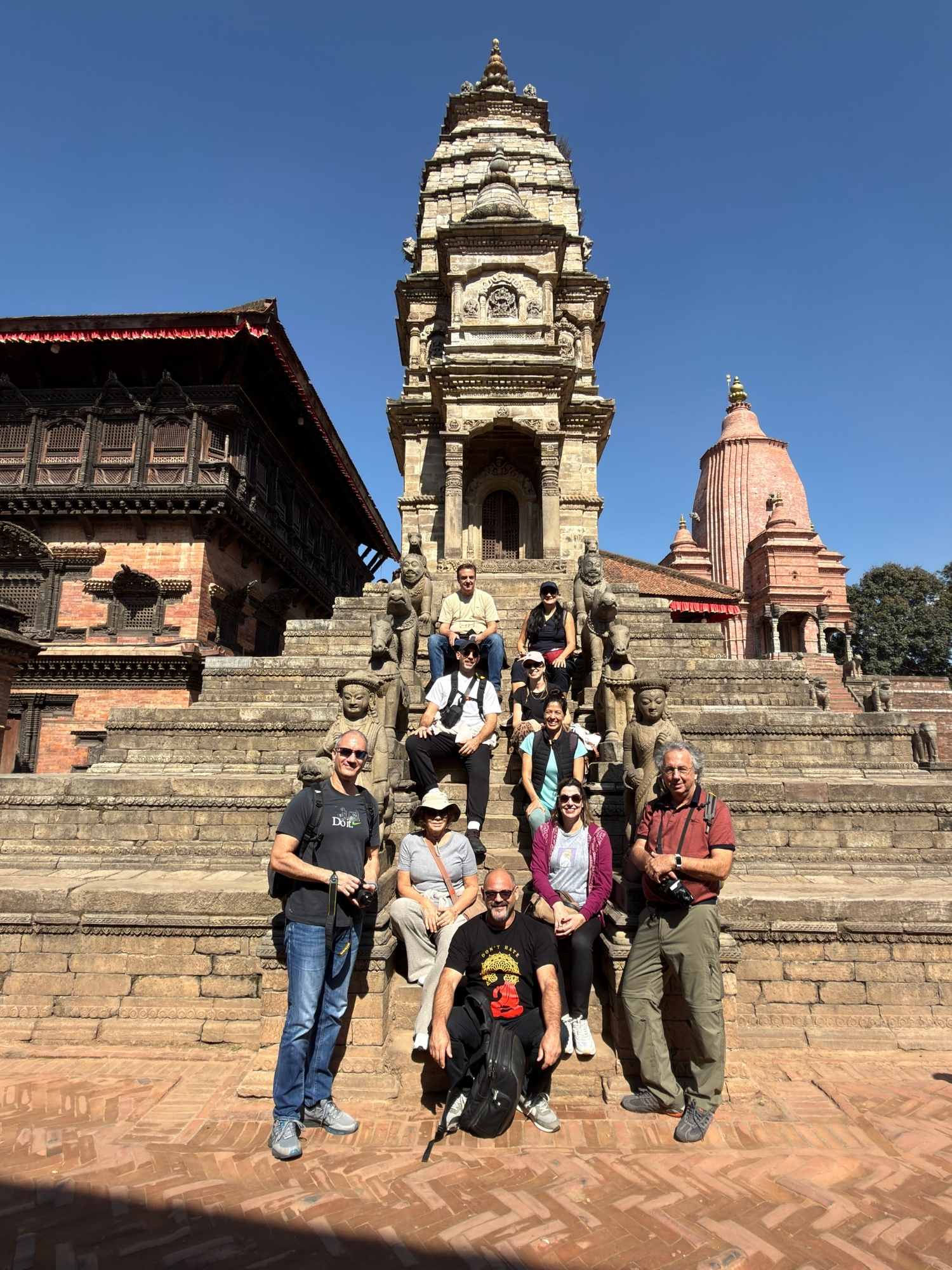
At Elysian Himalaya, we arrange private Newari feasts in heritage homes in Bhaktapur and Patan — settings where the architecture alone would justify the evening, and the food elevates it to something approaching the sacred. Your Elysian Classic Journey includes a Newari feast as a centrepiece cultural experience, because we believe you cannot understand Nepal without understanding how Newars eat.
Kathmandu's Fine Dining Revolution
The Kathmandu restaurant scene of 2026 bears little resemblance to what existed even five years ago. A new generation of Nepali chefs — many trained abroad, all fiercely proud of their culinary heritage — are creating restaurants that would hold their own in any world capital.
Where the Altitude Meets the Plate
The best of these establishments share a philosophy: Himalayan ingredients, global technique, Nepali soul. Expect dishes like slow-braised yak cheek with juniper reduction and buckwheat polenta. Or river fish from the Trisuli, cured with Himalayan pink salt and served with a pickled radish that tastes like it contains every season at once.
These aren't fusion experiments in the confused, committee-designed sense. They're the natural expression of a cuisine finding its contemporary voice — the same process that transformed Peruvian food from a regional curiosity into a global phenomenon.
Several properties we partner with offer private chef experiences where these meals are prepared exclusively for our guests, often on rooftop terraces with views that make the food taste even better than it already does.
The Himalayan Pantry: Ingredients That Define a Cuisine
Understanding Nepal's luxury food experience begins with understanding its ingredients — many of which are now commanding premium prices in international markets.
Timur Pepper (Zanthoxylum armatum)
Nepal's answer to Sichuan pepper, but with a character entirely its own. Where Sichuan pepper numbs, Timur tingles — a citrusy, electric sensation that wakes up every dish it touches. Found in the middle hills between 1,000 and 2,500 metres, it's become the signature spice of contemporary Nepali haute cuisine.
Yak Cheese and Butter
In the high-altitude regions near the Tibetan border, yak dairy products have been staples for millennia. The cheese — dense, sharp, aged in mountain air — is increasingly featured in luxury lodge dining. Yak butter tea, once an acquired taste for visitors, has been reimagined in boutique hotels as a rich, warming infusion.
Himalayan Honey
Nepal is home to the world's largest honeybee, Apis laboriosa, which produces honey at altitudes above 3,000 metres. This honey — sometimes called "mad honey" for its mild psychoactive properties in large doses — is a prized ingredient in luxury Nepali desserts and is exported as one of the most expensive honeys on earth.
Ilam Tea
From Nepal's eastern hills comes tea that rivals the finest Darjeeling — which makes sense, as Ilam sits just across the border. The best single-estate Ilam teas have a muscatel sweetness and floral complexity that have begun attracting serious attention from the international tea community. A guided tea tasting in Ilam is one of the most peaceful and civilised mornings you can spend anywhere on earth.
Farm-to-Table at Altitude: The Lodge Dining Experience
One of the most distinctive aspects of Nepal's luxury food scene is what happens outside Kathmandu — at the high-end lodges that serve as base camps for Elysian Premium Journey guests.
At the best of these properties, meals are composed almost entirely from ingredients sourced within walking distance. Kitchen gardens supply herbs and vegetables. Local farmers deliver grain and dairy. The proteins — typically chicken, goat, and river fish — come from the surrounding valleys.
This isn't a marketing conceit. In many of these locations, there is simply no industrial food supply chain. The result is cooking of an immediacy and freshness that most farm-to-table restaurants in Western cities can only approximate. When your morning eggs were laid an hour ago, and the greens in your salad were picked while you were in the shower, you taste the difference.
The lodges along the Annapurna circuit and in the Everest region have particularly invested in elevating their culinary offerings, recognising that today's luxury trekker expects the food to match the views.
The Private Chef Experience: Dining as Ceremony
For guests on the Elysian Ultimate Journey, we offer what we consider the pinnacle of Nepal's culinary potential: a private chef experience that unfolds over the course of your entire journey.
This isn't a single dinner. It's an ongoing relationship with a chef who understands both Nepali cuisine and your personal palate — someone who sources ingredients in each location you visit, who tells the story of each dish, who adjusts the menu based on your reactions to previous meals.
In Kathmandu, this might mean a rooftop dinner featuring reinterpretations of classical Newari dishes. In Pokhara, a lakeside lunch built around freshwater fish and the produce of the Seti River valley. At altitude, warming broths and high-protein dishes designed to fuel and nourish simultaneously.
The chef becomes, in effect, another guide — someone who reads the country through flavour and teaches you to do the same.
Cooking Classes: Learning the Language of Nepali Food
For travellers who want to go beyond eating to understanding, immersive cooking experiences offer a profound entry point into Nepali culture. The best of these are not tourist cooking classes — they're intimate sessions with home cooks and professional chefs who share not just recipes but the cultural logic behind them.
Why is dal bhat eaten twice a day? Because it's a complete protein that fuels hard physical work in a way no other meal can. Why are certain dishes served at weddings and others at funerals? Because Nepali food is inseparable from Nepali cosmology — every spice, every preparation method, every serving order carries meaning.
These classes often take place in family homes, adding a layer of authentic connection that no restaurant can replicate. You don't just learn to cook momos; you learn who makes them, and why, and what they mean.
The Beverage Landscape: Beyond Tea
Nepal's drink culture extends well beyond its famous teas. The country has a growing craft beverage scene that complements its culinary evolution.
Nepali wine — yes, it exists — is produced in small quantities in the Kathmandu Valley and is improving rapidly. Craft beer has exploded in Kathmandu, with breweries producing everything from Himalayan wheat ales to Timur-infused IPAs. And traditional spirits like aila and raksi are being rediscovered by a new generation of bartenders who treat them with the respect they deserve.For our guests, we curate beverage pairings that tell a parallel story to the food — local wherever possible, always thoughtful, never an afterthought.
A Gastronomic Itinerary: How to Eat Your Way Through Nepal
For the traveller who wants to make food a central pillar of their Nepal experience, here's what an ideal culinary journey might look like:
Day 1-3: Kathmandu Valley — Heritage dining in Dwarika's or Baber Mahal. Private Newari feast in Bhaktapur. Market tour of Asan Bazaar with a chef guide. Fine dining at one of the city's new-wave restaurants. Day 4-5: Pokhara — Lakeside lunch with Annapurna views. Visit to local organic farms. Cooking class featuring Gurung cuisine. Day 6-8: High-Altitude Lodges — Lodge-to-table dining. Yak cheese tasting. Himalayan honey pairing. Sunrise breakfast at altitude. Day 9-10: Chitwan or Ilam — Tharu cuisine (if Chitwan). Tea estate experience (if Ilam). Farewell dinner featuring the journey's greatest hits.This is exactly the kind of bespoke itinerary we build for our guests. Every meal is a chapter in the story of Nepal, and every chapter is worth reading slowly.
The Future of Nepal's Culinary Identity
Nepal's food story is just beginning to be told internationally. The US-Nepal Gastronomy Exchange, launched in recent years, has brought Nepali chefs to global stages. The Nepal Tourism Board has made gastronomy tourism a strategic priority. And the young chefs returning from training in Europe and Asia are building something genuinely new — a cuisine that honours its roots while reaching for the global conversation.
For the luxury traveller, this represents a rare opportunity: to experience a culinary scene at the moment of its emergence, before the world catches on and the reservation lists grow long. Nepal's food is having its moment. The question is whether you'll be there to taste it.
Begin Your Culinary Journey
At Elysian Himalaya, food is never an afterthought — it's woven into the fabric of every journey we design. Whether you're drawn to the ancient sophistication of Newari cuisine, the purity of high-altitude farm-to-table dining, or the intimacy of a private chef experience, we build your gastronomic story around your curiosities and your palate.
Every journey is different, because every traveller tastes the world differently. Tell us what moves you, and we'll design a Nepal that feeds not just the body but the imagination.
Begin designing your journey →