The Moment Everything Changes
There is a precise instant — about eight minutes after takeoff from Kathmandu — when the haze of the valley falls away and the Himalayas reveal themselves. Not as a postcard. Not as a photograph you've seen a thousand times. But as a wall of white so massive, so improbable, so present that your mind simply stops trying to process it and starts, instead, to surrender.
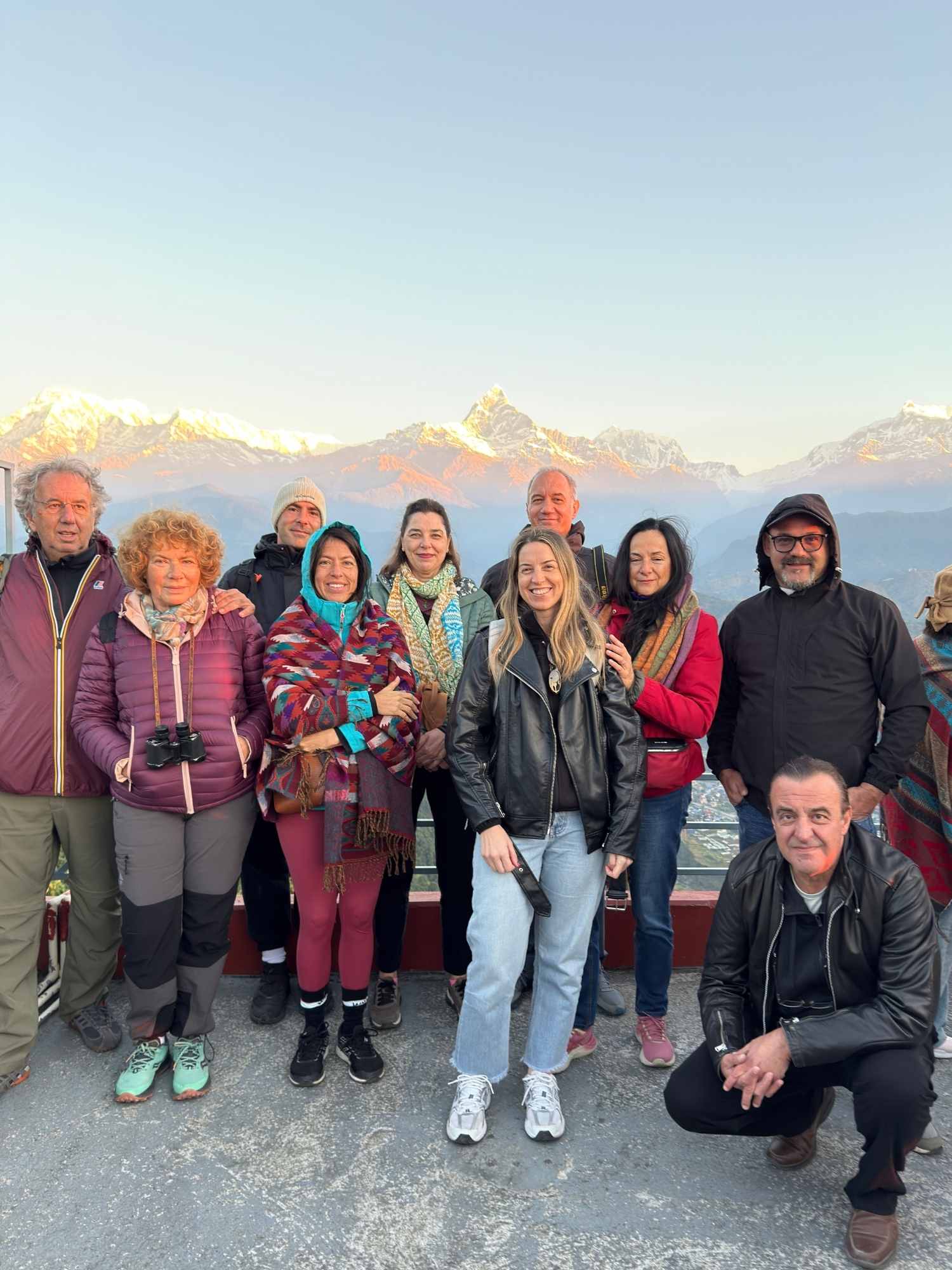
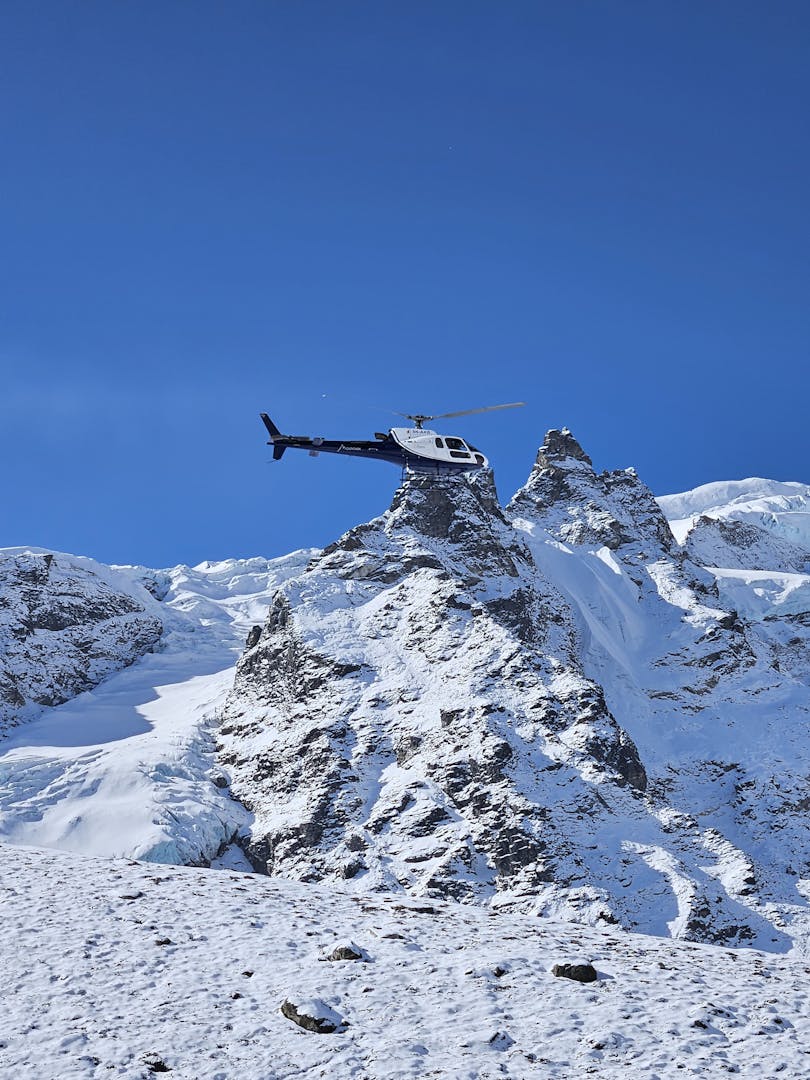
This is what a private helicopter tour in Nepal offers that no trek, no viewpoint, no five-star terrace ever will: the full, unmediated confrontation with scale. Eight of the world's fourteen highest peaks, arrayed before you in a panorama that stretches from horizon to horizon. And beneath the rotors, silence — or rather, the particular hum that becomes silence when your mind empties itself before immensity.
I have lived between Athens and Kathmandu for over a decade. I have trekked the trails, driven the mountain roads, watched the sunrise from every altitude. And I will tell you this without hesitation: nothing prepares you for seeing the Himalayas from the air. It is not a better version of what you've experienced on the ground. It is an entirely different encounter.
Why Private Changes Everything
The Difference Between Shared and Sovereign
Nepal has offered helicopter tours for years. The shared versions — five passengers crammed into an AS350, following a fixed route on a fixed schedule — are impressive enough. You see Everest. You take photographs. You land at a predetermined point, spend exactly fifteen minutes on the ground, and fly back. It is efficient, affordable, and ultimately forgettable.
A private helicopter tour operates on different principles entirely. You choose the route. You decide when to hover, when to land, when to circle back because the light on Annapurna's south face just shifted into something extraordinary. Your pilot — and in Nepal, the best pilots are artists of altitude — responds to your curiosity rather than a timetable.
This is the distinction that separates tourism from experience: the ability to respond to the moment. And in a landscape as dynamic as the Himalayas, moments arrive constantly. A cloud formation parting to reveal Makalu. A glacier lake turning turquoise in the morning sun. A herd of blue sheep on a ridge that you notice only because you weren't rushing past.
The Routes That Define Himalayan Aviation
Nepal's helicopter routes read like a catalogue of the sublime. Each offers something distinct, and the luxury lies in choosing — or combining — them according to your desires.
Everest Base Camp and Kalapatthar (5,250m). The iconic route. From Kathmandu, you fly east along the Himalayan range, passing Langtang and Gaurishankar before the Khumbu Valley opens below. The landing at Kalapatthar offers a perspective reserved for those who otherwise spend twelve days trekking: Everest, Lhotse, Nuptse, and Ama Dablam forming a cathedral of ice and rock around you. On a private charter, you can extend your time on the ground, walk the moraines, breathe the thin air at your own pace. Annapurna Base Camp (4,130m). A different character entirely. The Annapurna Sanctuary is a natural amphitheater — a cirque of peaks surrounding a glacial basin that feels like standing inside the earth's architecture. The approach from Pokhara takes you over Machapuchare, the sacred "Fish Tail" mountain that has never been summited, and into a silence broken only by the occasional crack of ice. Upper Mustang — The Forbidden Kingdom (3,800m). This is where private helicopter access becomes not a luxury but a revelation. The overland journey to Upper Mustang takes days through the world's deepest gorge. By air, you are transported in forty minutes from the 21st century into a medieval Tibetan kingdom that time forgot. Our Elysian Ultimate Journey was designed around this exact capability — the compression of distance that allows you to arrive rested, present, and ready to engage with a culture that rarely opens itself to outsiders. Langtang Valley (3,500m). The overlooked gem. North of Kathmandu, Langtang offers pristine wilderness, Tamang villages untouched by mass tourism, and glacial landscapes that rival anything in the Khumbu. A helicopter approach turns a week-long trek into a single extraordinary day, with multiple landings at villages where your arrival is an event, not a routine. Gosaikunda Sacred Lake (4,380m). An alpine lake held sacred by both Hindus and Buddhists, surrounded by peaks and charged with spiritual significance. By helicopter, this pilgrimage site — usually reached only after days of strenuous hiking — becomes accessible as a profound half-day experience. Rara Lake — Far Western Nepal (2,990m). Nepal's largest lake sits in the remote far west, surrounded by virgin forests and visited by almost no one. A private helicopter is the only practical way to reach it, making this arguably the most exclusive scenic experience in the entire country.The Art of Aerial Curation
Designing Your Route
The real luxury of a private helicopter tour is not the aircraft. It is the curation. Anyone can charter a helicopter. The question is: what will you do with that freedom?
At Elysian Himalaya, we design helicopter experiences as integral elements of larger journeys — not as isolated spectacles, but as transitions between dimensions of Nepal. A morning flight to Everest Base Camp becomes the opening movement of a day that continues with a private lunch in a Sherpa village and an evening meditation at a monastery that receives no other visitors.
This is what I mean by experiential wealth. The helicopter is a tool. The experience is in what it connects.
Combining Air and Ground
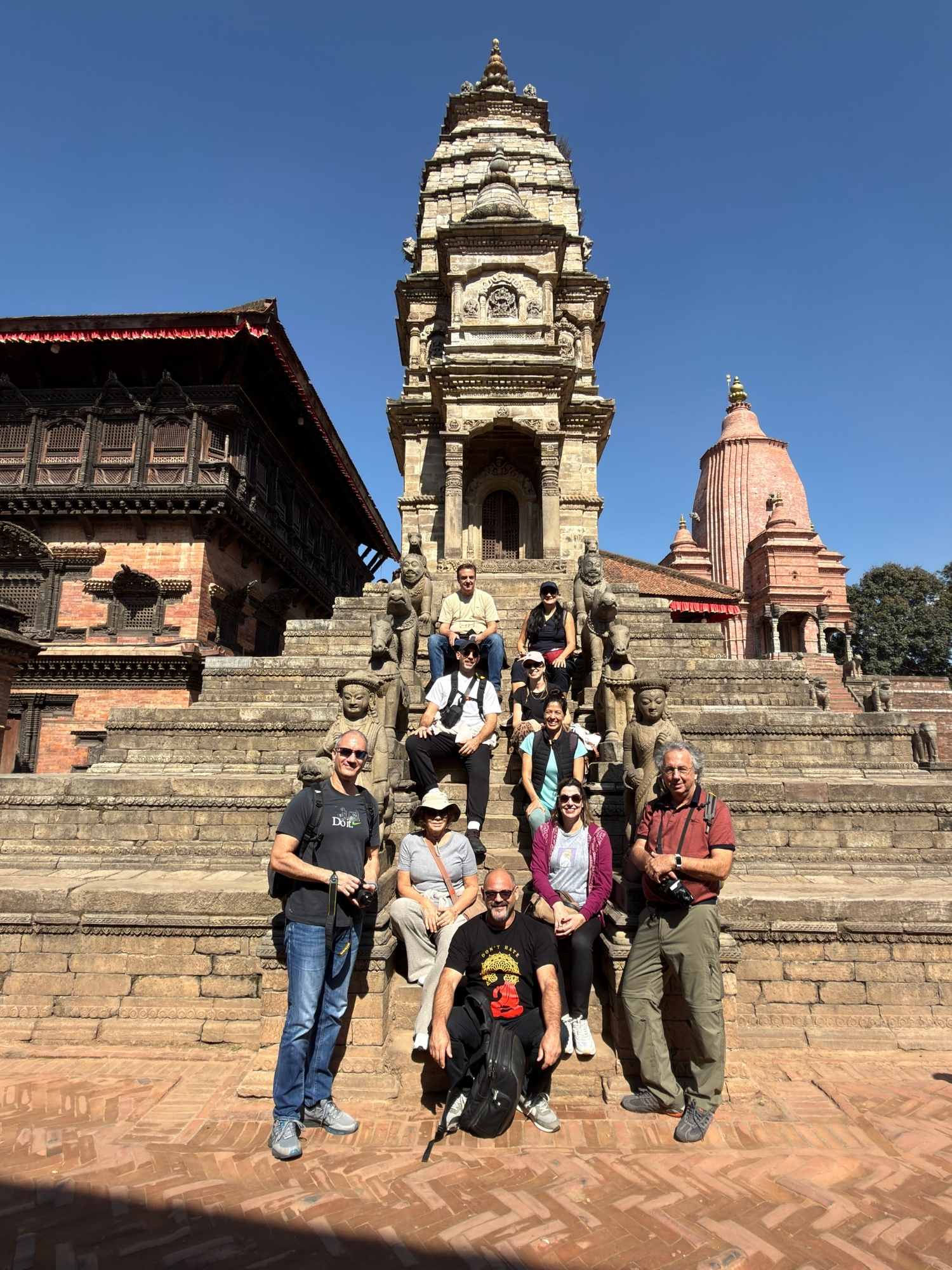
The most compelling Nepal journeys weave helicopter access into a fabric of ground-level immersion. Consider the architecture of our Premium Journey: you spend days in the Kathmandu Valley, walking medieval streets, sitting with artisans, participating in ceremonies. You absorb Nepal at human pace. Then, one morning, you lift off — and everything you've learned on the ground takes on new meaning as you see it from above. The rice terraces become geometry. The rivers become silver threads. The mountains become not obstacles but companions.
The return to ground level after a helicopter experience is itself transformative. You walk differently. You see differently. The landscape has revealed its secrets, and you carry them as you continue your journey through the Classic or Premium itinerary.
Practical Matters: What You Need to Know
Costs and Charter Options
Private helicopter charters in Nepal range from USD 2,500 to USD 5,500 per hour, depending on the aircraft, route, and season. For reference:
| Route | Duration | Approximate Cost (Private) |
|---|---|---|
| Kathmandu → Everest Base Camp → Return | 4-5 hours | USD 4,000–5,500 |
| Pokhara → Annapurna Base Camp → Return | 2-3 hours | USD 2,500–3,500 |
| Kathmandu/Pokhara → Upper Mustang | 1-2 hours | USD 2,500–4,000 |
| Kathmandu → Langtang Valley → Return | 2-3 hours | USD 2,500–3,500 |
| Kathmandu → Gosaikunda → Return | 1.5-2 hours | USD 2,000–3,000 |
These figures reflect 2026 pricing for an AS350 or similar aircraft accommodating up to five passengers. For couples, the per-person cost is naturally higher — but the exclusivity is absolute.
Within our Elysian journeys, helicopter access is integrated into the overall experience rather than priced as a standalone add-on. This means the transition between ground and air feels seamless rather than transactional.
Safety and Operators
Nepal's helicopter safety record has improved dramatically over the past decade. The operators we work with — selected through years of direct experience, not directory listings — maintain international maintenance standards and employ pilots with thousands of hours of Himalayan flying experience.
Himalayan aviation is uniquely demanding. Weather windows are precise. Altitude effects on performance are significant. The difference between a competent operator and an exceptional one is not visible on paper — it shows in the pilot's decision to delay a flight by thirty minutes because the wind at Lukla will shift, or to approach Annapurna from the east rather than the west because the morning thermals will provide a smoother, more scenic experience.
This is why we never recommend booking helicopter tours independently. The logistics of Himalayan aviation are too nuanced, and the margin between good and extraordinary too narrow, to leave to chance.
The Best Time to Fly
October–November: The clearest skies of the year. Mountain visibility is at its absolute peak. Every detail of every summit is etched against deep blue sky. This is when photographs look like paintings. March–May: Warmer temperatures mean more comfortable landings at high altitude. Spring haze can soften distant views but creates dramatic atmospheric effects — beams of light through cloud, mountains emerging from mist like apparitions. The rhododendron forests below are in full bloom, adding color to the canvas. December–February: Cold but crystalline. The air is so clear it feels artificial. Snow lines drop lower, creating maximum contrast. Fewer visitors mean more flexible scheduling and occasionally better pricing. Bring warm layers for high-altitude landings. June–August: Monsoon limits most Himalayan flying, but Upper Mustang sits in a rain shadow and remains accessible. This is Mustang's secret season — green valleys, dramatic clouds, and an exclusivity that borders on solitude.Beyond the View: What Helicopter Access Makes Possible
Medical and Humanitarian Perspective
It is worth noting that helicopter infrastructure in Nepal serves purposes far beyond luxury tourism. The same aircraft and pilots that provide scenic tours are, during other hours, conducting high-altitude rescues, delivering medical supplies to villages accessible by no other means, and supporting earthquake relief operations.
When you charter a private helicopter in Nepal, you are participating in an ecosystem that sustains remote communities. The revenue from tourism flights directly subsidizes humanitarian operations. This is not a marketing point — it is a structural reality of Himalayan aviation.
Photographic Expeditions
For the serious photographer, a private helicopter offers capabilities that no other platform can match. The ability to hover, to circle, to return to a position as light changes — combined with the visual access to landscapes that no ground position provides — makes aerial photography in Nepal a category unto itself.
We have arranged helicopter charters specifically for photographers — with doors removed for unobstructed shooting, routes designed around golden-hour timing, and multiple landings at locations chosen for their compositional potential. If photography is your medium, Nepal from the air is your masterpiece waiting to happen.
Celebrations at Altitude
Anniversaries, proposals, milestone birthdays — some moments deserve settings that match their significance. A private champagne breakfast at 4,000 meters, with Dhaulagiri as your backdrop and no other human being in sight, is the kind of experience that redefines what celebration can mean.
We have designed helicopter experiences for couples marking decades together, families celebrating reunions, and individuals marking personal transformations. The Himalayas have a way of making every human occasion feel both intimate and infinite.
The Philosophy of Altitude
There is a concept in mountaineering called "the view from above" — the idea that perspective literally changes understanding. What you see from 5,000 meters is not simply more of what you see from sea level. It is a different kind of seeing altogether.
A private helicopter tour in Nepal offers this perspective without the physical ordeal that traditionally accompanies it. This is not about cutting corners or avoiding effort. It is about recognizing that the transformation happens in the seeing, not in the suffering. The Himalayas will humble you regardless of how you arrive. What a helicopter provides is the gift of arriving present — alert, responsive, emotionally available for the encounter.
This is the philosophy behind everything we design at Elysian Himalaya. Not the easiest path, but the most meaningful one. Not the most expensive option, but the one that creates the deepest resonance. Whether your journey includes a single helicopter flight or is built entirely around aerial access, the principle remains the same: every element serves the transformation.
Your Sky-High Journey Begins Here
If the idea of seeing Nepal from the air stirs something in you — not just curiosity, but recognition — then the next step is simple. Share your vision with us, and within 48-72 hours, I will design a journey that weaves helicopter access into a Nepal experience unlike anything you have encountered before.
No templates. No fixed itineraries. Just a conversation about what the Himalayas might reveal when you meet them on their own terms — at altitude, in clarity, with nothing between you and the infinite but thin air and an open heart.
Because the greatest luxury in Nepal is not what you fly over. It is what you finally see.