Luxury Photography Tours in Nepal: Capturing the Himalayas Through the Lens of Extraordinary Privilege
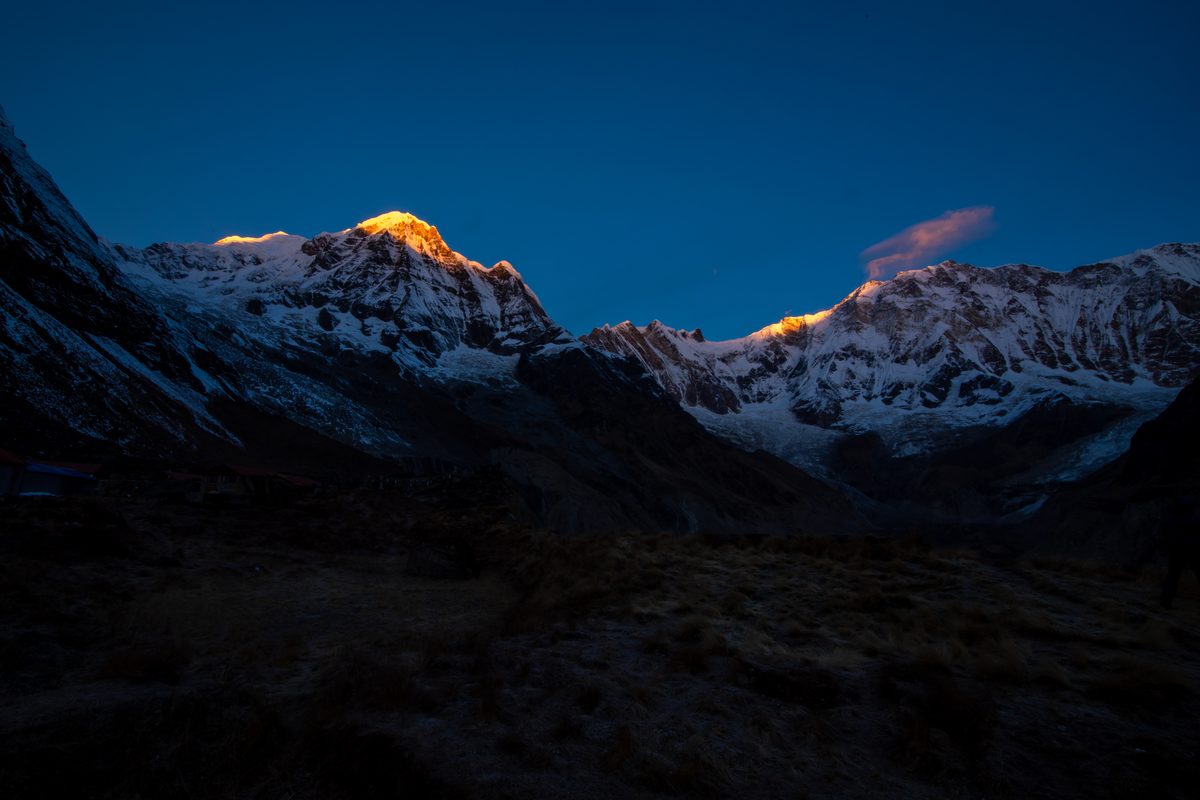
There is a particular quality of light in Nepal that exists nowhere else on earth. It arrives without announcement in the pre-dawn hours above Nagarkot, spilling like molten amber across the Langtang range. It lingers in the medieval courtyards of Bhaktapur, where a thousand years of devotion have worn the brick to a burnished warmth that seems to generate its own radiance. It falls, impossibly golden, across the rice terraces of Ghandruk as farmers move through their fields in gestures unchanged since antiquity.
For the discerning traveller who carries a camera not as a tourist's accessory but as an instrument of attention, Nepal represents the supreme subject. And a luxury photography tour — one designed with the same care a master printer gives to a platinum palladium process — transforms the act of image-making into something far more profound than documentation. It becomes a form of communion.
Why Nepal Is the World's Ultimate Photography Destination
The numbers alone are staggering. Eight of the world's fourteen peaks above 8,000 metres. Over 125 ethnic groups, each with distinct traditions, architecture, and ceremonial dress. Four UNESCO World Heritage Sites within the Kathmandu Valley alone. A vertical geography that spans from subtropical jungle to arctic wilderness within a distance shorter than most European commutes.
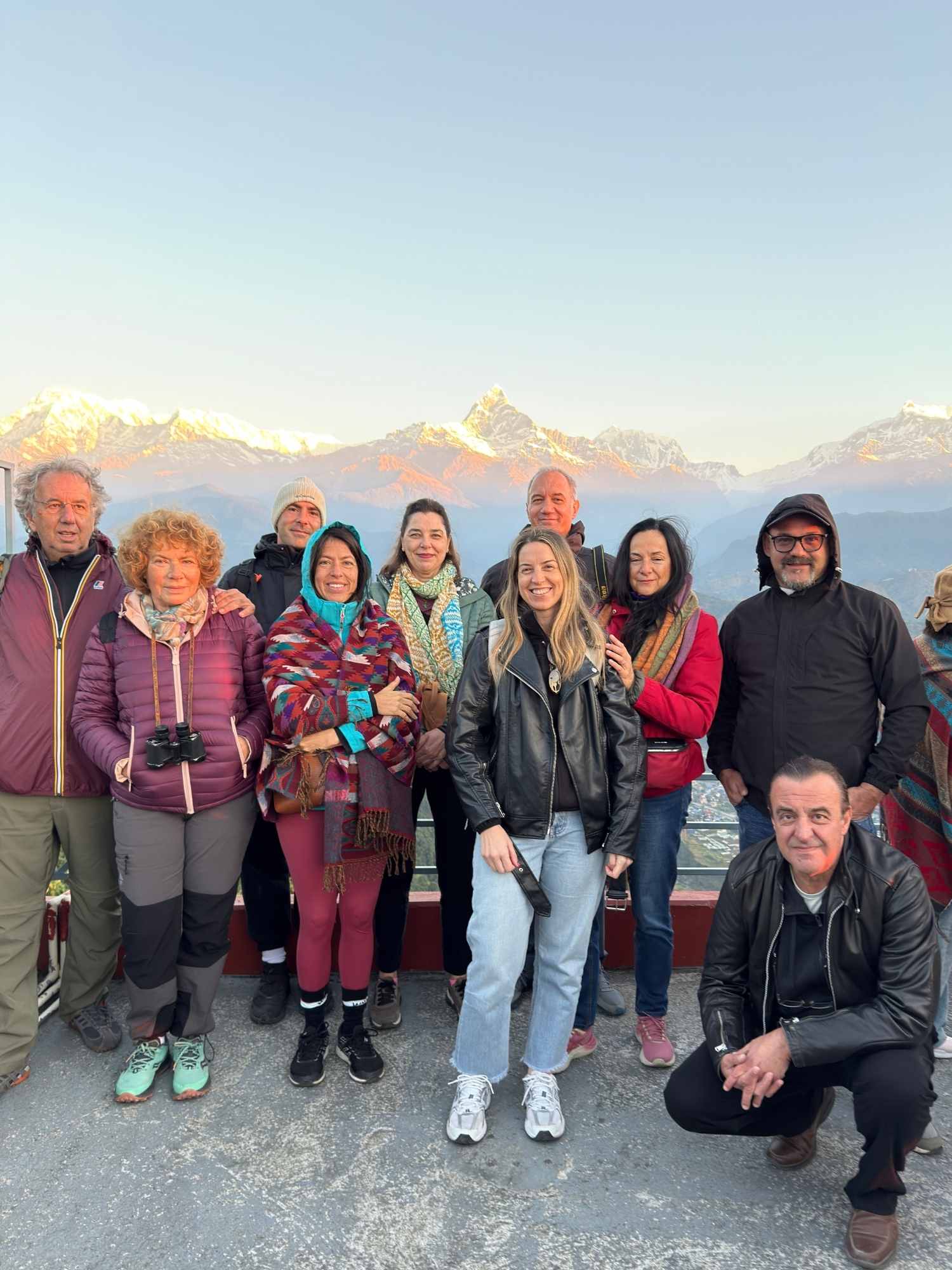
But statistics tell you nothing about what it feels like to stand on a ridge at 4,200 metres while the first light of morning turns Machapuchare from charcoal to rose quartz to blinding white in the space of twelve minutes. They cannot convey the quiet electricity of Durbar Square at dusk, when the last light catches the gilded toranas of ancient temples and the streets fill with the amber glow of butter lamps.
Nepal does not merely present scenes to be captured. It offers entire worlds to be entered.
The Light That Photographers Dream About
Professional landscape photographers speak of Nepal's light with a reverence usually reserved for the Lofoten Islands or Patagonia. The altitude strips the atmosphere of haze, producing a clarity that renders distant peaks with an almost surreal definition. The Himalayan weather patterns create cloud formations — lenticular caps on summits, fog threading through valleys — that would seem contrived if they appeared in a studio.
What makes Nepal extraordinary for photographers is the duration of the golden hours. At altitude, the low angle of the sun extends the magic hour well beyond the fleeting minutes one might enjoy at sea level. From certain vantage points, you can work in perfect warm light for an hour or more, adjusting compositions, waiting for the precise moment when cloud, light, and mountain converge.
What Makes a Photography Tour Luxury
A standard photography tour puts you in a minibus with twelve other participants, racing from location to location with just enough time to set up a tripod before the group moves on. It is the photographic equivalent of fast food — technically nourishing, spiritually vacant.
A luxury photography tour is an entirely different proposition. It is, in essence, an exercise in the art of time.
Private Access, Private Moments
The difference begins with access. When your itinerary is designed around your creative vision rather than a group consensus, doors open that remain firmly closed to conventional tours. We have arranged private dawn access to temples in Patan before they open to the public — an hour of uninterrupted shooting in spaces where the morning light pours through carved wooden screens and falls on stone floors polished by centuries of barefoot pilgrimage.
Through Elysian Himalaya's bespoke journey design, every photographic opportunity is considered and prepared for. Your personal guide — not merely a trek leader but a cultural interpreter — knows precisely when the prayer flags catch the wind at Boudhanath, when the potters of Thimi begin their morning work, when the mustard fields of the Terai are at their most luminous.
Helicopter Access to Impossible Vantage Points
Perhaps the single most transformative element of a luxury photography tour in Nepal is helicopter access. The Elysian Ultimate Journey includes private helicopter transfers that do far more than save time — they unlock perspectives that are literally impossible by any other means.
Imagine hovering at eye level with the south face of Annapurna as the first light strikes. Imagine setting down on a remote plateau in Upper Mustang, where the eroded sandstone formations create a landscape so otherworldly that every frame feels like a discovery. Imagine the doors of the helicopter removed (safety-harnessed, naturally) as you bank along the Kali Gandaki gorge — the deepest canyon on earth — with Dhaulagiri and Annapurna flanking you like sentinels.
These are not hypothetical scenarios. They are experiences we have designed and delivered for clients whose photographic ambitions demanded nothing less.
Expert Guidance Without Creative Compromise
The finest luxury photography tours pair you with a photographer-guide whose expertise enhances your vision without imposing their own. The distinction matters enormously. You are not there to recreate someone else's portfolio. You are there to discover what your eye sees when confronted with the most dramatic subject matter on the planet.
The best guides offer technical counsel when invited — suggesting a polariser for the glacial lakes, recommending a longer exposure as mist moves through the rhododendron forest — while leaving you free to compose as your instinct directs. They know the terrain intimately: the particular ridge where Everest, Lhotse, and Makalu align in a single frame, the village courtyard where the afternoon light creates a Vermeer-like interior.
The Signature Luxury Photography Itineraries
The Cultural Portrait Route: Kathmandu Valley and Beyond
For the photographer drawn to the human subject — the face weathered by altitude, the hands shaping clay, the eyes lit by devotion — the Kathmandu Valley offers an inexhaustible richness.
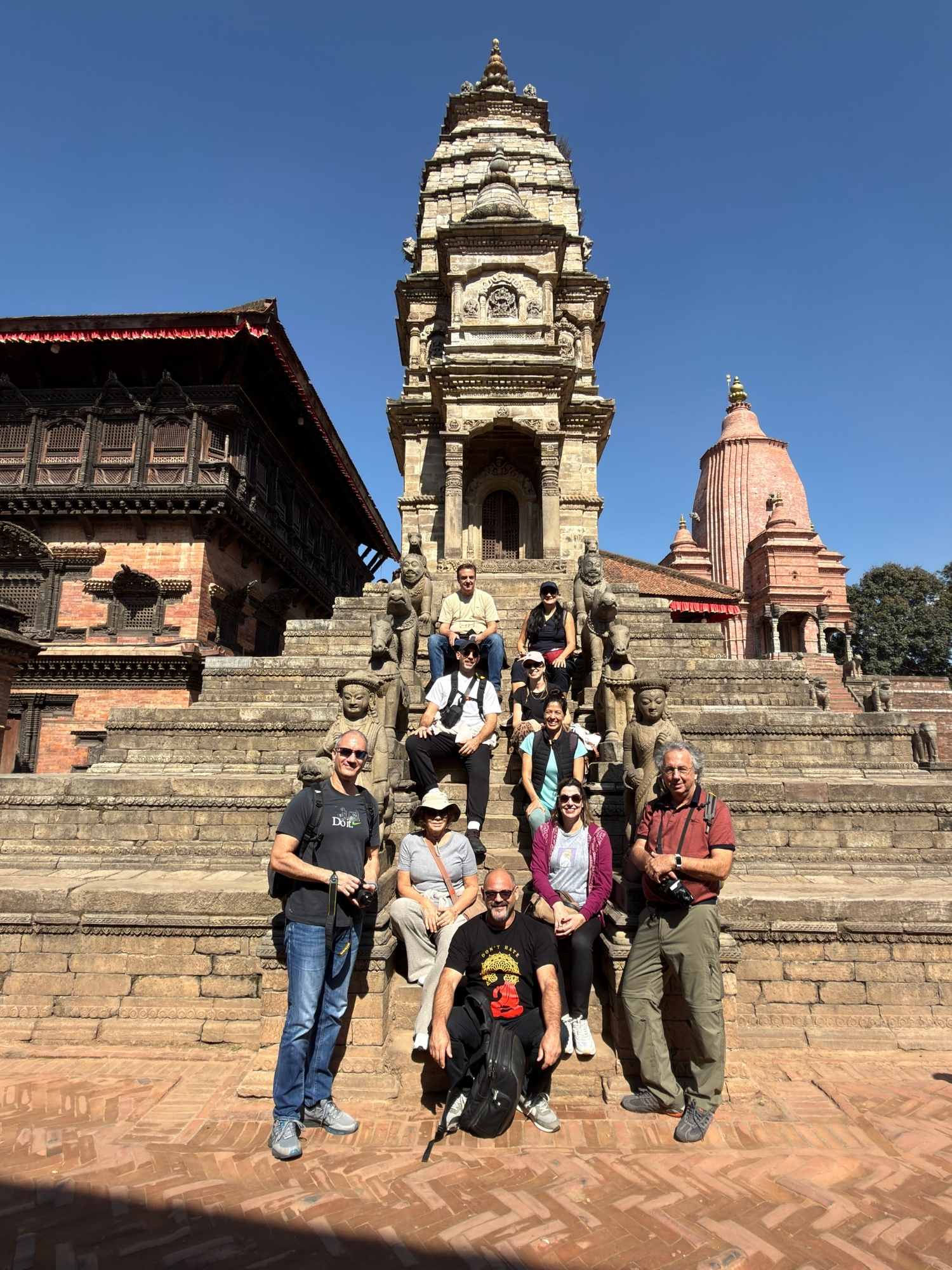
Begin in Bhaktapur, Nepal's best-preserved medieval city. The pottery square, the peacock window, the Nyatapola Temple at dawn — these are not merely sights but living compositions that shift with every change in light and season. A luxury tour grants you the time to return to the same location at different hours, understanding how the subject transforms under different conditions.
Move to Patan, the city of a thousand golden roofs, where Newari artisans continue metalworking traditions that predate the Renaissance. The intimate scale of Patan's courtyards — intimate, warm, layered with sculptural detail — produces images of astonishing intimacy.
The Elysian Classic Journey incorporates these cultural treasures as part of a broader immersion that extends to the hill towns of the Kathmandu Valley rim — Nagarkot, Dhulikhel, Namo Buddha — where the human narrative unfolds against the backdrop of the eternal Himalayas.
The Himalayan Landscape Route: Annapurna and Everest
For the landscape photographer, Nepal's two great mountain regions offer distinct but equally compelling subjects.
The Annapurna region combines accessibility with diversity. From the subtropical depths of the Modi Khola valley to the arid high plateau of Upper Mustang, the visual range is extraordinary. Poon Hill at sunrise — though admittedly well-trodden — remains one of the great panoramic experiences on earth, and a luxury approach means arriving before the crowds, or better still, accessing alternative viewpoints that offer the same spectacle in solitude.
The Everest region demands more commitment but rewards it absolutely. The trek to Everest Base Camp, undertaken in luxury with comfortable lodge accommodation and private support, leads through a visual crescendo that culminates in views from Kala Patthar that justify every adjective ever wasted on the mountain.
For clients who wish to combine both, the Elysian Premium Journey offers a carefully calibrated itinerary that captures the best of each region without the exhaustion of conventional trekking.
The Wildlife Frame: Chitwan and Bardia
Nepal's lowland national parks — particularly Chitwan and the more remote Bardia — offer wildlife photography opportunities that rival East Africa's finest. The Bengal tiger, the greater one-horned rhinoceros, the gharial crocodile, the Asian elephant — all are present and, with expert guiding, photographable.
The luxury difference here is not merely comfort (though staying at a heritage safari lodge rather than a dormitory is welcome after hours in a hide). It is access to the finest naturalist guides, who understand animal behaviour well enough to position you for the shot before the moment arrives. It is the patience that luxury affords — spending an entire morning at a waterhole rather than rushing through a checklist of sightings.
The Art of Ethical Photography in Nepal
A subject that deserves attention, and one that distinguishes the thoughtful luxury photographer from the careless tourist, is the ethics of photographing Nepal's people and cultures.
Nepal's communities are not exhibits. The sadhu at Pashupatinath, the Sherpa mother grinding grain in Namche, the Tharu dancer in Chitwan — each is a person with agency, dignity, and the right to decide whether and how they are represented. A luxury photography tour that deserves the name approaches every human encounter with respect, seeking permission, building rapport, and where appropriate, sharing the resulting images with the subjects.
At Elysian Himalaya, this principle is non-negotiable. Our guides facilitate genuine connections rather than transactional photo opportunities. The result, invariably, is better photography — portraits that reveal character rather than merely recording appearance, cultural scenes that convey meaning rather than spectacle.
Planning Your Luxury Photography Tour
The Best Seasons for Photography in Nepal
Autumn (October–November) delivers the clearest skies, the most reliable mountain views, and the warm post-monsoon palette of harvest golds and festival colours. It is the undisputed prime season for landscape photography. Spring (March–April) brings the rhododendron bloom — vast forests of crimson and magenta covering the mid-altitude slopes — along with increasingly clear skies as the pre-monsoon haze retreats. For the photographer who values floral foregrounds and dramatic cloud formations, spring is exceptional. Winter (December–February) offers the most crystalline light and the emptiest trails, though colder temperatures require more considered preparation. For the dedicated landscape photographer willing to work in cold conditions, winter produces images of startling clarity and drama. Monsoon (June–September) is unconventional but rewarding for the adventurous. The rain produces extraordinary cloud dynamics, the landscape is at its most intensely green, and the reduced visibility can create moody, atmospheric images utterly unlike the calendar-perfect shots of autumn.What to Bring — A Luxury Photographer's Equipment Guide
The luxury approach to photography equipment mirrors the luxury approach to travel: bring the best, but only what serves your vision.
- Bodies: A professional mirrorless system (Sony A1/A7RV, Nikon Z8/Z9, Canon R5 II) paired with a reliable backup. Altitude and dust demand weather-sealed construction.
- Lenses: A quality wide-angle (14-24mm or equivalent) is essential for Himalayan landscapes. A 70-200mm handles portraits and compressed mountain perspectives. A fast prime (85mm or 50mm f/1.4) transforms cultural portraiture.
- Filters: A polariser is indispensable at altitude. Graduated neutral density filters manage the extreme dynamic range between Himalayan snowfields and shadowed valleys.
- Drone: Nepal permits drone photography with appropriate licensing. Your luxury tour operator should arrange permits in advance — the aerial perspective over Himalayan terrain is transformative.
- Support: A carbon fibre tripod that you will actually carry. At altitude, ounces matter — even when porters carry the bulk of your gear.
The Transformation Beyond the Photograph
Something happens to photographers in Nepal that transcends the technical or even the aesthetic. The act of paying close attention — which is, after all, what photography demands — opens a channel of perception that changes the way you see not just Nepal, but everything.
Clients return from our photography tours with thousands of images, certainly. But they also return with something less tangible and more valuable: a refined sensitivity to light, to human expression, to the quiet dramas that unfold in the space between earth and sky. Nepal, experienced at the pace and depth that luxury permits, becomes not just a destination but a permanent shift in perception.
This is what we mean by experiential wealth. Not the accumulation of photographs, but the deepening of sight.
Begin Your Visual Journey
Every Elysian Himalaya experience begins with a conversation — an exploration of your creative ambitions, your photographic interests, your desire for cultural depth or mountain solitude or both. Whether you are drawn to the intimate cultural richness of the Kathmandu Valley, the dramatic grandeur of the high Himalayas, or the wild beauty of the Terai lowlands, we design a journey that serves your vision.
Design your bespoke photography journey — and discover what happens when the world's most extraordinary landscapes meet the focused attention of someone who has learned to truly see. Dimitrios Giannopoulos is the founder of Elysian Himalaya, where he personally designs each journey. A Greek who found his calling in the Himalayas, he believes that the finest travel is not about the places you visit, but the way those places change you.