The Difference Between Seeing Nepal and Understanding It
There is a moment — it comes to every traveller who has ventured into the Himalayan foothills — when the enormity of what lies ahead becomes almost incomprehensible. The peaks do not simply rise; they annihilate your sense of scale. The valleys do not simply recede; they swallow sound itself. And standing at the threshold of that immensity, you are faced with a choice that will define every hour of your journey: do you navigate this landscape alone, or do you entrust yourself to someone who has spent a lifetime reading its language?
This is not a question of logistics. It is a question of depth. A private tour guide in Nepal is not a convenience — it is the single most transformative decision you can make when designing a luxury Himalayan experience.
What a Private Guide Actually Means in Nepal
Let us dispense with the conventional notion of a "tour guide" — the person holding a numbered flag at the front of a column of twenty. In Nepal, a private guide occupies an entirely different role. They are part cultural interpreter, part expedition leader, part storyteller, and — when the moment calls for it — part confidant.
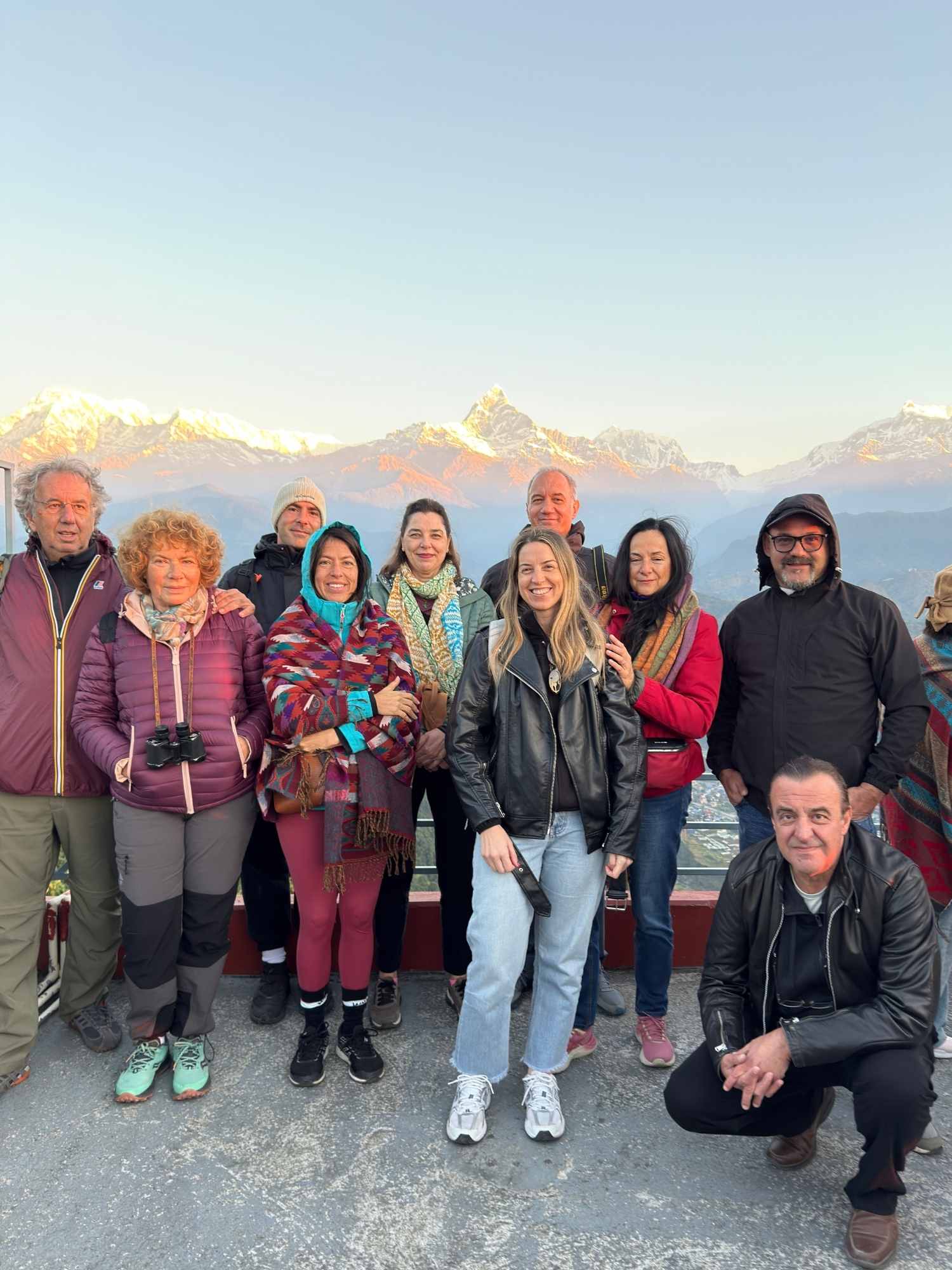
The best Nepali guides are not trained in hospitality programmes. They are forged by the mountains themselves. Many have grown up in the villages that dot the trekking routes. They speak the local dialects — Sherpa, Tamang, Gurung, Thakali — that unlock conversations no outsider could ever access. They know which monastery will open its doors to a traveller who arrives with genuine curiosity rather than a camera. They know which ridge offers a sunrise that makes Everest look like a rehearsal.
The Invisible Architecture of a Great Journey
What distinguishes a luxury journey from a merely expensive one is the architecture of experience — the careful sequencing of revelation, rest, intensity, and reflection. A private guide constructs this architecture in real time, reading your energy, your curiosity, your unspoken desires.
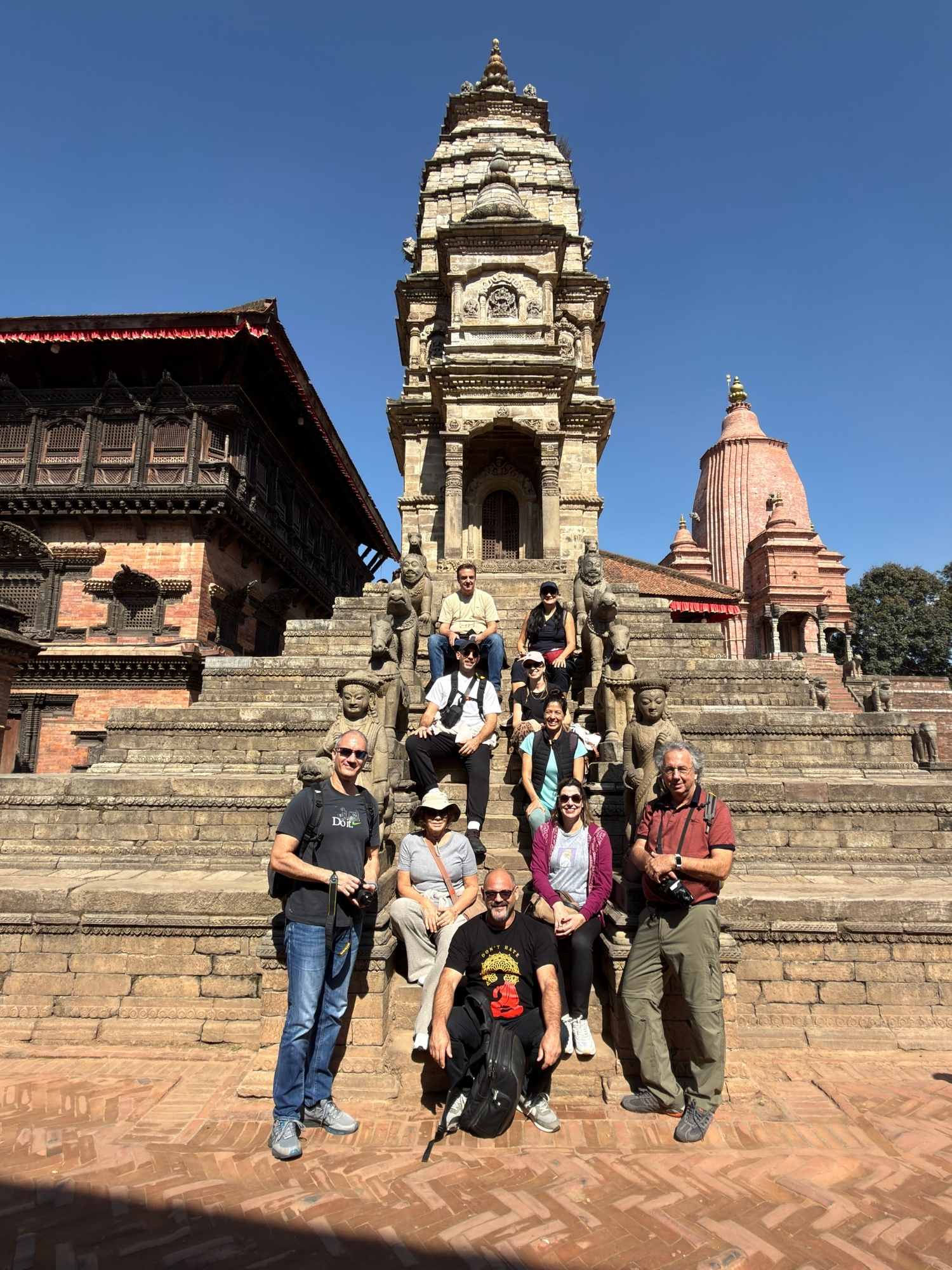
Imagine arriving in Kathmandu. Without a guide, you see the temples, the crowds, the chaos. With the right guide, you are led through a side door into a 14th-century courtyard where a Buddhist monk is performing a ritual that has continued unbroken for six centuries. You are not watching culture — you are standing inside it.
This is why our Elysian Classic Journey begins with a full day of guided immersion in the Kathmandu Valley before a single mountain is glimpsed. The foundation must be laid before the crescendo.
The Knowledge That Cannot Be Googled
In the age of infinite information, it is tempting to believe that a well-researched itinerary and a good map can substitute for local expertise. This is a dangerous illusion in Nepal.
Navigating the Unseen
Nepal's terrain is alive in a way that no other landscape quite manages. Trails shift after monsoon. Bridges are rebuilt in new locations. A path that was passable in October may be a river in April. A private guide navigates not by GPS but by a living, constantly updated mental map — one built over decades of traversing the same routes in every season.
More importantly, they navigate the human terrain. Nepal's rural communities operate on relationships, not transactions. A guide who is known and trusted in a village can arrange a home-cooked meal with a local family, a private audience with a village elder, or access to a festival that no travel website has ever listed. These are the moments that transform a trip from photogenic to genuinely life-altering.
Safety as a Silent Luxury
At altitude, conditions change with shocking speed. Cloud cover can descend in minutes. Temperatures can drop twenty degrees between noon and sunset. A private guide monitors not just the weather but your physical response to it — the subtle signs of altitude sickness, the first indications of fatigue, the moment when pushing forward becomes unwise.
This is not adventure-guiding in the adrenaline sense. It is the quiet, invisible safety net that allows you to be fully present in the experience rather than anxiously calculating risk. True luxury, after all, is the freedom from worry.
The Art of the Bespoke Itinerary
The greatest advantage of a private guide is the ability to deviate. Group tours run on schedules. Private journeys run on inspiration.
Morning Detours and Midnight Stars
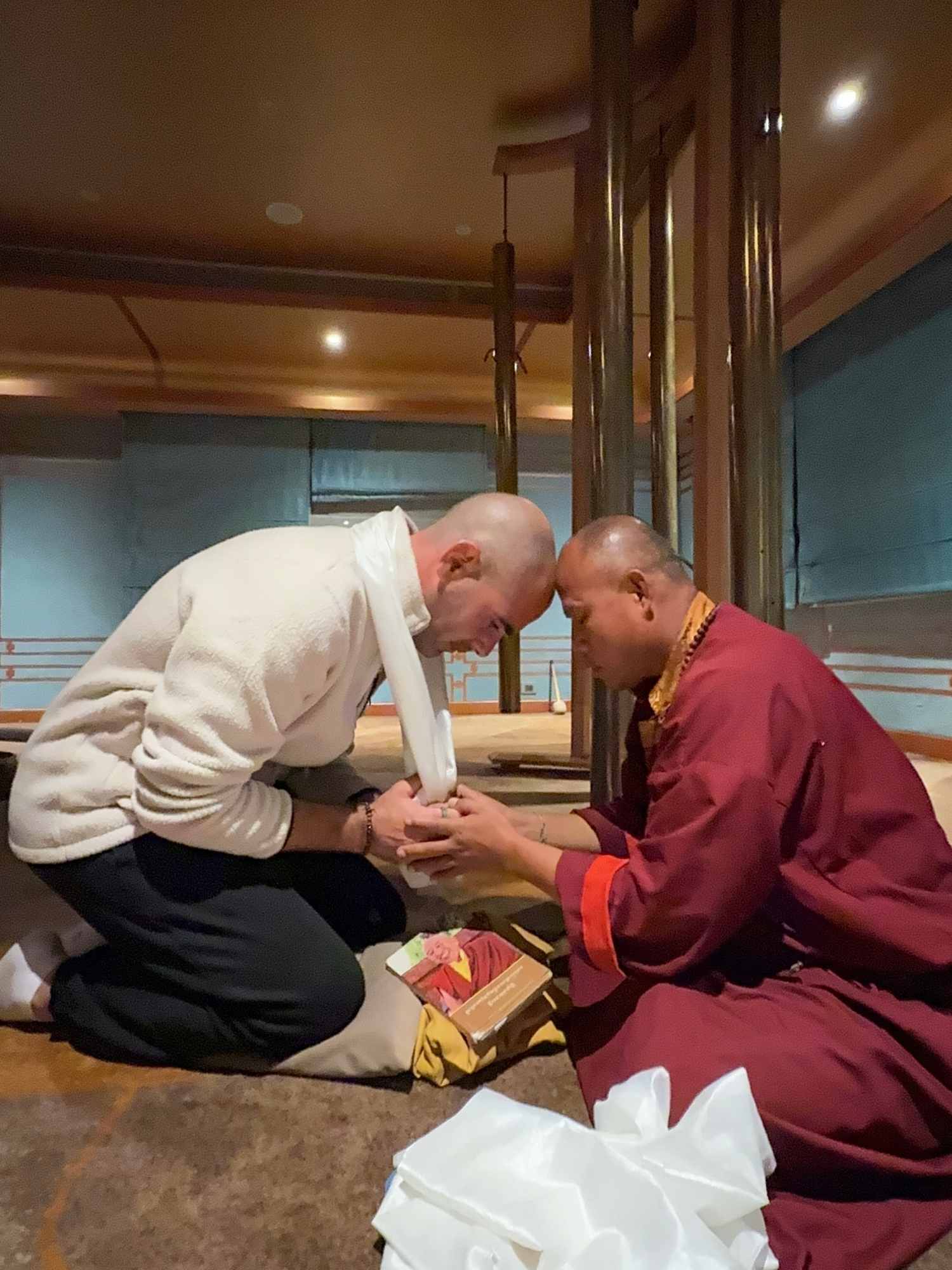
Perhaps your guide notices that you lingered at a particular viewpoint, transfixed by the way light was falling on a distant ridge. The next morning, they reroute the trek to a higher vantage point where that same ridge reveals an entirely different character at dawn. Perhaps they observe that you are moved by Buddhist philosophy and arrange an evening conversation with a lama at a monastery that rarely receives visitors.
This kind of responsive, intuitive curation is what separates our Elysian Premium Journey from conventional luxury trekking. Every day is designed, but nothing is rigid. The skeleton of the itinerary exists to support spontaneity, not suppress it.
Access to the Inaccessible
Nepal contains entire worlds that exist beyond the reach of standard tourism. The cave monasteries of Upper Mustang. The honey hunters of the Annapurna foothills. The living goddess traditions of the Newar communities. A private guide does not merely point you toward these experiences — they broker access to them. They make introductions. They translate not just language but context, ensuring that what you witness is understood, not just observed.
For travellers seeking the ultimate expression of this philosophy, our Elysian Ultimate Journey includes helicopter access to regions that would otherwise require weeks of trekking, combined with guides who have decades of relationships in these remote communities.
Choosing the Right Guide: What the Discerning Traveller Should Know
Not all guides are created equal, and in Nepal's relatively unregulated tourism market, the difference between a competent guide and an exceptional one can define your entire experience.
Credentials That Matter
Look beyond certifications — though a Nepal Mountaineering Association (NMA) licence is a baseline requirement. What matters more is:
- Regional expertise: The best guide for the Annapurna Circuit is not necessarily the best guide for Everest Base Camp. Mountain culture, terrain, and logistics vary enormously between regions.
- Language: English fluency is essential, but the real value lies in fluency in local dialects. A guide who speaks Sherpa opens doors in the Khumbu that remain closed to others.
- Temperament: An exceptional guide reads the room — or rather, the trail. They know when to share a story and when to walk in companionable silence. They understand that luxury travellers value their autonomy and do not need to be managed.
- Network: The guide's personal relationships — with lodge owners, helicopter pilots, monastery abbots, village leaders — are your passport to the extraordinary.
The Guide-Traveller Relationship
The most profound journeys in Nepal unfold when the relationship between guide and traveller transcends the transactional. When trust is established, conversations deepen. Your guide begins to share not just knowledge but perspective — their own relationship with the mountains, the stories their grandparents told about the peaks, the way their culture understands the boundary between the human world and the divine.
These conversations, often unfolding over hours of walking through landscapes that reduce conversation to its most essential form, are frequently cited by our guests as the single most memorable element of their journey.
The Economics of Excellence
A common misconception is that a private guide is a premium reserved for the ultra-wealthy. In reality, when you factor in the value equation — the time saved, the access gained, the experiences unlocked, the safety provided — a private guide is the most efficient investment in any Nepal journey.
Consider the alternative: a self-guided traveller in Nepal will spend hours navigating permit bureaucracy, negotiating transport, and attempting to find the experiences that a guide delivers effortlessly. The time wasted on logistics is time stolen from the journey itself.
For those who view travel as an investment in personal transformation rather than a line item on a budget, the question is not whether to hire a private guide but how to find one whose vision matches your own.
Beyond the Mountains: A Guide Through Nepal's Soul
The role of a private guide extends far beyond the trekking trails. In the cultural heartland of the Kathmandu Valley, a knowledgeable guide transforms temple visits from sightseeing into revelation. In Chitwan, they decode the language of the jungle — the alarm call of a langur that signals a tiger's presence, the track in the mud that tells the story of a rhino's morning.
In Pokhara, they know the lakeside restaurant where the dal bhat is made by a grandmother who has been cooking the same recipe for fifty years — and they know that this meal will linger in your memory long after the mountain views have blurred into a highlight reel.
The Cultural Bridge
For Greek travellers in particular — and this is something I have observed repeatedly in designing journeys for our clientele — there is a striking resonance between Greek and Nepali culture. The emphasis on hospitality. The centrality of family. The relationship between landscape and identity. A perceptive guide recognises this resonance and uses it as a bridge, drawing connections that make Nepal feel not foreign but deeply, unexpectedly familiar.
The Elysian Approach: How We Select Our Guides
At Elysian Himalaya, we do not maintain a roster of guides. We maintain relationships. Each guide in our network has been personally vetted through years of collaboration. We know their strengths, their specialities, their personalities. When we match a guide to a guest, we are not filling a staffing requirement — we are arranging an introduction between two people who, we believe, will bring out the best in each other.
This is the philosophy that underpins everything we do. Nepal is not a destination to be consumed. It is a conversation to be entered. And the right guide is the one who ensures that conversation is conducted in a language you can feel, even before you understand a single word.
Your Journey Begins With a Conversation
If you are considering Nepal — truly considering it, not as a destination on a list but as a turning point in your life — then the first step is not booking a flight. It is having a conversation about what you hope to find among the highest mountains on earth.
We are here for that conversation. Tell us what moves you, and we will introduce you to the guide — and the journey — that will change everything.