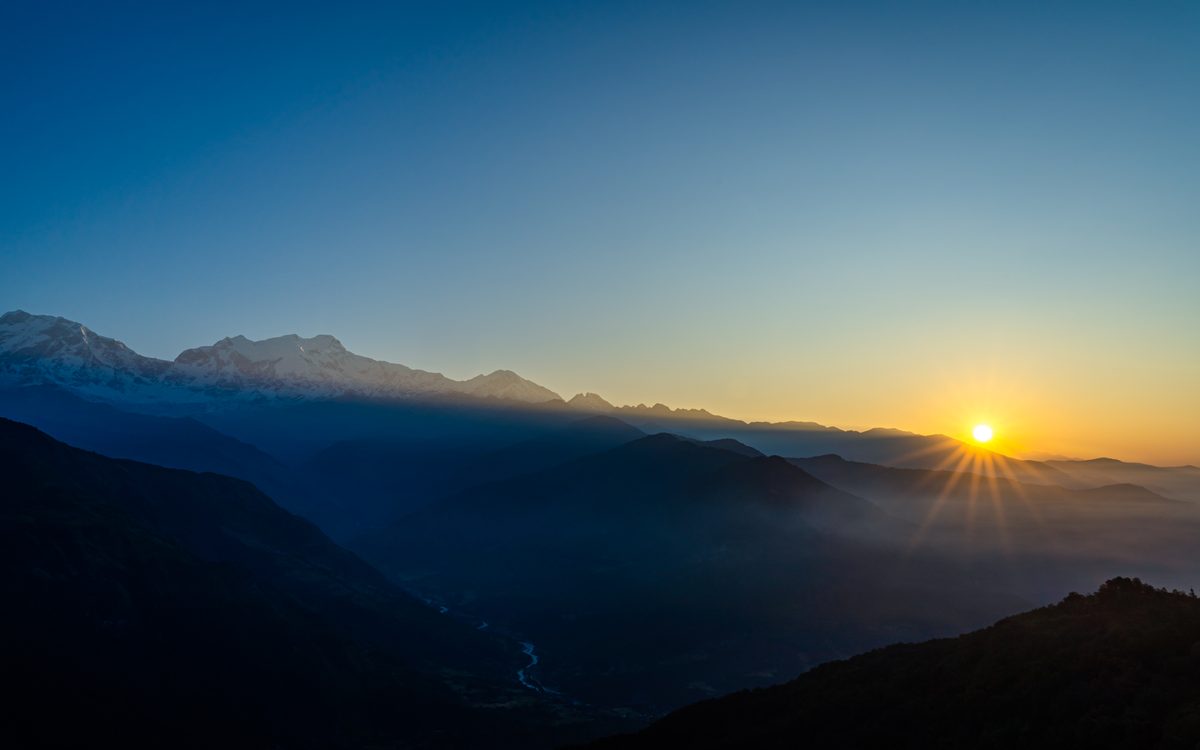
There is a moment, somewhere around half past five in the morning, when the entire idea of a mountain changes.
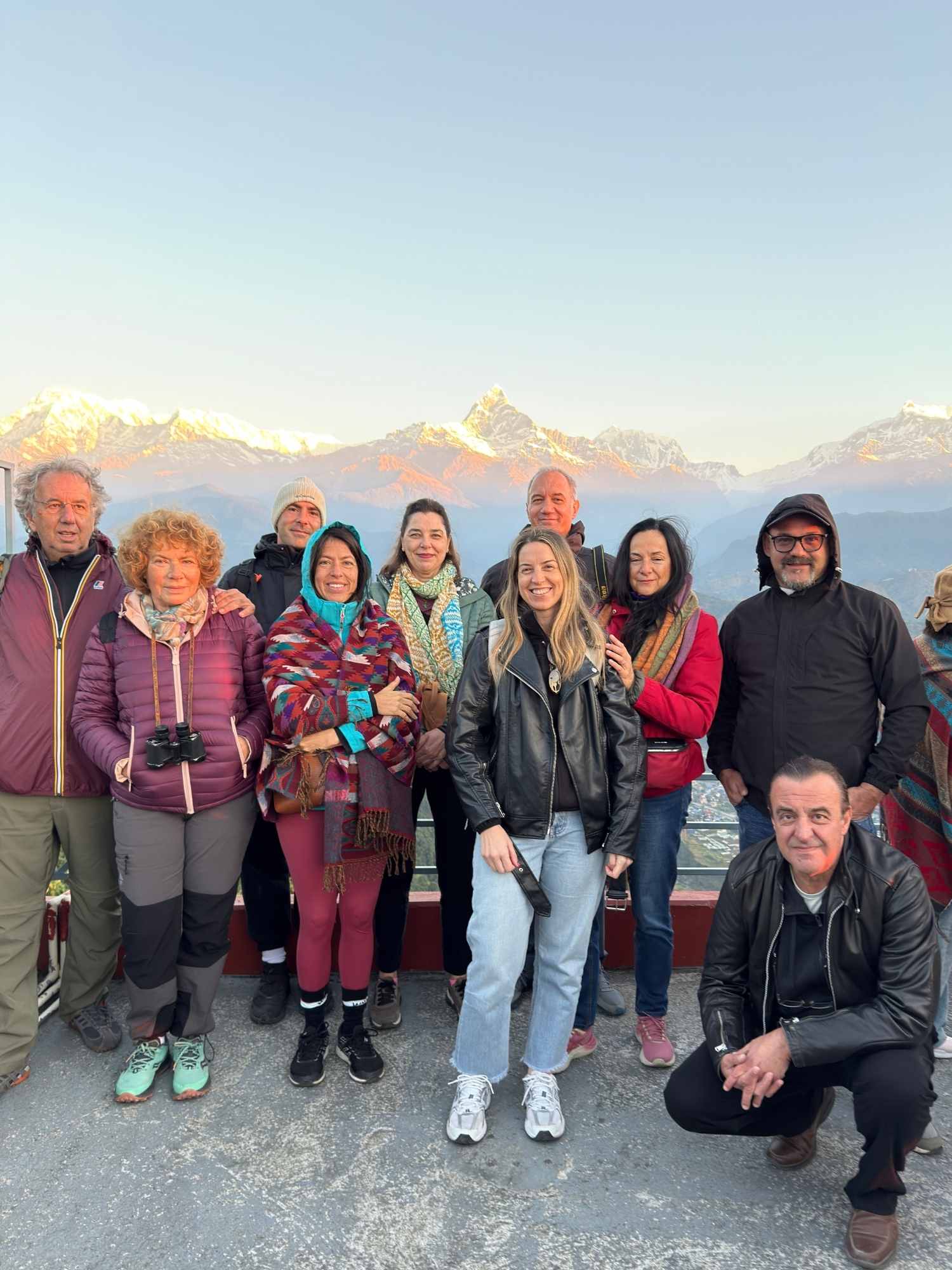
You have walked up through the dark in a borrowed silence, the breath of a few dozen strangers ahead of you, the cold pressing in at the collar. And then the eastern sky does something it has done every day for ten thousand years and will do indifferently for ten thousand more: it begins to bleed gold. The first light does not arrive on the snow. It arrives on Dhaulagiri — the seventh-highest mountain on earth — and it arrives the way a flame catches the edge of paper, a single rim of fire that spreads until the whole western wall of the Annapurna massif is burning rose and amber against a sky still holding the last of its stars.
This is Poon Hill. And it is, without exaggeration, the most photographed sunrise in the Himalayas.
Which is precisely the problem.
The Trek Everyone Has Heard Of
Ask anyone who has spent a season in Nepal's trekking circuit, and the name Poon Hill will surface within minutes. At 3,210 metres, this modest ridge above the village of Ghorepani has become a rite of passage — the trek you do when you have only a few days, the trek that delivers a genuine high-Himalayan panorama without the altitude, the cost, or the commitment of Everest Base Camp.
That accessibility has been its glory and its undoing. On a clear October morning, the small viewing platform at the summit can hold three hundred people, shoulder to shoulder, phones aloft, jostling for the shot. The lodges below are spartan, the trails crowded, the experience — for all its beauty — closer to a pilgrimage queue than a private revelation.
I have stood in that crowd. I have also stood on that same ridge with a single client, a flask of Ilam tea, and not another soul within a kilometre. The difference between those two mornings is the entire subject of this essay.
Because Poon Hill, approached correctly, is not a lesser trek. It is one of the most exquisite short journeys in the world — a three-to-four-day passage through rhododendron forest, terraced farmland, and Gurung mountain villages, culminating in a sunrise that genuinely rivals anything you will see at three times the altitude. The mountain has never been the issue. Only the manner of arriving at it.
Why the Short Trek Is the Sophisticated Choice
There is a particular kind of traveller — often the most seasoned among us — who has come to understand that the value of a journey is not measured in suffering. They have done the long expeditions. They have queued for the summits. And they have arrived, somewhere in their fifties or sixties, at a quieter conviction: that three perfect days are worth more than fourteen merely endured.
Poon Hill is the trek for this traveller.
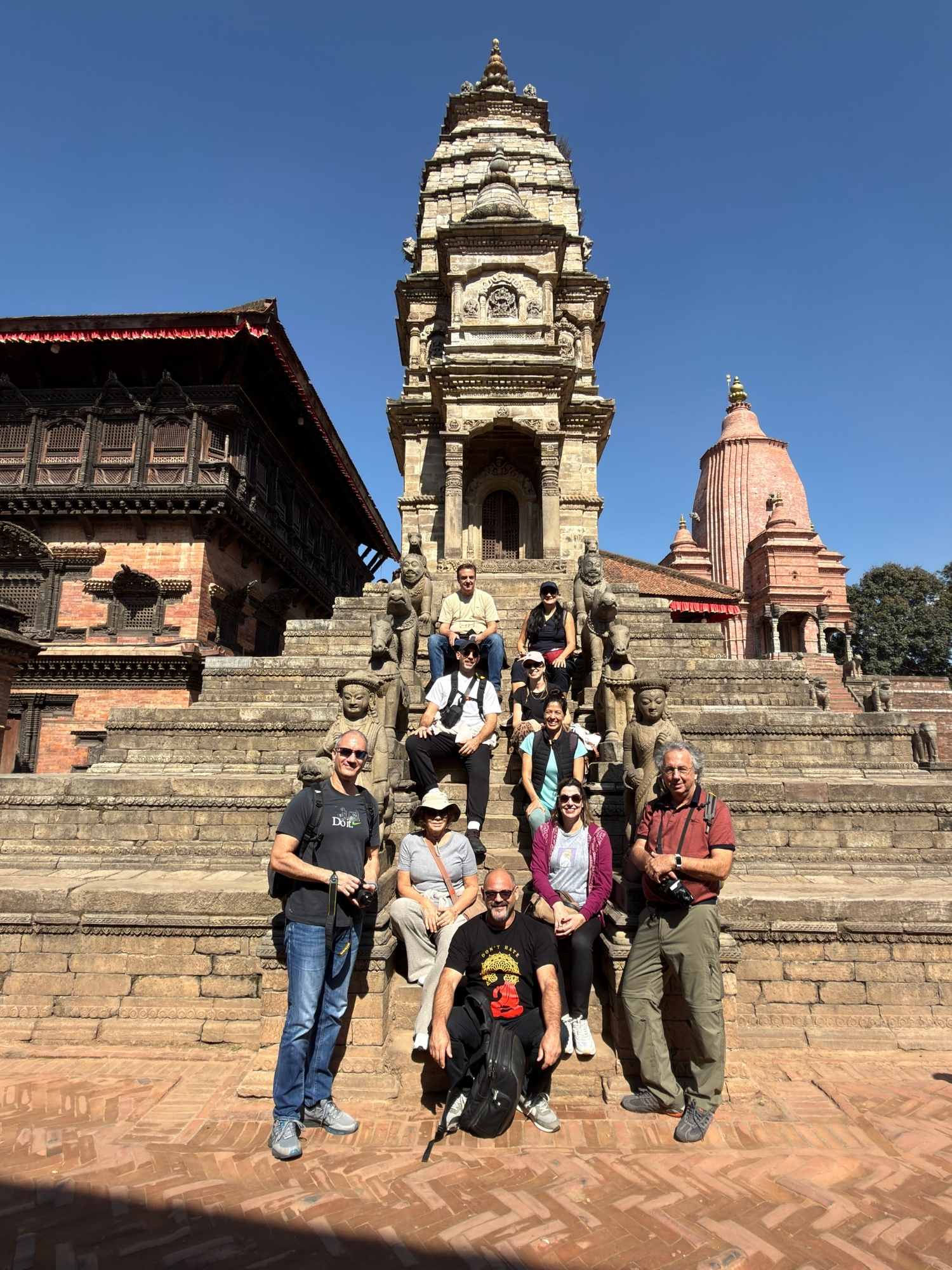
It asks for no acclimatisation schedule, no diamox, no weeks carved from a working life. It sits comfortably inside a single luxurious week in Nepal — bookended by Kathmandu's living heritage and Pokhara's lakeside calm — and it delivers, in compressed and concentrated form, the essential Himalayan experience: the forest, the village, the mountain, the silence, the dawn. This is the heart of what we call our Premium journey — the trek that gives you the Himalaya without asking you to surrender your comfort, your schedule, or your knees.
It is, in short, the most generous trade in Nepali travel. And in the right hands, it becomes something close to perfect.
The Anatomy of a Refined Poon Hill Journey
What separates a luxury Poon Hill trek from the standard package is not a single grand gesture. It is a hundred small decisions, each one removing friction, each one returning your attention to the only things that matter: the landscape and your own response to it.
Walking Against the Crowd
The first decision is the most important, and it is invisible to anyone who has not run these trails for years. It is timing.
The conventional itinerary moves everyone in the same direction, on the same schedule, arriving at the same lodges at the same hour. The refined version does the opposite. We walk the circuit in reverse, or we shift the days by half a beat, so that you reach Ghorepani as the day-trekkers are leaving and you climb to the summit not with three hundred people but with thirty — or, on the mornings we engineer most carefully, with almost none. The mountain is the same. Your relationship to it is transformed.
Where You Sleep
Ghorepani and Ghandruk are not Pokhara. There are no five-star hotels on this ridge, and anyone who tells you otherwise is selling a fiction. What there is — and what most travellers never find — is a small number of genuinely characterful lodges: family-run houses with en-suite bathrooms, real hot water drawn from solar and back-up systems, goose-down bedding carried in for the season, and a kitchen that has been quietly briefed weeks in advance about exactly how you take your food.
We do not book the lodge with the most rooms. We book the one with the best southern aspect, the warmest dining room, and the owner who will hold the fire for you when you come down from the summit. These relationships are the real luxury, and they cannot be bought from a website.
Who Walks Beside You
A private guide on Poon Hill is not a navigator — the trail needs no navigating. He is an interpreter of a world. The Gurung villages you pass through, the people who built and farm them, the ex-Gurkha grandfather who will invite you in for raksi if your guide knows him by name — this is the texture that turns a walk into an immersion. Our guides are not freelancers picked up in Pokhara. They are part of the family, and many of them grew up on these very trails. To understand why this matters more than anything else on the mountain, read our case for the private guide in Nepal — it is the single decision that changes everything.
The Ascent That Doesn't Hurt
Porters carry your bags. This is standard. What is not standard is the choreography of pace — a guide who reads your breathing, who has tea waiting at the precise bend in the trail where you will want it, who knows that the climb from Ulleri is 3,200 stone steps and plans the morning so that you arrive at the top with energy to spare rather than collapsing at the lodge door. Luxury on a trail is not the absence of effort. It is the presence of intelligence.
The Helicopter That Changes the Equation
Here is where the Poon Hill journey can ascend, quite literally, into another category altogether.
The walk up is the pleasure. The walk down is, frankly, the part most travellers would happily skip — long descents are hard on the body, and the final day's return to Pokhara through lower, hotter, dustier country adds little to the experience.
So we remove it.
A private helicopter, lifting from Ghorepani or Ghandruk in the clear morning air, returns you to Pokhara in fifteen extraordinary minutes — the entire Annapurna sanctuary unfolding beneath you, the trail you walked yesterday a thin thread through the forest, Machhapuchhre's fishtail summit turning slowly past your window. You are back at your lakeside suite in time for a late breakfast, the trek complete, the descent erased, the memory ending on a high note rather than a tired one. This is the kind of seamless escalation that defines our Ultimate journey — where the line between trekking and flying dissolves entirely.
It is, I will admit, an indulgence. It is also one of the most quietly transformative decisions you can make on this trek, and almost no one offers it as a matter of course.
When to Go
Poon Hill has two seasons, and they offer two entirely different journeys.
Spring (March to May) is the rhododendron season, and it is glorious. The forests between Ulleri and Ghorepani are among the densest rhododendron stands in Nepal, and for a few weeks they ignite — crimson, pink, and white blooms arching over the trail like a cathedral nave. The mountains are occasionally veiled by afternoon haze, but the mornings are clear and the colour is unforgettable. Autumn (late September to November) is the season of crystalline air. After the monsoon has washed the dust from the sky, the visibility is almost supernatural — Dhaulagiri and Annapurna stand impossibly sharp against a hard blue sky, and the sunrise from Poon Hill reaches a clarity that spring cannot match. This is the connoisseur's season, and it is when we send our most discerning travellers.A word on the rest of the year: winter brings cold but startling clarity and near-empty trails, which the well-equipped traveller may find magical. The monsoon months we generally counsel against. For a fuller account of the rhythm of the Nepali year, our guide to the best time to visit Nepal goes season by season.
More Than a Mountain
It would be a mistake to think of Poon Hill as a single morning of beauty bracketed by walking. The villages you move through are the point as much as the summit.
Ghandruk, in particular, is one of the most beautiful settlements in the Annapurna region — a tiered village of slate-roofed stone houses climbing a hillside in full view of Annapurna South and Machhapuchhre, its lanes paved, its Gurung museum quietly excellent, its people heirs to one of the most storied martial cultures on earth. To walk through Ghandruk in the late afternoon, woodsmoke rising, children returning from school, the great mountains catching the last light — this is not scenery. It is a living civilisation, and it asks to be met slowly.
This is the difference between trekking and travelling. One is a route. The other is a relationship with a place. Everything we design at Elysian Himalaya bends toward the second. You can see how that philosophy shapes every journey across our full range of Himalayan destinations.
The Sunrise, Revisited
Let me return to that half-past-five moment, because I want to be precise about what it is worth.
You will have travelled a long way to reach it. You will have flown from Europe, paused in Kathmandu, driven the winding road to the trailhead, and walked for two days through forest and village. And then you will stand on a ridge in the dark, and you will wait, and the cold will make you wonder briefly why you came.
And then Dhaulagiri catches fire.
There is a silence that falls over even a crowded summit in that instant — a collective, involuntary stilling, as three hundred people forget their phones for the length of a single breath. To experience that moment alone, or nearly so, with someone who knows exactly where to stand and exactly when to say nothing, is among the most quietly profound things travel can offer. It is not an achievement. You have not conquered anything. You have simply been present, fully and rarely present, for one of the great daily miracles of the planet.
That presence — that is the experiential wealth we believe in. Not the photograph. Not the summit logged. The morning itself, held whole, and carried home.
Designing Your Poon Hill Journey
No two of our travellers walk the same Poon Hill. Some want the rhododendron spring and a slow, three-night immersion through the Gurung villages. Others want the autumn clarity, the private summit, and the helicopter home before lunch. Some fold it into a broader Nepal of heritage and wildlife; others come for the trek alone and let it stand as the whole of their week. Our Classic journey offers the essential experience with characteristic grace; our Premium and Ultimate tiers layer in the private summits, the boutique lodges, and the flight home.
What unites them is a single conviction: that the most beloved sunrise in the Himalayas deserves to be met not in a crowd, but in the manner it has earned — with patience, with refinement, and with the quiet certainty that you are exactly where you are meant to be.
The mountain has been waiting ten thousand years. Let us design the morning you finally meet it.
Begin designing your bespoke Poon Hill journey →