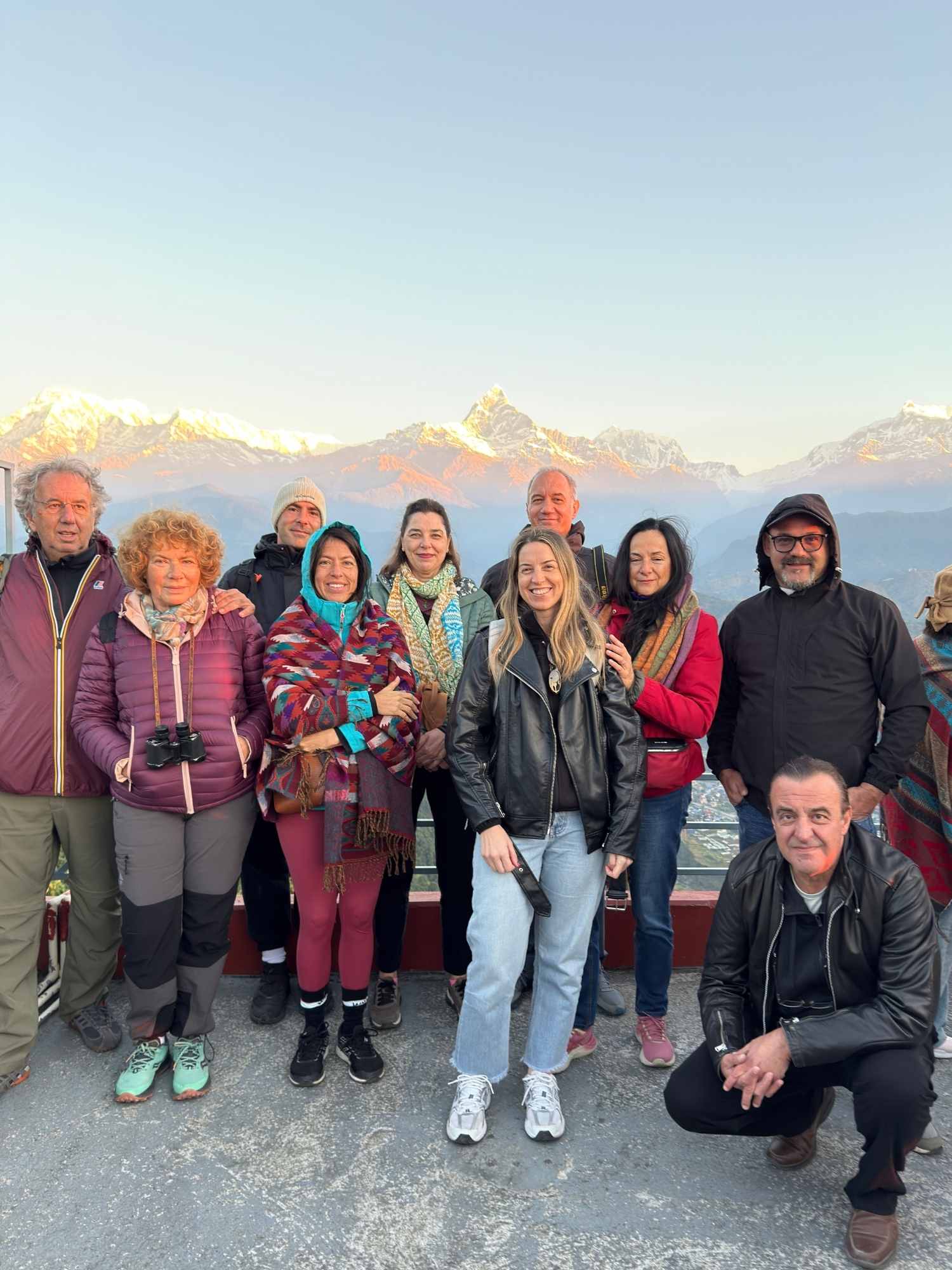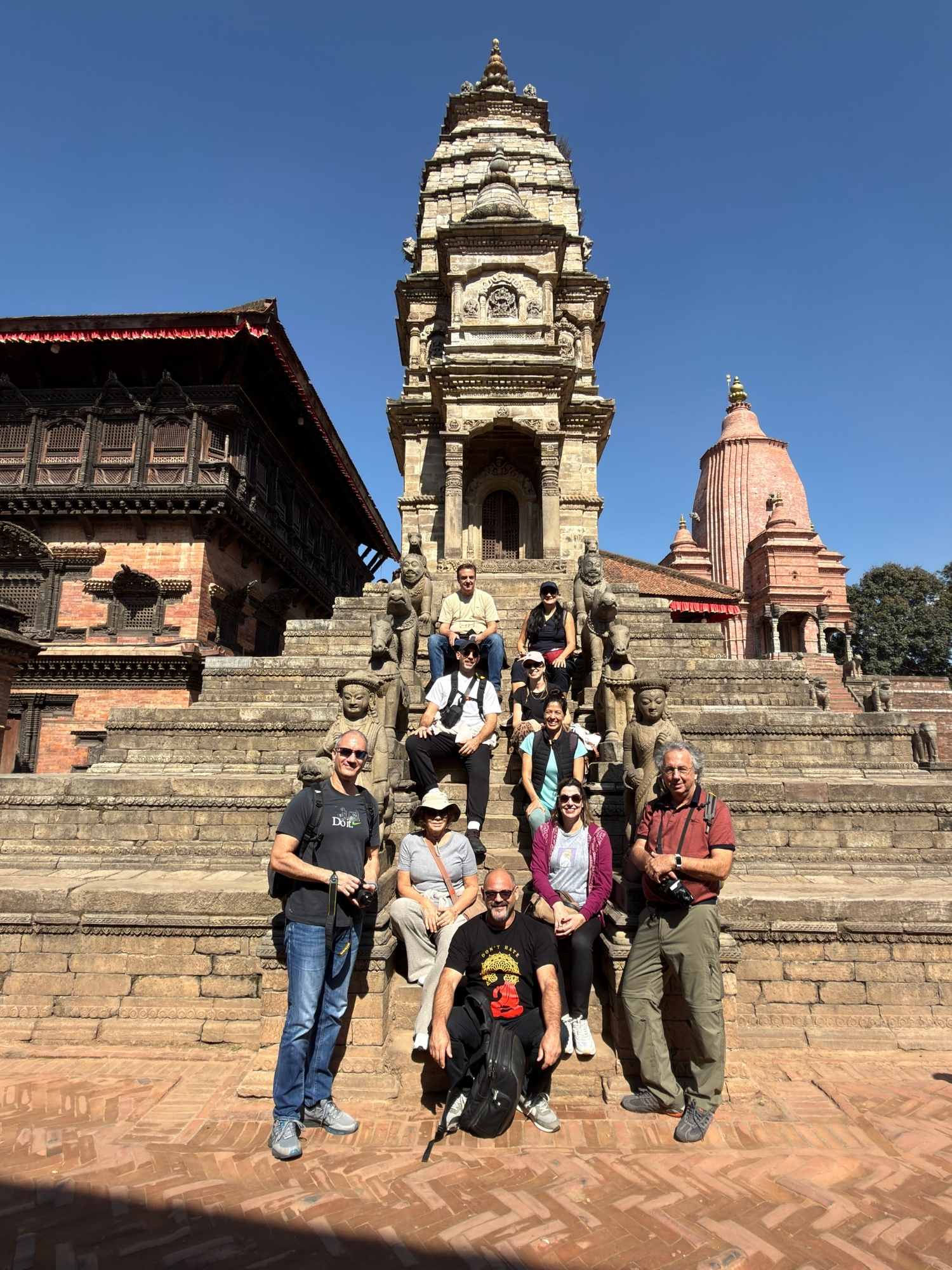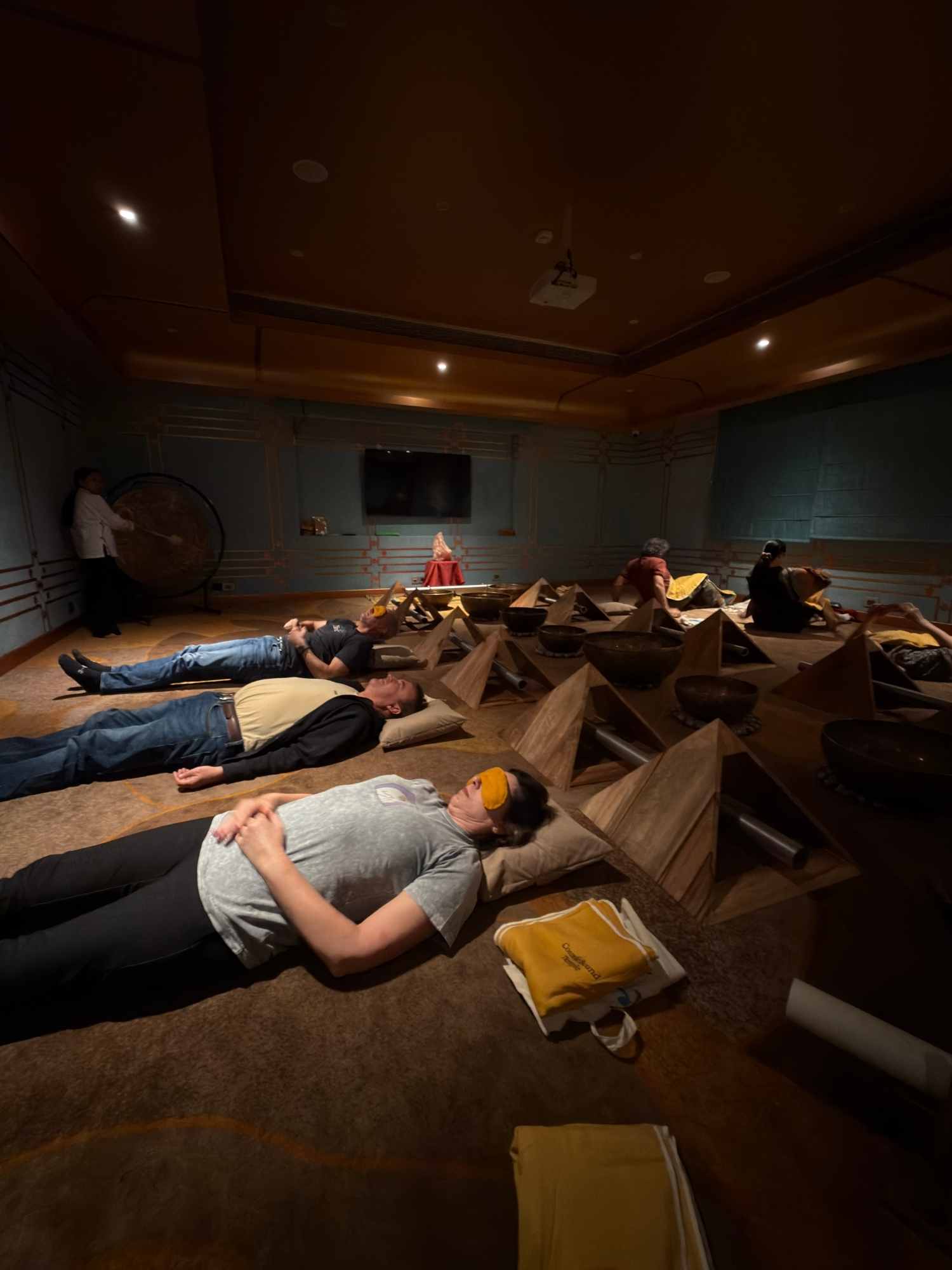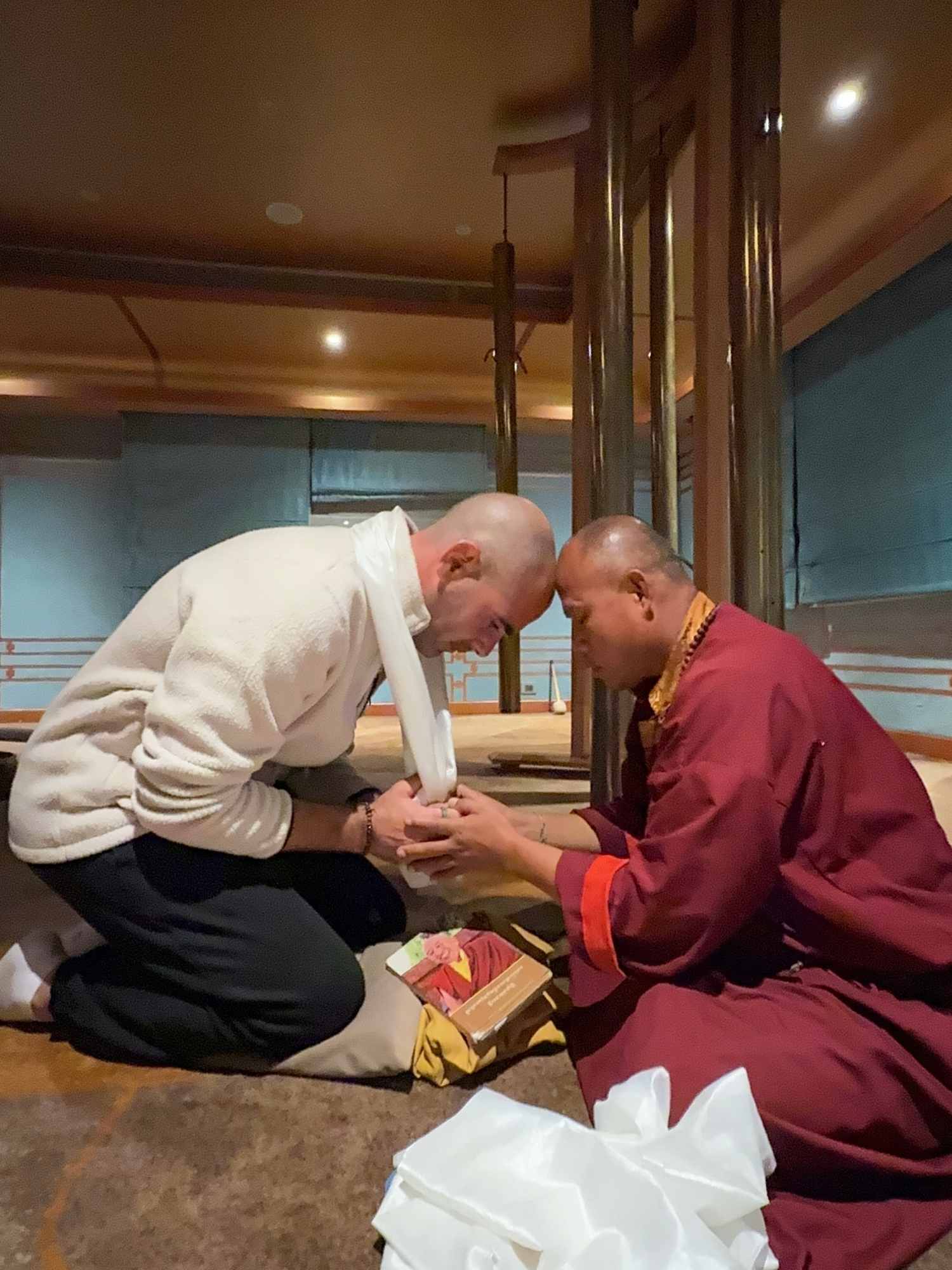
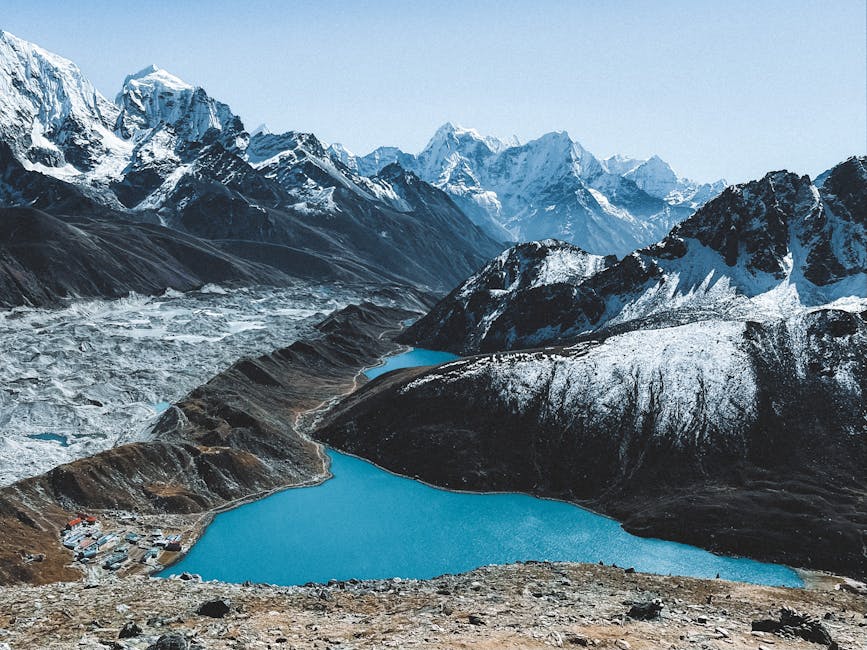
There is a particular silence that exists only in places the modern world has not yet learned how to reach. It is not the silence of empty rooms or quiet libraries. It is older than that — geological, almost — the kind of silence that settles around you when you stand on the shore of a lake at three thousand metres, watching its surface change colour for the fourth time that morning, and realise that no other human being on earth knows exactly where you are.
This is the silence of Rara.
Rara Lake sits in the far west of Nepal, in Mugu district, suspended at 2,990 metres in a fold of the Himalayas so remote that for most of the twentieth century it was effectively unreachable. It is the country's largest and deepest freshwater lake — a turquoise body of water roughly five kilometres long and half a kilometre wide, encircled by pine and juniper forests that rise into snow-capped ridges. Locals call it Mahendra Tal, the Queen of Lakes, and they speak of it the way one speaks of a relative who lives far away: with reverence, a little protectiveness, and the quiet certainty that you have not truly met her until you have made the journey yourself.
For our most discerning travellers — those who have already touched the prayer flags at Everest Base Camp, dined at the foot of Annapurna, sipped Bordeaux on a private helicopter to Upper Mustang — Rara represents something else entirely. It is, perhaps, the most truthful luxury that Nepal can offer in 2026: not amenity, but absence. Not service, but solitude. The privilege of standing somewhere extraordinary and being, for a few precious hours, entirely alone.
The Geography of Almost-Untouched
To understand why Rara matters, you must first understand where it is. Nepal's tourism economy has, for decades, concentrated itself along a relatively narrow corridor running east from Kathmandu through Pokhara to the Annapurna and Everest regions. Ninety percent of international visitors never venture beyond it. The result is two-fold: those famous trails are now busy in ways they were not even a decade ago, and the rest of the country — the vast, mountainous, culturally distinct west — remains almost as it was a century ago.
Rara sits at the heart of that other Nepal. The lake is the centrepiece of Rara National Park, the smallest national park in the country at just 106 square kilometres, but also one of its most ecologically rich. Within its boundaries you will find Himalayan black bears, musk deer, red pandas, and over two hundred and fourteen species of birds, including the iridescent Himalayan Monal — Nepal's national bird, whose feathers shift through nine colours as it moves through the light.
The journey to Rara is itself part of the experience. Most travellers fly first from Kathmandu to Nepalgunj in the lowlands, then transfer to a small aircraft that lands on a grass-and-gravel airstrip at Talcha, an hour's gentle walk from the lake. For those who require a more compressed itinerary — and, in 2026, most of our Ultimate-tier guests do — we arrange direct private helicopter transfers from Kathmandu, a flight of approximately two hours that traces the spine of the Himalayas before descending into a valley most pilots have never had occasion to visit.
It is, by any honest measure, the most logistically demanding luxury journey we offer. It is also, by the testimony of those who have made it, the one they are most likely to describe later, in a quiet voice, as the most beautiful thing they have ever seen.
What Luxury Actually Means at 2,990 Metres
Let us be clear about something. There is no Aman property at Rara Lake. There is no five-star resort with a marble lobby. There is, at the time of writing, no road to within forty kilometres of the lake. What Rara offers is not the luxury of accumulation but the luxury of orchestration — the kind of luxury that depends entirely on the quality of the people arranging it.
This is where a bespoke approach becomes not a preference but a necessity. The infrastructure that exists at Rara is sufficient — boutique lodges, a handful of family-run guesthouses, the seasonal Rara Eco Resort — but it is not abundant, and almost none of it can be reached or reserved through the ordinary channels of international travel. Every element of a Rara journey must be built by hand: the helicopter timing, the guide who knows which hour of the morning the lake is at its most glassine stillness, the porters who carry your high-thread-count linens to the lakeside camp where you will sleep, the kitchen team who will prepare a five-course tasting menu using produce flown in that morning from a private grower in Pokhara.
What this produces, when it is done correctly, is a kind of comfort that feels almost paradoxical in its setting. You wake at six in the morning in a heated canvas suite — a structure that did not exist on this hillside three weeks before your arrival and will not exist a week after your departure — to find a personal attendant placing a French press of single-origin Nepali coffee at your bedside. You step outside to a temperature of perhaps four degrees Celsius, wrapped in a cashmere shawl that has been waiting for you since check-in, and walk fifty metres to a viewing platform built specifically for your party. The lake below is the colour of a glacier melting into emerald. Your breakfast — yak cheese, wild honey, hot rolls baked in a clay oven set up beside your camp — is brought to you on a folding table draped in white linen. There is no other guest. There is no Wi-Fi. There is no possibility of interruption.
This is not luxury as it is sold by the conventional industry. This is luxury as it was understood by the explorers and aristocrats who first travelled to the Himalayas in the 1920s — the conviction that the most extraordinary places on earth deserve to be experienced with extraordinary care, and that the apparatus of comfort should never be allowed to obscure the place itself.
The Five Colours of a Single Morning
The most quoted detail about Rara Lake — the one every guidebook repeats and no guidebook successfully conveys — is that the water changes colour throughout the day. By the time you have spent two mornings on its shore, you understand why this fact has been repeated so often, and why it continues to feel inadequate.
At dawn, when the sun has not yet reached the surface, the lake is a deep, slate-grey blue, almost black at its centre, the colour of a stone dropped in a deep well. As the first light catches the eastern ridge, the water turns a soft mineral green, the surface still entirely smooth, mirroring the snow on the peaks above so precisely that the line between mountain and reflection becomes impossible to find. By mid-morning, with the sun fully present, the lake has shifted to a luminous turquoise — the colour postcards try and fail to capture. By midday it is a deep, oceanic blue, almost cobalt, and by late afternoon, as the wind picks up and the surface breaks into small waves, it becomes a textured, silver-violet that defies easy naming. At sunset, when the western peaks blaze orange and the sky behind them turns a particular shade of magenta that only exists at high altitude, the lake holds all of those colours at once, a palette of almost unbearable beauty that lasts perhaps eleven minutes before the light fails and everything becomes, again, that ancient slate-blue darkness.
To witness this cycle, properly and without interruption, requires being in residence for at least two full days. This is one of the reasons we structure our Rara itineraries as a minimum of three nights at the lake itself — fewer, and you risk being there only for the colour you happened to catch, which would be like visiting the Sistine Chapel and looking only at one wall.
The Cultural Texture: Khas, Bhote, and the Forgotten West
Western Nepal is, culturally, a different country from the parts most travellers know. The dominant communities here are Khas — a high-caste Hindu people whose traditions, dialect, and folk music differ markedly from those of the central hills — alongside Bhote villages of Tibetan-Buddhist heritage in the higher reaches. The blend produces a region whose visual and acoustic vocabulary is unfamiliar even to many Nepali nationals: red-brick villages with pagoda-style temples, women in heavy silver jewellery and crimson saris who herd sheep along ridges, and a folk-music tradition — the Khas deuda — in which entire villages join hands in a slow circular dance that has been performed in the same way for at least seven centuries.
For our guests, we arrange access to communities that do not see foreign visitors in any meaningful number. A typical evening might involve a private deuda performance at a village two hours' walk from the lake, conducted by torchlight in a stone-walled courtyard. Our cultural advisor — an anthropologist who has spent two decades documenting western Nepali traditions — provides historical and linguistic context. The villagers themselves provide everything else: a meal of buckwheat dhindo and goat curry, eaten cross-legged on woven mats, followed by a half-hour during which the eldest woman of the household will, if she is willing, sing the lineage of her family back to the eighteenth century.
This is the sort of access that, in our experience, transforms a journey from a holiday into a memory of a different order. It is also the sort of access that cannot be assembled through any quantity of money alone. It depends on relationships built over years, on a guide who is family-connected to the village, and on a willingness to travel at the pace and rhythm of the place itself rather than the schedule of an international itinerary.
Beyond the Lake: Sinja Valley and the Cradle of the Khas Empire
For guests whose journey allows for an additional two or three days, we recommend extending the itinerary to include the Sinja Valley, a one-day horseback ride from Rara. Sinja is one of the most extraordinary historical sites in Nepal — and one of the least visited. It was the capital of the Khas Empire, which between the eleventh and fourteenth centuries ruled an enormous swathe of the western Himalayas, including parts of present-day Tibet, India, and what is now western Nepal. The empire produced the early form of the Nepali language and a sophisticated court culture that has been almost entirely forgotten by the wider world.
Today, Sinja is a quiet valley scattered with temple ruins, half-buried sculptures, and a small archaeological museum that contains some of the most important medieval inscriptions in South Asia. Standing in its central temple — a roofless stone structure overlooking the river that gives the valley its name — you feel something that is increasingly rare in any kind of travel: the sense of having found a place that history itself has not yet fully claimed.
We arrange for a private archaeologist to accompany guests through the site, and for the journey itself to be undertaken on horseback, in the company of a small support team and a fly camp set up in advance at the midpoint. The total experience adds approximately three days to the itinerary and elevates a Rara journey from extraordinary to, in our considered view, transformative.
When to Go: The Two Windows
Rara is not a year-round destination. Heavy snow in winter closes the airstrip and the surrounding passes, and the summer monsoon — though milder here than in the rest of Nepal — brings cloud cover that obscures the lake's celebrated colour shifts. There are, in practice, two windows.
The autumn window runs from late September through mid-November. This is the most popular period — though "popular" at Rara still means perhaps a few hundred international visitors across the entire season — and it offers the most reliable weather, the clearest mountain views, and the rich gold tones of the surrounding meadows after the monsoon greenery fades. It is also when the migratory birds are at their most abundant.
The spring window runs from early April through early June. The temperatures are slightly warmer, the rhododendron forests on the surrounding hillsides erupt into colour — entire mountainsides turning red and pink and white — and the lake, freshly fed by snowmelt, reaches its most luminous turquoise. Spring is our personal preference for first-time visitors, in part because the rhododendron season is one of the truly great floral spectacles in the natural world, and in part because the air at this altitude in spring carries a particular clarity that we have not found anywhere else.
For comparison with other Nepali destinations, see our season-by-season luxury guide, which addresses the country as a whole.
The Investment
A bespoke Rara journey at the standard our guests expect typically begins at €14,000 per person for a seven-night programme inclusive of private helicopter transfers from Kathmandu, four nights at the lake in a privately erected luxury camp, three nights of pre- and post-extension at our recommended properties in Kathmandu and Pokhara, all meals, all guides, all permits, and all logistics. For guests choosing to extend with the Sinja Valley horseback option, that figure rises to approximately €17,500 per person.
This is, by Himalayan standards, a significant investment — though it should be set against the comparison: a single night at Shinta Mani Mustang's flagship suite, currently the most-booked luxury property in Nepal, runs to approximately €1,800 inclusive. Rara, properly arranged, is not a more expensive journey than the conventional luxury circuit. It is simply a more difficult one to assemble — which is, of course, much of its value.
For a comprehensive view of luxury Nepal travel costs, see our definitive 2026 cost breakdown.
A Final Word: What You Are Actually Buying
The longer one works in this industry, the clearer one becomes about what genuine luxury actually is. It is not thread count or champagne label. It is not a particular shade of marble in a hotel bathroom. It is, in our considered view, the conversion of money into something that money alone cannot buy: time, space, expertise, and access. The capacity to be somewhere extraordinary, in conditions of extraordinary comfort, in the company of extraordinary people, with the absolute privacy that allows the place itself to make its impression on you.
Rara delivers this in a form that almost no other destination on earth can match. It is the rarest combination of natural beauty, cultural depth, and genuine remoteness — and the journey there, properly conceived, becomes one of those experiences that quietly recalibrates your sense of what a journey is for.
We design only a small number of Rara itineraries each year. The logistics demand it; the philosophy of the place demands it more. Each one is built from the ground up around the specific interests, rhythms, and curiosities of the guests we are hosting. There is no template. There is no off-the-shelf version. There is only the question we ask at the start of every consultation: what would you most like to be true about the days you are going to remember?
Once we know the answer to that, the rest is simply a matter of going to find it — even, and perhaps especially, when finding it requires going to a place that the world has not yet finished discovering.
If you are drawn to the idea of a journey to the Queen of Himalayan Lakes, begin the conversation here. We will spend the time it takes to understand what you are looking for, and we will build you the journey that delivers it. Rara has been waiting for centuries. There is no reason to hurry.