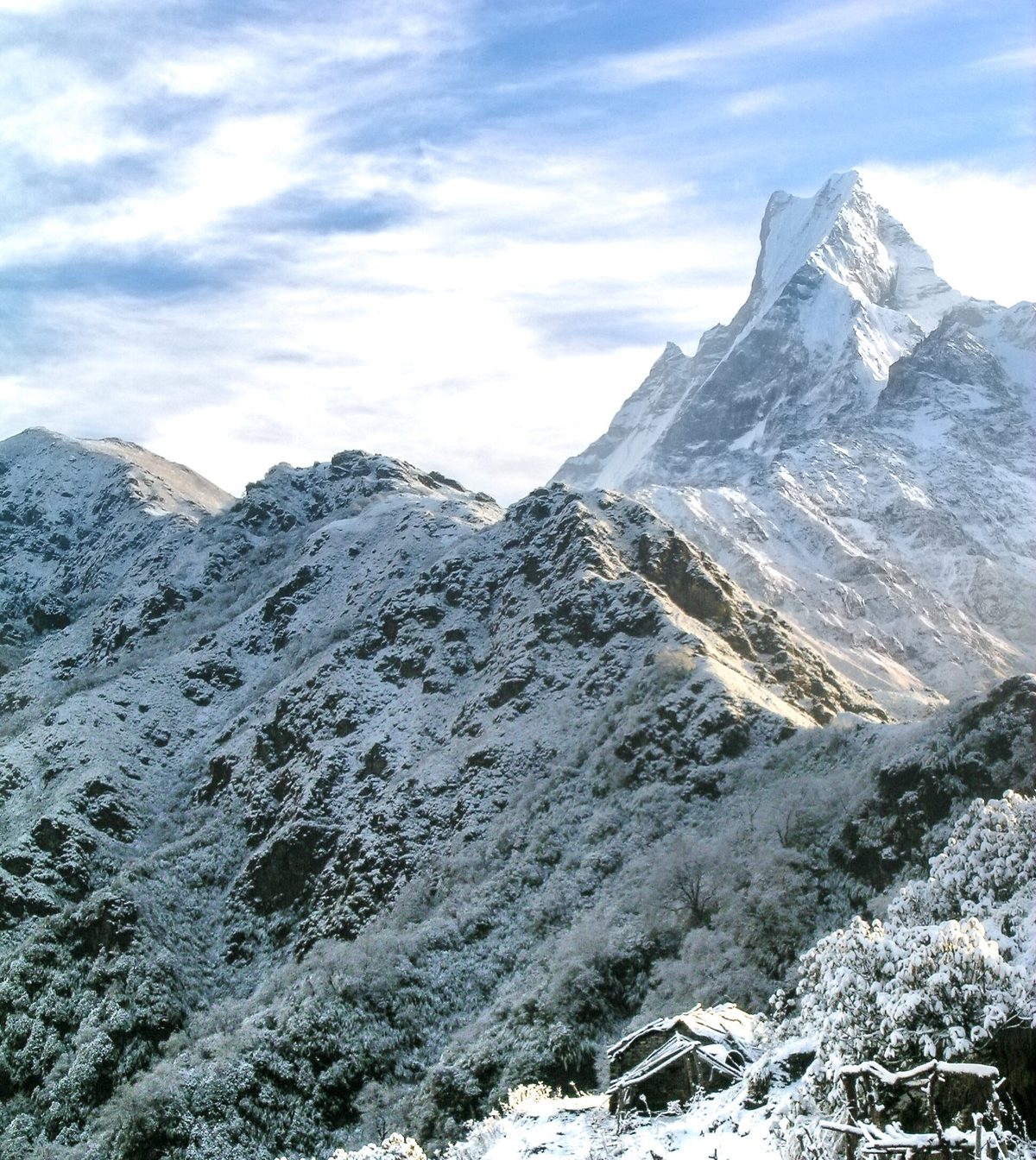
There is a moment, somewhere between Pangboche and the moraines beneath the southern face, when you stop walking. Not because the altitude has caught up with you — by then your body has settled into the rhythm of the Khumbu — but because the mountain in front of you refuses to be passed without a pause.
Ama Dablam, 6,812 metres, stands there in absurd perfection. A pyramid of granite and ice, twin ridges sweeping down like the arms of a mother gathering a child, the hanging glacier on its southern face glittering in the morning sun like a piece of jewellery. The Sherpas named it the Mother's Necklace. The climbers, with their European references, call it the Matterhorn of the Himalayas. Neither name does it justice.
This is the peak most pilgrims of the Everest region remember best, more vividly than Everest itself. Everest is the highest. Lhotse is the steepest. Cho Oyu is the most climbable. But Ama Dablam is the most beautiful — and that, for the kind of traveller we design journeys for, matters more than altitude alone.
Why Ama Dablam, and Why Now
The Everest Base Camp trek is one of the most famous walks on earth. It is also one of the most crowded. In peak season — October especially — the trail becomes a procession. The teahouses are full. The flights into Lukla are oversold. The dust on the trail rises in clouds. There is wonder, of course, but it is wonder shared with strangers.
The Ama Dablam Base Camp trek offers everything the Everest route offers — Sherpa villages, soaring peaks, monasteries clinging to cliffs, the silence that exists only above 4,000 metres — but with a fraction of the foot traffic. It tops out at 4,600 metres rather than 5,545. It demands less of the body and more of the eye. And its destination is, by any measure, the more photogenic mountain.
For the discerning traveller, this is not a compromise. It is an upgrade.
The Mountain That Climbers Love and Trekkers Worship
Ama Dablam is one of the most technically demanding climbing peaks in the Himalayas — a fact that makes it endlessly photographed and rarely summited. The Southwest Ridge route, first climbed in 1961 by a small team including Edmund Hillary's son-in-law to be, is now considered one of the great alpine prizes of the region. Approximately 400 climbers attempt it each year. Most do not summit.
But you are not here to climb it. You are here to walk to its base, sleep in its shadow, watch its colours change at sunrise, and let the experience rearrange something in you that has been arranged the same way for too long.
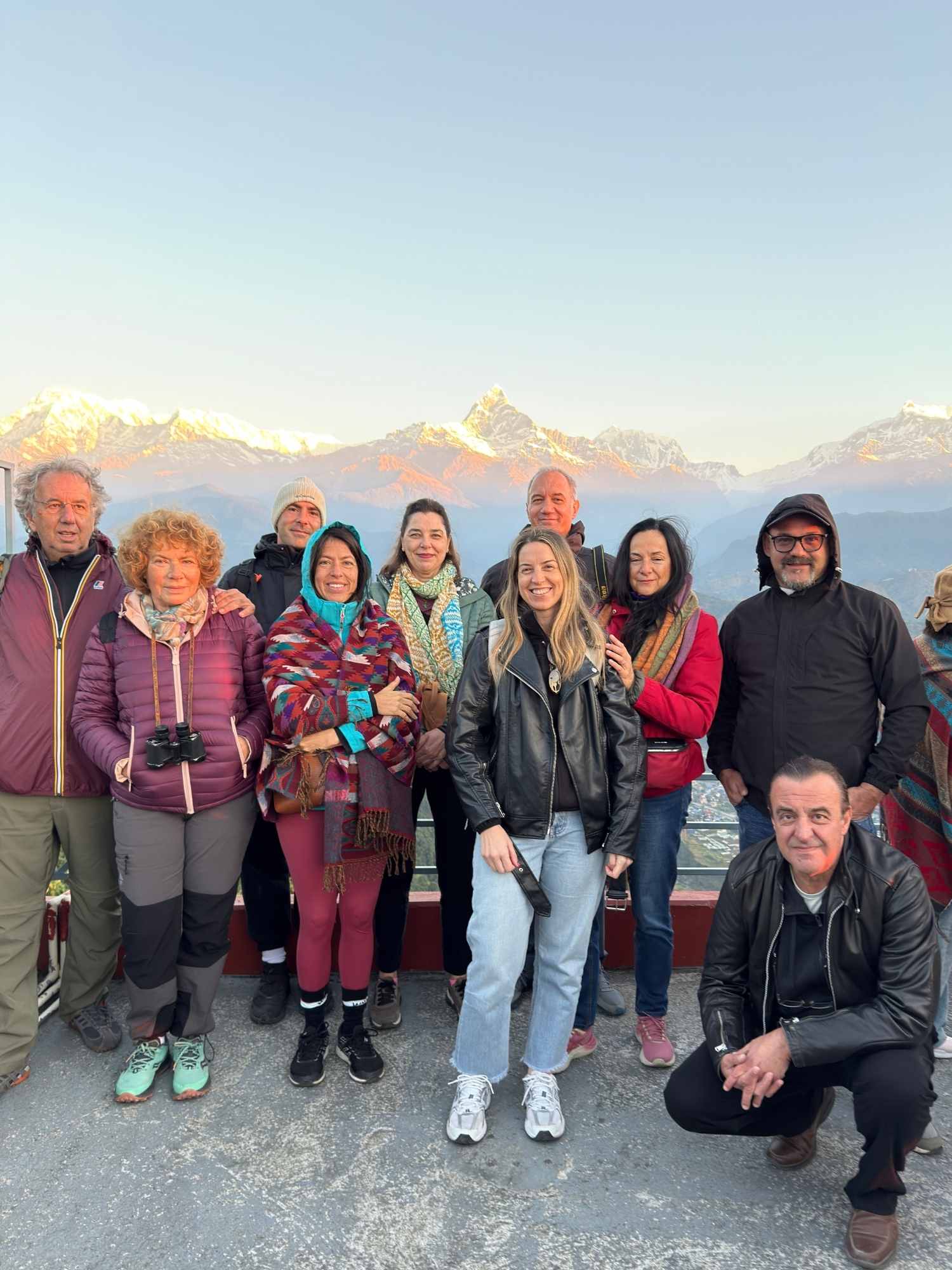
The trek to Ama Dablam Base Camp is a side journey off the main Everest Base Camp route. You leave the procession at Pangboche, turn east, and within an hour the world goes quiet. The trail climbs through juniper and rhododendron, crosses a glacial stream, then opens onto an alpine meadow where yaks graze and the southern face of Ama Dablam fills the entire western sky. There is no other view in Nepal — perhaps in the world — quite like it.
The Luxury Version: How We Design This Journey
A standard Ama Dablam trek is a wonderful thing. A Elysian Himalaya luxury version is a different undertaking entirely. The aim is not to make the mountains more comfortable — that would miss the point — but to remove the friction that keeps most travellers from being fully present.
Helicopter Access, Where It Matters
The flight from Kathmandu to Lukla is famously dramatic — a 25-metre runway carved into a Himalayan hillside, the world's most precarious commercial airstrip. For most trekkers, it is also the gateway to a week of waiting, because weather routinely cancels flights for days at a time.
Our travellers do not wait. We arrange a private helicopter charter from Kathmandu directly to Lukla, or, when terrain and conditions permit, directly to a high-altitude lodge near Phakding or Namche, saving up to two days of trail time. The aircraft is twin-engine, the pilot a veteran of the Khumbu, the seats face the mountains. By breakfast, the city is behind you. By lunch, the Himalayas are personal.
The Lodges, Not the Teahouses
The Khumbu has, in the last decade, undergone a quiet revolution. Where once there were only basic teahouses — plywood walls, communal dining halls, shared bathrooms — there is now a handful of properties that meet international five-star standards. We work exclusively with these.
In Namche Bazaar, you sleep in a heated room with a private bathroom, a goose-down duvet, and a window that frames Thamserku. In Tengboche, you wake to the sound of monks chanting at the monastery next door, then descend to a breakfast of fresh fruit and barley pancakes prepared by a Western-trained chef. In Pangboche, the lodge has a wood-fired sauna — a gesture of civilisation that, after a day in the mountains, becomes a quiet revelation.
A Private Guide and a Private Chef
The single greatest variable in any Himalayan journey is the guide. Ours are not generalists. They are Sherpas of the Khumbu, born in these villages, fluent in English and often German or Italian, certified to international mountaineering standards, and trained to read the mountain in ways the rest of us never will. They know which lodges are honest about their wood-burning stoves. They know which pass to cross when the wind picks up. They know which monk to ask for a blessing.
A dedicated chef accompanies the group on every Premium and Ultimate tier itinerary, sourcing local ingredients — yak cheese from Pangboche, apples from the orchards below Namche, buckwheat flour ground at 3,000 metres — and translating them into meals that would not embarrass a Kathmandu fine-dining restaurant. Altitude suppresses appetite. Excellence restores it.
Oxygen, Medicine, and the Margins of Safety
Every Elysian Himalaya high-altitude itinerary carries a portable oxygen concentrator, a pulse oximeter, and a comprehensive altitude medication kit. The guide is wilderness-first-aid certified. The lodges we use have evacuation arrangements with the Lukla helipad. None of this is announced loudly. It is simply there, the way good infrastructure should be — invisible until needed, decisive when it is.
The Route: Twelve Days, Carefully Paced
The standard Ama Dablam Base Camp trek is run in nine or ten days. We run it in twelve. The extra time is not luxury for its own sake — it is acclimatisation, the single most important variable in how the body responds to altitude.
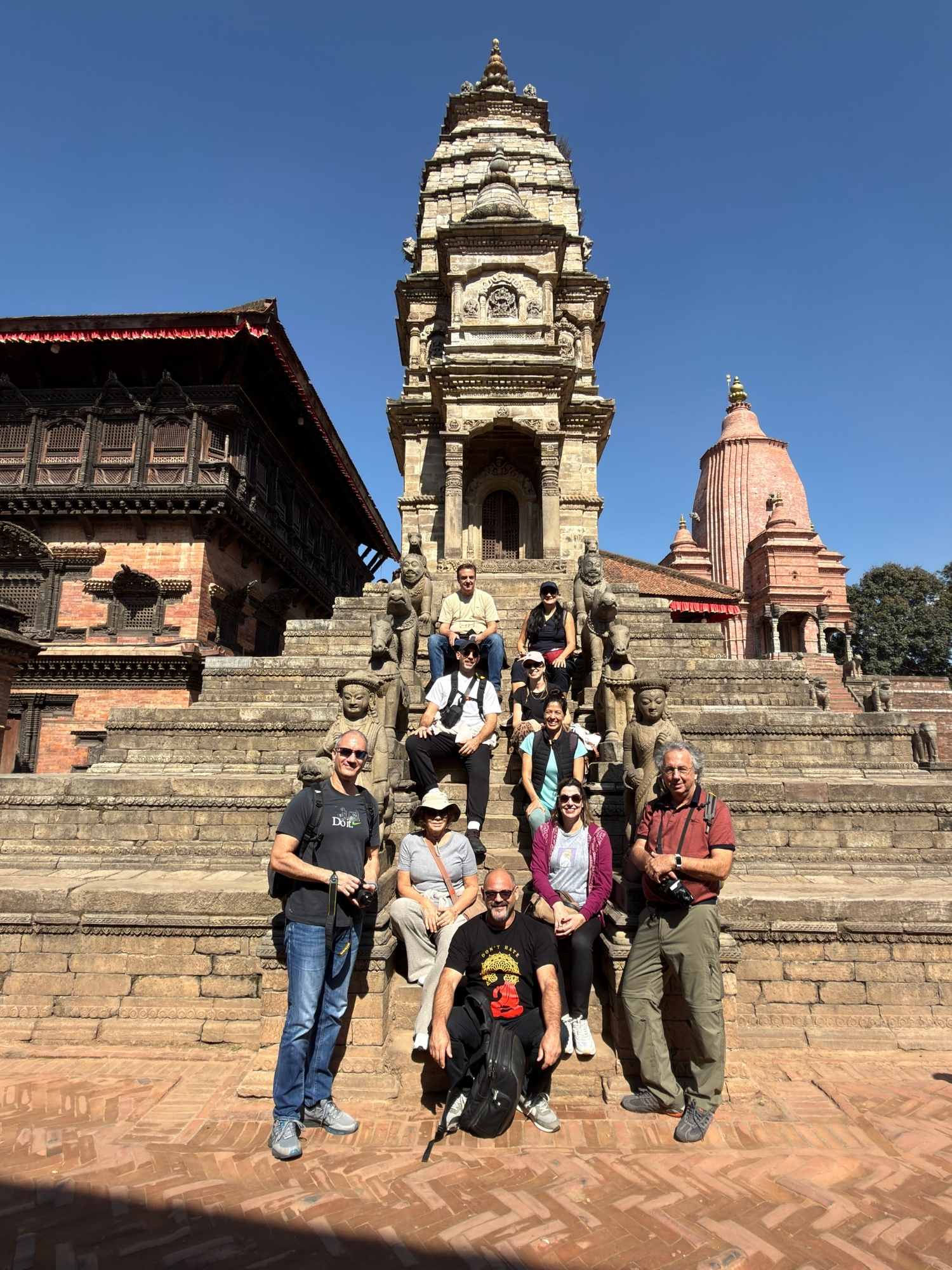
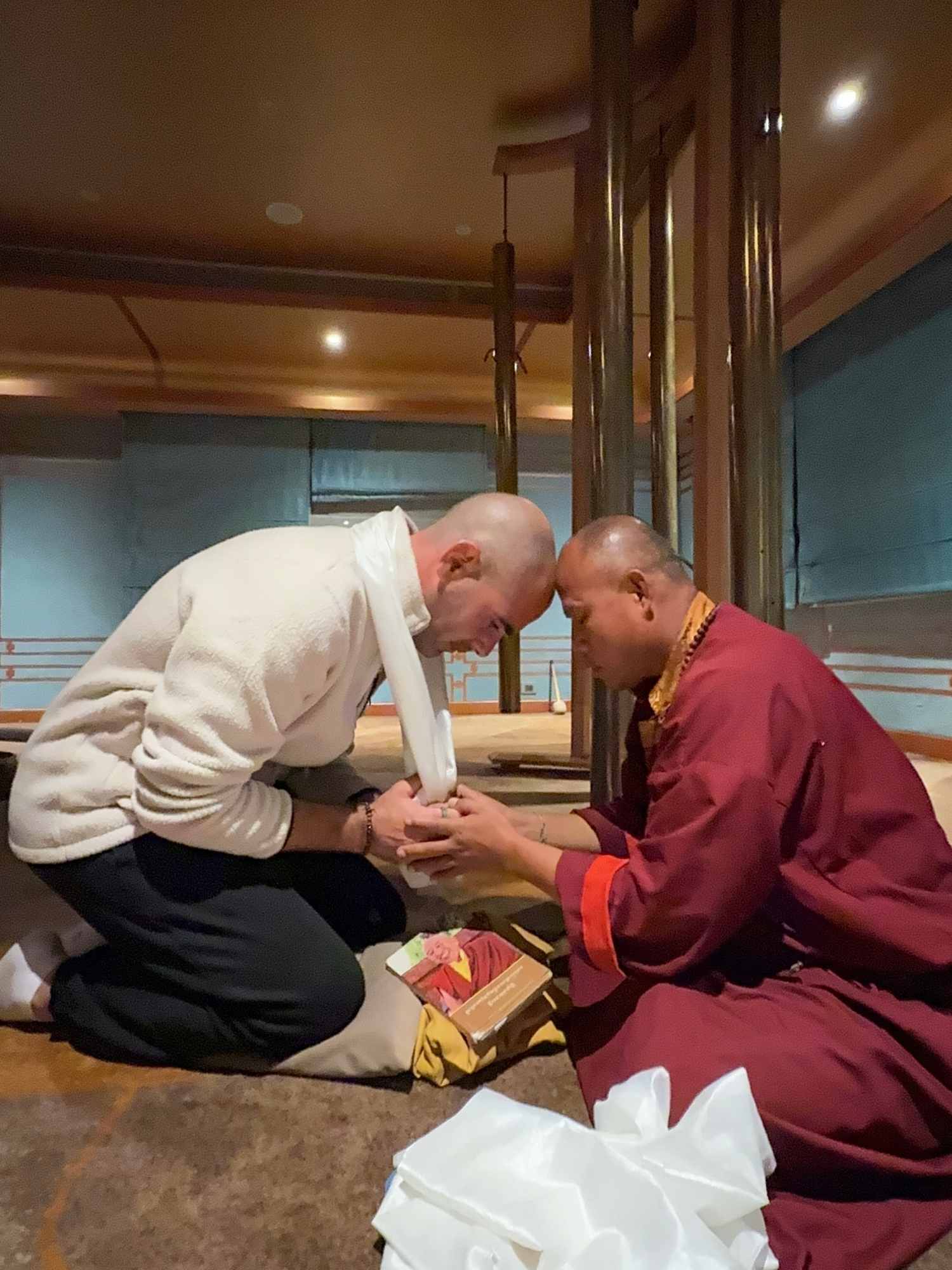
Day 1–2: Arrival in Kathmandu. A night at Dwarika's Hotel, the city's most refined property, designed around a museum-grade collection of restored Newari architecture. A private tour of the medieval temple complexes of Bhaktapur and Patan with a Sanskrit-reading guide. (For more on Kathmandu's overlooked depth, our insider's guide to luxury Kathmandu is essential reading.) Day 3: Helicopter transfer to Lukla. A short trek to Phakding for acclimatisation. Day 4–5: Phakding to Namche Bazaar. Two nights in Namche — the Sherpa capital — with a rest day for altitude adjustment and a morning hike to the Everest View Hotel for the first sight of the great peak. Day 6: Namche to Tengboche. The monastery here is the spiritual heart of the Khumbu, and an evening puja ceremony — chanting, butter lamps, the smell of juniper smoke — is one of the more affecting moments of the journey. Day 7: Tengboche to Pangboche. The trail descends to the Imja Khola river and climbs to one of the oldest Sherpa villages in the region. Pangboche Gompa, the oldest monastery in the Khumbu, contains a relic believed by some to be a yeti scalp. The lama who guards it has welcomed Elysian Himalaya travellers for over a decade. Day 8: Pangboche to Ama Dablam Base Camp. Five hours of climbing through a side valley most trekkers never enter. The mountain grows in scale with every step. The base camp sits at 4,600 metres on a grassy shelf directly beneath the southwest face. You arrive in time for the alpenglow — the moment, just before sunset, when the entire face turns molten gold. Day 9: A full day at base camp. This is the heart of the trek. Hike along the moraine. Visit the climbers' tents if it is the autumn season. Sit, with tea brought to you by your chef, and watch the light change on a mountain that has, by this point in your life, become personal. Day 10–11: Descent to Tengboche and onward to Lukla. We move efficiently downward, which the body welcomes. Day 12: Helicopter back to Kathmandu. A final night at Dwarika's. A long bath. A glass of something to mark the threshold between then and now.When to Go: The Two Windows
There are two seasons for Ama Dablam, and they are not equal.
Autumn (October–November) is the classical season. Skies are at their clearest, the air is dry, the views are unimpeded. October in particular is considered the perfect month — a four-to-six-week window of stable weather, dry trails, and that piercing high-altitude blue that exists nowhere else. This is the season for first-time Himalayan trekkers and for photographers. Spring (March–May) is the connoisseur's season. The skies are not quite as clear as October, but the rhododendrons are in bloom — entire hillsides red, pink, white — and the climbing season is in full swing, which means the base camp itself has a small encampment of expedition tents and prayer flags. There is more life. There is also less competition for the best lodges.We do not recommend the monsoon (June–September), when trails are slippery and views obscured, or deep winter (December–February), when the cold at 4,600 metres becomes punishing. For more on seasonal timing across all our destinations, see our season-by-season guide to luxury Nepal travel.
Who This Trek Is For
Not everyone. That is the honest answer.
The Ama Dablam Base Camp trek is moderate in difficulty — there is no technical climbing, no exposure that requires ropes, no terrain that an averagely fit person in their forties or fifties cannot manage. But it does require five to seven hours of walking per day, at altitudes above 3,500 metres, in conditions that can change quickly. The travellers who get the most from it are those who arrive prepared: cardiovascular fitness from regular hiking or running, mental flexibility, and a willingness to let the mountain set the pace.
It is, however, ideally suited to travellers who want the Himalayan immersion without the Everest Base Camp crowd. Couples who want a journey they will talk about for the rest of their marriage. Photographers who have done the obvious peaks and want the one they have not seen on a thousand Instagram feeds. Greek HNW travellers who have already walked Annapurna or visited Bhutan and are ready for the next, quieter level. (Our comparison of Nepal and Bhutan is a useful framing if this is the choice you are weighing.)
If you are stepping into a Himalayan trek for the first time and want the simpler, lower, more comfortable introduction, the Annapurna luxury trek may be the more sensible beginning. Ama Dablam is the second journey, not the first.
The Quiet Argument for Going
We are sometimes asked why anyone with the means to vacation anywhere in the world — Saint-Barth, the Maldives, a private island in the Cyclades — would choose to walk for ten days to a mountain.
The answer is that the mountains do something islands cannot. They are not entertainment. They are not relaxation. They are, for those who arrive open to it, a brief, exact realignment of scale. You spend ten days in the company of a peak that has stood for forty million years. You sleep beneath stars that, at 4,600 metres, are no longer scattered but stacked. You eat simple food in a simple room and notice, somewhere around day five, that something inside you has gone quiet that was not quiet before.
This is the experiential wealth we have been writing about across all of our journeys — the kind of richness that does not photograph but is the only kind worth pursuing. The Ama Dablam trek delivers it in concentrated form.
Designing Your Journey
Every Elysian Himalaya Ama Dablam trek is bespoke. We do not run groups. We do not offer fixed departures. We design each journey around the traveller — their fitness, their interests, their pace, their constraints, the people they are travelling with, the season they can spare, the photographs they have already taken in their life and the ones they have not.
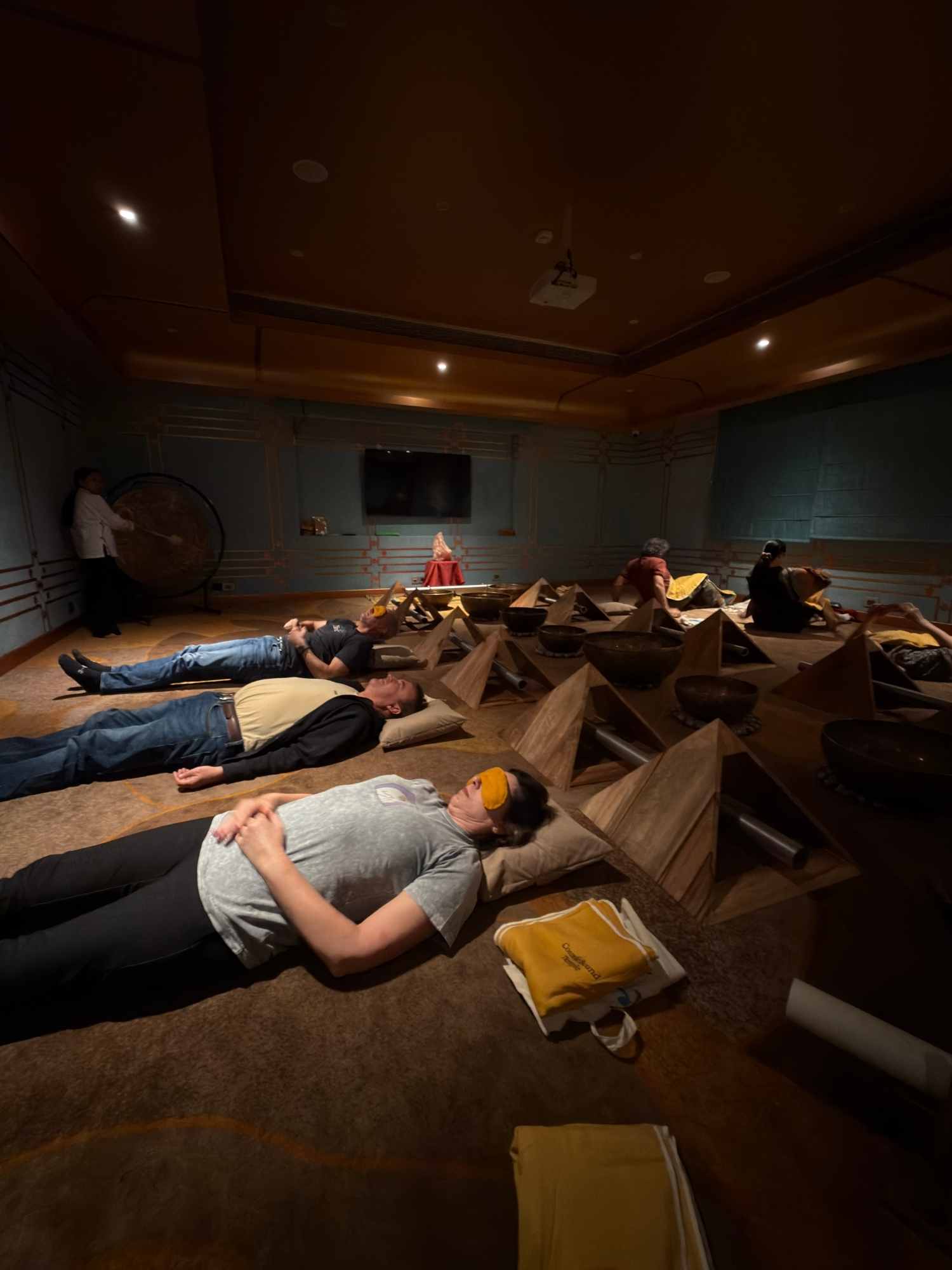
The base camp trek itself is one component. We routinely build it into longer itineraries — combined with a private helicopter day flight over Everest, with a few nights in Bhutan, with a return to Kathmandu for a closing immersion in Newari art, with a wellness extension at a Pokhara retreat. The architecture is open. The standard is fixed.
If Ama Dablam — the most beautiful mountain in Nepal, the Matterhorn of the Himalayas, the Mother's Necklace — has begun to occupy a quiet corner of your imagination, we would be glad to begin the conversation. Tell us when you would travel, how you walk, what you have already seen. We will design something that you will not stop talking about.
Begin designing your bespoke Ama Dablam journey →Dimitrios Giannopoulos founded Elysian Himalaya to share Nepal with discerning travellers. He has walked the Khumbu twice and counts the Ama Dablam Base Camp moraine among the most quietly affecting places he has stood. Read his story.