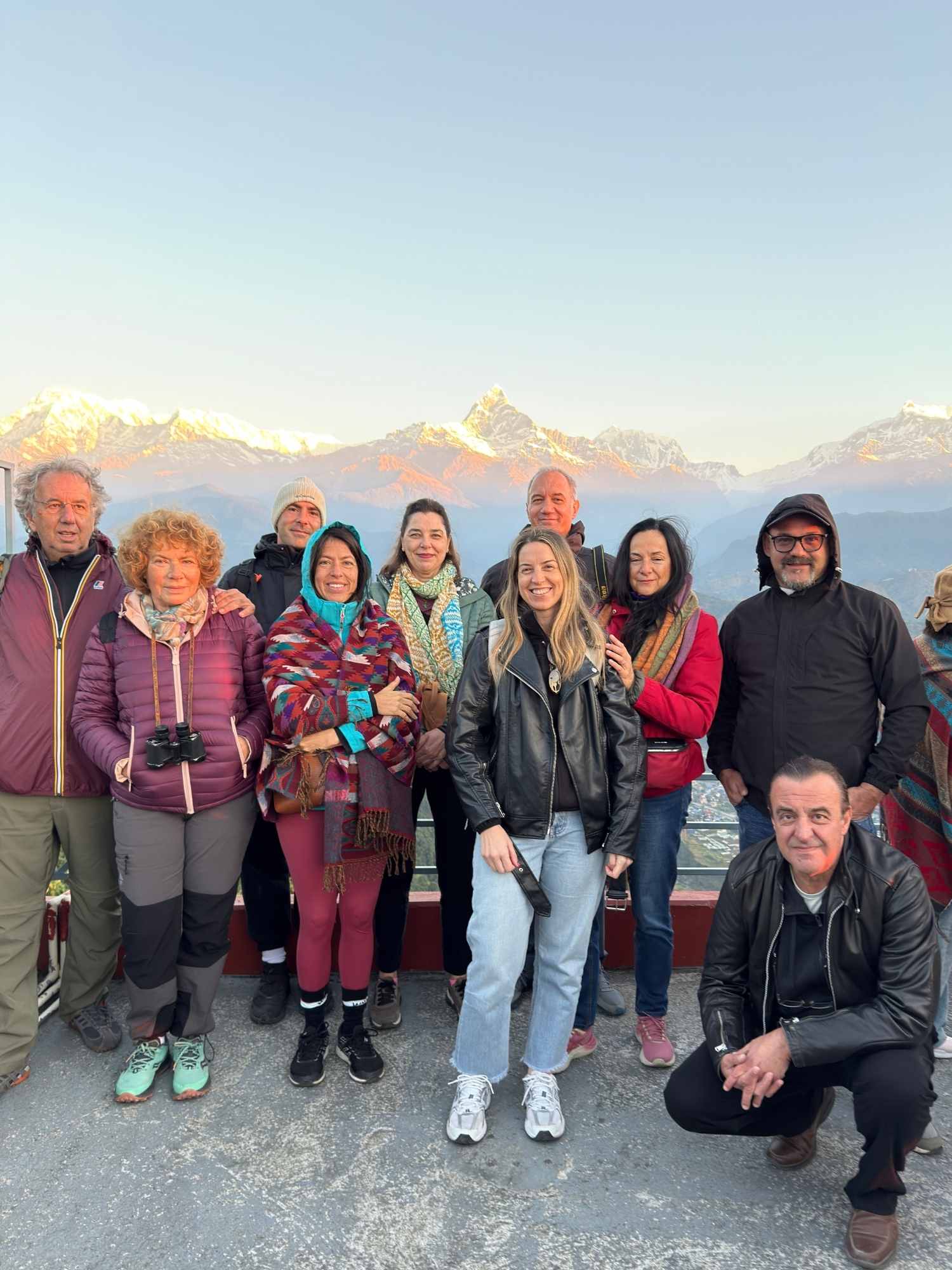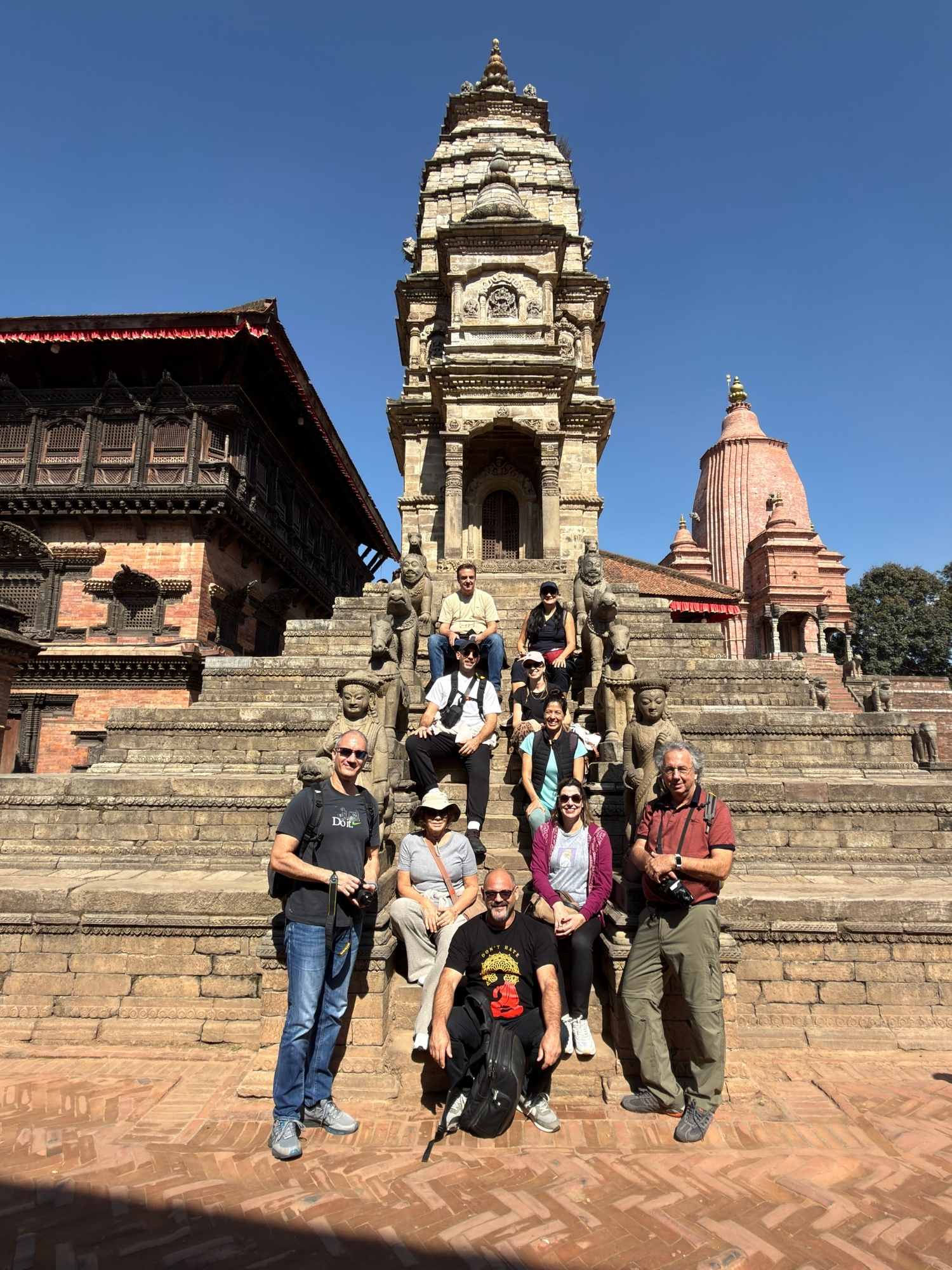
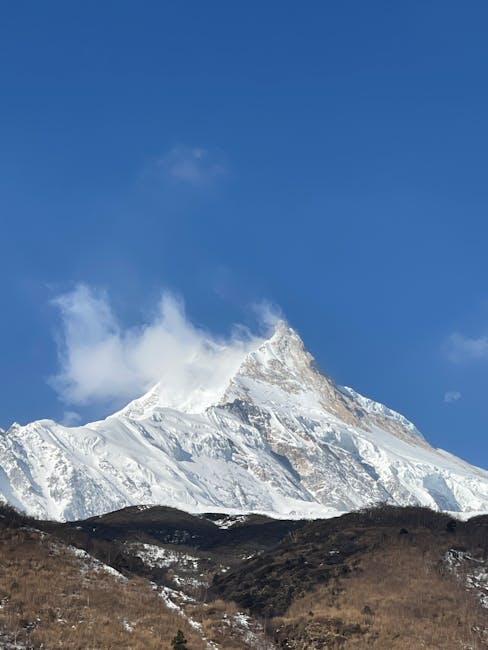
There is a moment, somewhere above the village of Samagaon, when the walls of the Budhi Gandaki valley fall away and Manaslu reveals itself in full. Eight thousand one hundred and sixty-three metres of ice and granite. The eighth-highest mountain on Earth. And almost no one is there to see it.
This is the secret the world's most discerning travellers have begun to whisper to one another in the lounges of Geneva, the suites of Chedi Andermatt, the private salons of Athens. Everest belongs to the lists. Annapurna belongs to the photographers. But Manaslu — Manaslu belongs to those who understand that true privilege is not access, but solitude.
The Manaslu luxury trek is not Nepal's most famous journey. It is, by deliberate and considered design, Nepal's most exclusive.
Why the World's Most Discerning Trekkers Are Choosing Manaslu
For three decades, the trekking conversation in Nepal has been dominated by two regions. The Everest Base Camp route attracts more than thirty thousand trekkers per year. The Annapurna Circuit, even after the road incursions of the 2010s, still channels tens of thousands through its passes each season. These are extraordinary places. They are also, by any meaningful definition, crowded.
Manaslu operates on a different principle entirely. Designated a restricted area by the Government of Nepal, it requires a special permit, a registered guide, and a minimum group size — restrictions that have, by intention, kept the annual visitor count below five thousand. To put that figure in perspective: more people summit Everest in a single climbing season than complete the Manaslu Circuit in an entire year.
The result is something almost extinct in modern adventure travel: a high-altitude journey that retains the texture of discovery. You can walk for an hour without seeing another foreign face. You can sit on the prayer-flagged terrace of a Tibetan farmhouse and hear nothing but yak bells and the distant rumble of an avalanche on Manaslu's southern face. You can, in 2026, still feel as though you have arrived somewhere the rest of the world has not yet found.
This is the foundation of our philosophy at Elysian Himalaya — the conviction that the rarest luxury is not five-star service but five-star privacy. Manaslu is where that philosophy expresses itself most completely.
The Circuit: A Cultural Crossing of Nepal Few Will Ever Walk
The Manaslu Circuit traces a ten-to-fourteen day arc through one of the most ethnographically rich corridors in the Himalaya. The trail follows the Budhi Gandaki river upward from the lower Hindu villages of Soti Khola and Machha Khola, climbs through the transitional terraced agriculture of Jagat and Deng, and then enters — somewhere around Namrung — a world that is, in every meaningful sense, no longer Nepal.
It is Tibet.
Not politically, of course. But culturally, linguistically, architecturally, spiritually, the upper Manaslu valley is Tibetan. The villages of Lho, Samagaon, and Samdo are inhabited by Nubri-speaking communities whose ancestors crossed the Larkya pass from the Tibetan plateau centuries ago and never went home. The houses are flat-roofed and stacked with juniper for the winter cold. The monasteries — Pungyen Gompa above Samagaon, Ribung Gompa nearby — are working spiritual institutions, not heritage attractions.
For the luxury traveller, this is the Manaslu trek's most underappreciated quality. You are not visiting a recreated Tibet behind a velvet rope. You are walking through one of the last living Tibetan-Buddhist cultures still practising at altitude, in its original valleys, on its own terms. The contrast with the more commercialised cultural circuits is profound.
The journey culminates at the Larkya La pass — 5,160 metres — and then descends, dramatically, into the Marsyangdi valley and the upper reaches of the Annapurna region. It is a circuit in the truest sense: you do not retrace your steps, you cross a country.
What "Luxury" Means on a Restricted-Area Trek
Here, the discerning reader will pause. Luxury, on a tea house trek above 4,000 metres, in a restricted area where the infrastructure is, by Western standards, modest?
The answer requires honesty. Luxury on the Manaslu Circuit does not mean a butler turning down your bed at 4,200 metres. It means, instead, the engineering of every variable that can be engineered, so that the journey's irreducible challenges — the altitude, the distance, the cold — are met with the maximum possible support.
In practical terms, an Elysian-level Manaslu trek looks like this:
- The best available room in every tea house, secured months in advance. On a circuit where the better lodges in Samagaon and Samdo can hold no more than a dozen rooms, advance reservation is the difference between a private en-suite and a shared dormitory. We book the former. Always.
- A private chef accompanying the group. The standard tea house menu of dal bhat and fried noodles is replaced — or, more accurately, supplemented — with continental breakfasts, freshly baked bread carried by porters, properly brewed espresso at altitude, and dinners that respect both the body's caloric demands and its desire for something refined.
- Full porter and pack-animal support. Our guests carry only a daypack. Everything else — duffels, equipment, food provisions, even the chef's kitchen — moves ahead by mule or porter team.
- Premium oxygen, satellite communications, and a registered medical professional. At altitude, the difference between adequate and exceptional safety provision is not a luxury. It is the foundation on which the rest of the experience is built.
- Helicopter contingencies, fully briefed and pre-arranged. If weather or health requires it, our guests can be evacuated to Kathmandu within hours, not days. This is not a service we hope never to use; it is the safety net that allows the trek's rhythm to remain unhurried.
- Two private guides, not one. A senior expedition leader and a cultural guide whose role is to translate the spiritual life of the upper valley — the meaning of the prayer wheels, the lineage of the Pungyen lamas, the symbolism of the festival masks at Lho.
The result is a trek that is, by any meaningful measure, the most thoroughly supported high-altitude journey available in Nepal — and, simultaneously, the most discreet. You will not see a brand on a duffel bag. You will not stay in a "luxury lodge" advertised in a magazine. Manaslu's luxury, like the mountain itself, hides in plain sight.
The Itinerary: Fourteen Days, Four Worlds
A typical Elysian Manaslu journey unfolds over fourteen days from Kathmandu, with two further days reserved as a weather buffer. The pace is deliberately unhurried — not because the trek demands it, but because the experience deserves it.
Days 1–2: Kathmandu — Acclimatisation and Cultural Setting. Two nights at Dwarika's or the Hyatt Regency. A private tour of Boudhanath at dawn. A briefing with the lead guide and the medical team. An early dinner of newari cuisine in the courtyard of a heritage haveli. Day 3: The Drive to Soti Khola. A long but spectacular eight-hour transfer in a private 4×4 convoy along the road that follows the Trishuli and then the Budhi Gandaki. We travel with experienced drivers, never in a group vehicle. Days 4–6: Lower Valley — Hindu Nepal. From Soti Khola through Machha Khola and Jagat, the valley deepens. The villages are Hindu, the architecture is Gurung and Magar, the climate is sub-tropical. Hot showers are still possible. The trail is a museum of rural Nepalese life. Days 7–9: The Transition — Into the Buddhist Highlands. Through Deng and Namrung, the world changes. The first chortens appear. Prayer flags multiply. The houses flatten and turn Tibetan. By Lho — where the great Manaslu reveals itself for the first time, framed by the mani walls — the cultural transformation is complete. Days 10–11: Samagaon and the Pungyen Acclimatisation. Two nights in Samagaon, the trek's cultural and spiritual heart. A morning hike to Pungyen Gompa, a private audience with the resident lamas (when in residence), and an afternoon with our cultural guide exploring the village's everyday rhythms. Day 12: Samdo and the Last Inhabited Settlement. A short ascent to Samdo, the highest year-round inhabited village on the Nepalese side of the trail. The Tibetan border is two hours away on foot. Day 13: Larkya Phedi and the Pre-Dawn Approach. A modest move to the base of the pass. An early dinner. An early sleep. Day 14: The Larkya La Pass. A three-thirty start. Eight to ten hours of climbing and descending across the highest point of the journey at 5,160 metres. The descent into the Marsyangdi valley brings the first views of the Annapurnas. The walls of one Himalayan kingdom give way to another. Days 15–16: Bimthang and Beyond. A descent through one of the most beautiful valleys in Nepal. A helicopter, if desired, can lift the group from Bimthang directly back to Kathmandu — a forty-minute flight that compresses what would otherwise be three days of further trekking into a single, unforgettable ascent through the Himalayan peaks.For travellers who want every constraint dissolved, our Ultimate journey extends this final flight into a private helicopter tour of the western Himalaya — Manaslu, Annapurna, and finally Mustang — before returning to Kathmandu's most exclusive accommodation.
When to Go: The Two Windows That Matter
The Manaslu Circuit is, by the nature of its altitude, a two-season trek.
Spring (mid-March to mid-May) is the season of clarity and rhododendron. The lower valley is in bloom. The mountain views are at their sharpest. Temperatures at altitude are cold but manageable. The crowd, such as it is, is light. This is the connoisseur's spring. Autumn (late September to mid-November) is the season of harvest and crystalline light. The skies, after the monsoon, are at their cleanest of the year. The villages are at their most photogenic — buckwheat drying on roofs, prayer flags freshly raised for the autumn festivals. This is the photographer's autumn, and the season most luxury Manaslu treks are scheduled.The intermediate seasons — winter and monsoon — are not, in our view, suitable for the journey at the level we offer it. The pass becomes dangerous in winter, and the lower trail becomes hazardous in the monsoon. We will gently decline a trek scheduled outside these windows.
The Cost of Exclusivity
A fully bespoke Elysian Manaslu trek — fourteen to sixteen days, two private guides, a chef, full logistics, helicopter contingency, and the best available accommodation throughout — typically begins at €11,500 per person and rises with group size, helicopter inclusion, and accommodation upgrades on either end.
This figure reflects the true cost of doing the trek properly. Lower-priced versions of the Manaslu Circuit exist; they are not what we do. The difference, articulated honestly, is the difference between visiting a place and being received by it.
For a complete breakdown of what Nepal trips cost at this level, our pricing breakdown article lays it out in full.
Manaslu, Annapurna, or Everest? The Honest Answer
The question we are asked most often by clients considering their first major Nepalese trek is whether to choose Manaslu, Annapurna, or Everest Base Camp. The honest answer depends on what you are looking for.
If you want the iconic image — the prayer flags at Base Camp, the silhouette of Everest at sunrise, the satisfaction of having stood beneath the world's highest peak — Everest is the right journey.
If you want the most varied trek — a circuit that crosses agricultural valleys, alpine meadows, and a high pass; that takes you through both Hindu and Buddhist Nepal — Annapurna remains an exceptional choice.
If you want what almost no one else has — a permit-restricted, deeply Tibetan, sparsely travelled high-altitude journey through one of the last fully traditional valleys in the Himalaya — there is only one answer.
Begin the Conversation
Every Elysian journey begins with a conversation, not a brochure. The Manaslu Circuit is the kind of trek that rewards careful planning — months, not weeks — and a guide who knows when to push, when to pause, and when to step aside and let the mountain speak for itself.
If you are considering Nepal for 2026 or 2027, and the idea of a journey that ends with a private helicopter flight from Bimthang to Kathmandu under the shadow of Manaslu speaks to you, begin your design here.
The pass will still be there. The villages will still be there. But the windows in the calendar are narrow, and the rooms in the right tea houses are few. The travellers who walk Manaslu next season will be the ones who began the conversation this one.