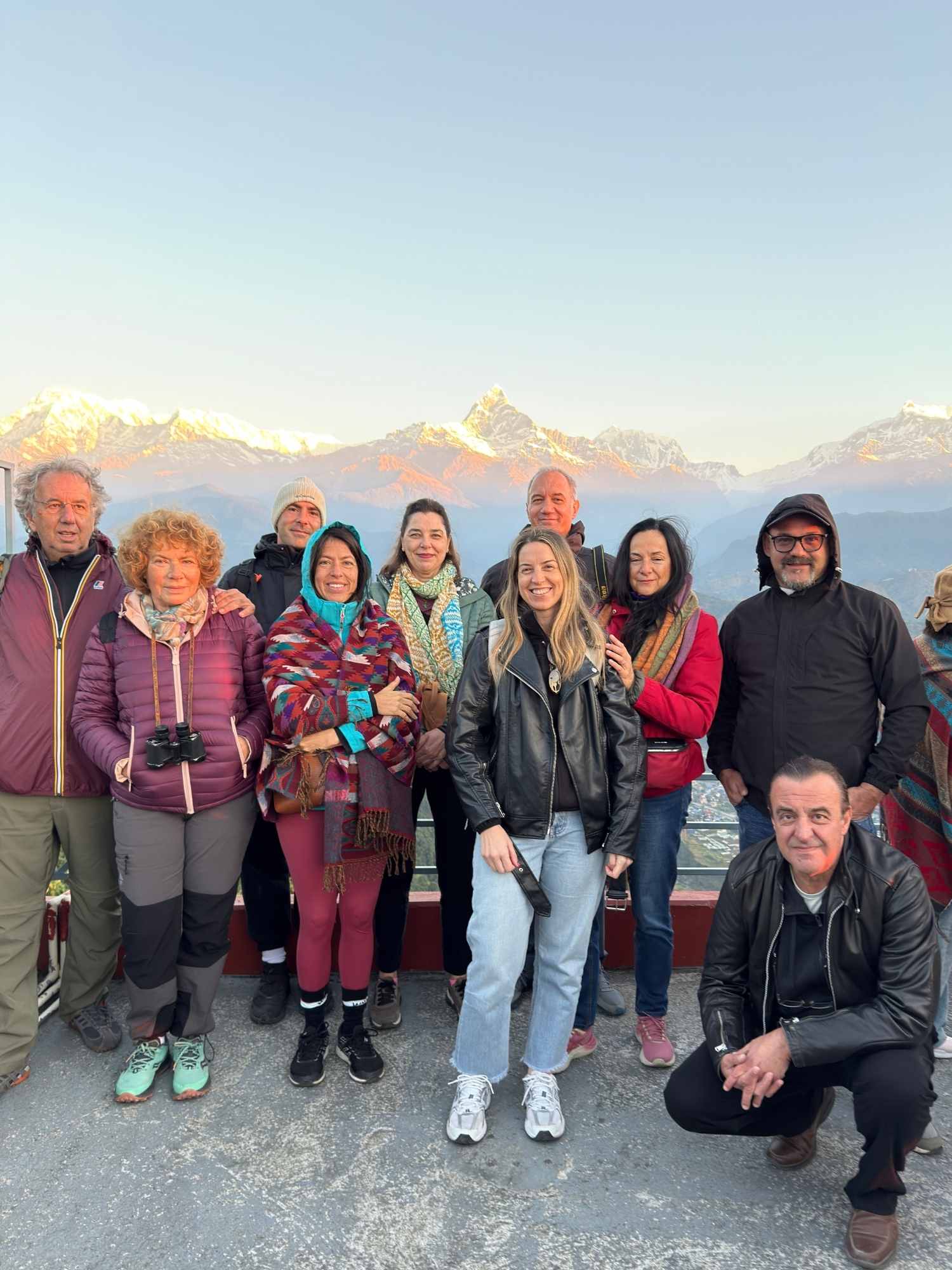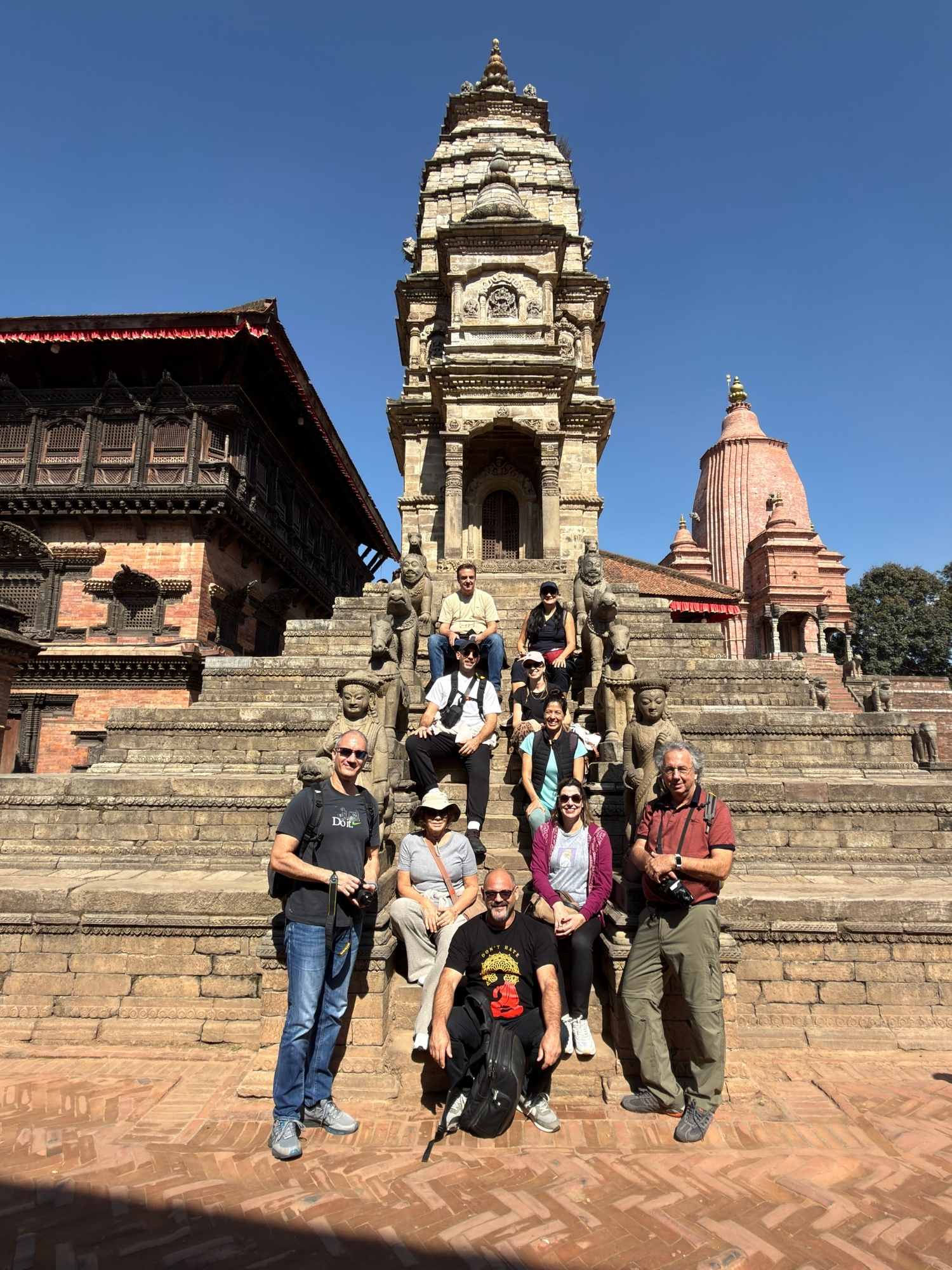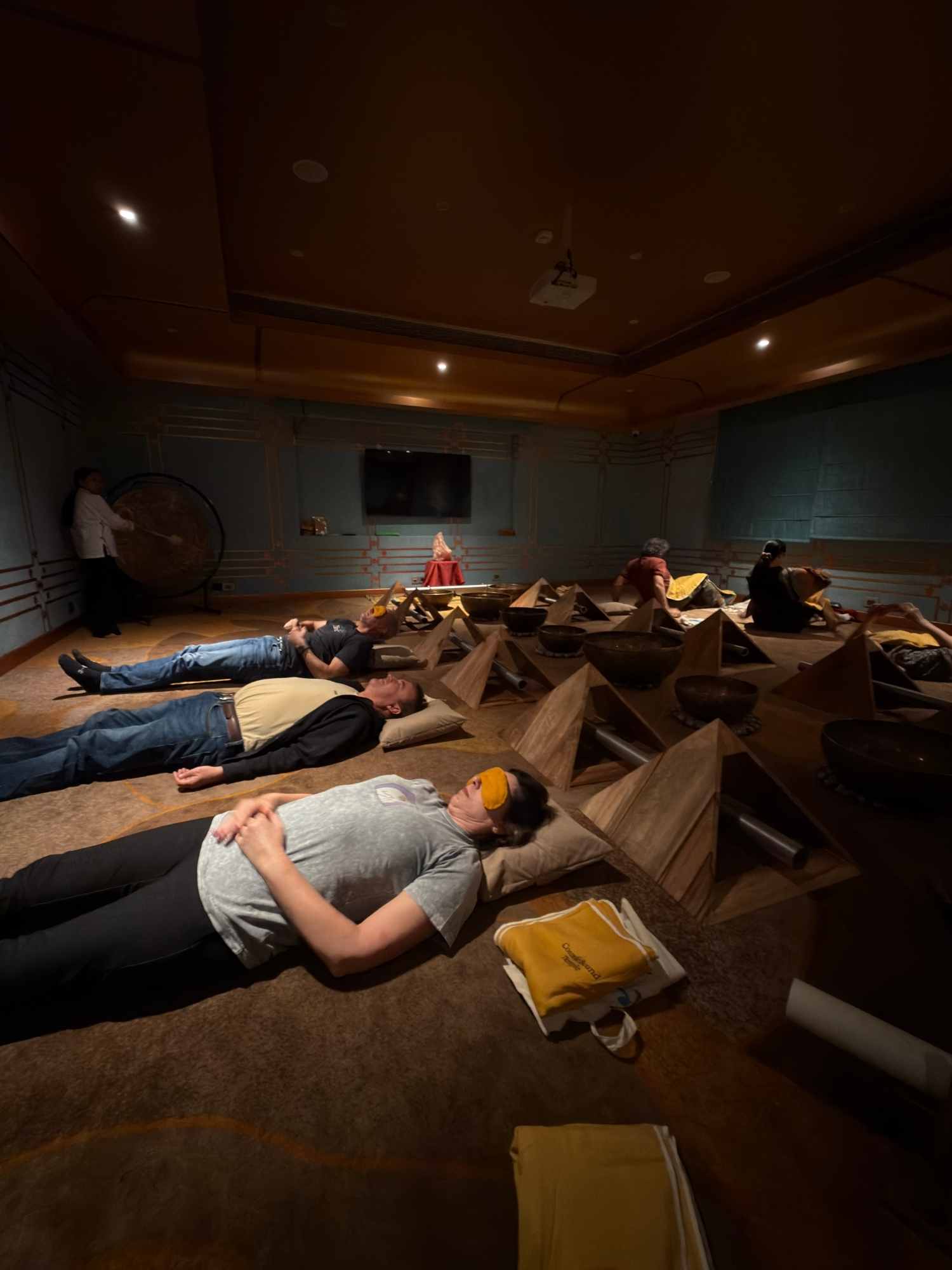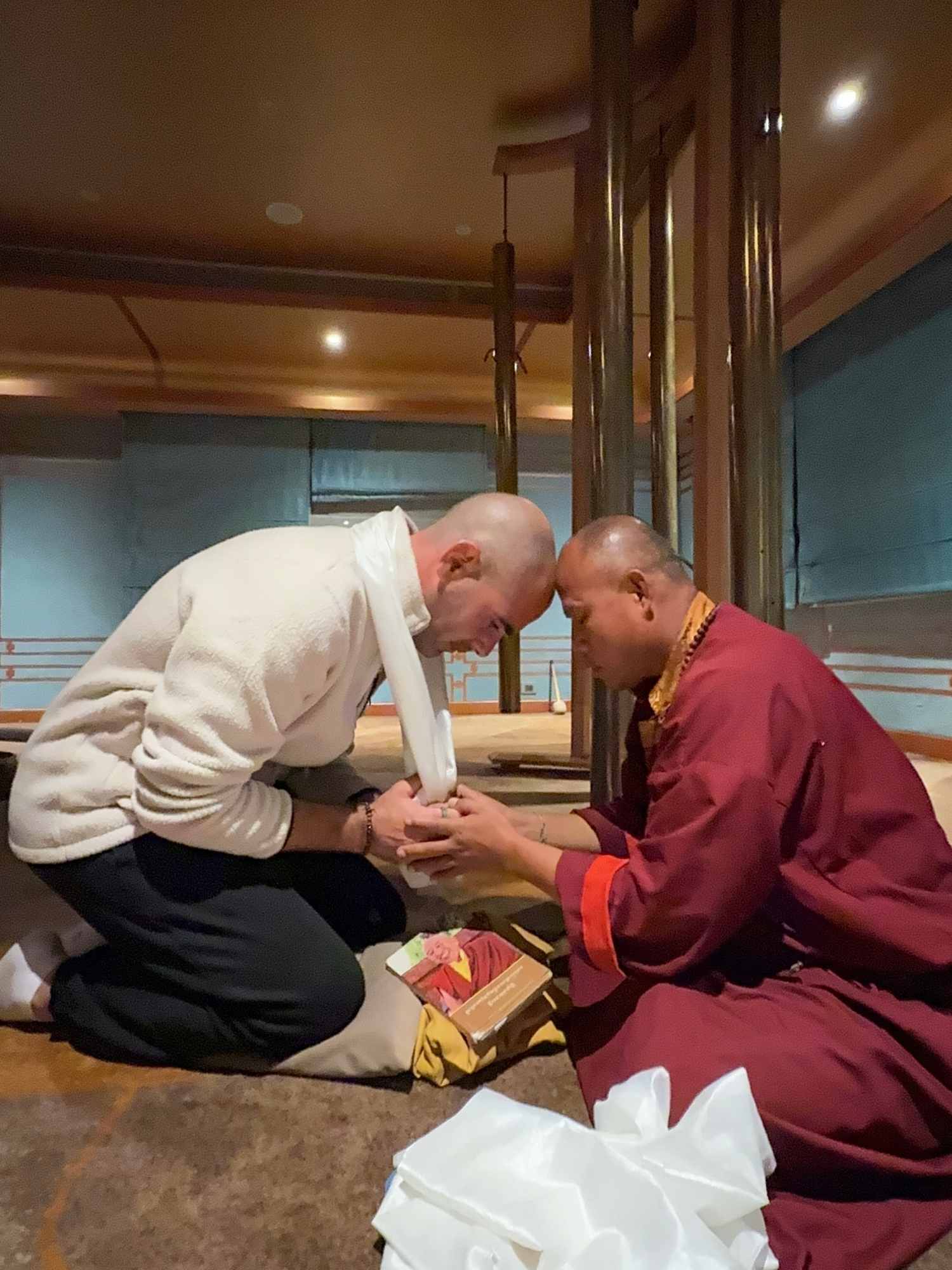
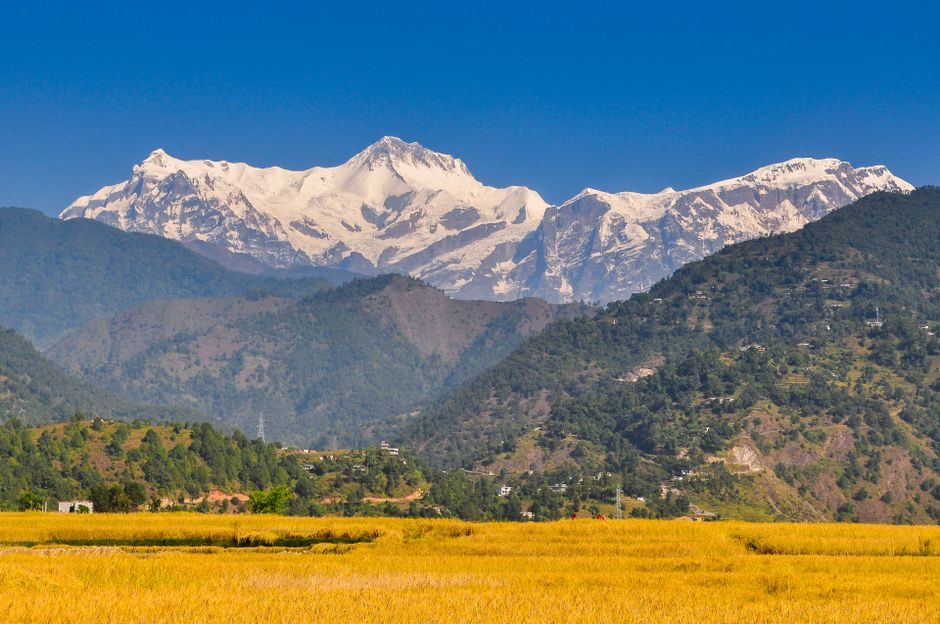
Every year around the third week of September, something happens here that I have never entirely got used to. The monsoon lets go. It does not fade — it stops, more or less overnight, and the air it leaves behind has been washed of eight weeks of dust. One morning you step outside in Pokhara and Machhapuchhre is simply there, close enough to see the snow moving on the summit ridge, where the day before there was a grey wall. That is the beginning of autumn in Nepal, and it is the reason October and November are the two months the entire mountain economy of this country lives on.
This year those months arrive differently. As of 5 September, following the Rasuwa flood of 26 August, more than 1,340 people have died and close to 4,900 remain missing according to the Nepal Police count, fifteen municipalities have been declared disaster zones for three months, and parts of the country north of Kathmandu are closed and will stay closed. I have written the full account of what happened, and I keep it current, in Nepal after the Rasuwa flood. What follows here is the narrower and more practical thing people keep writing to ask me for: a map of the season. Where the country stands, region by region, so that you can plan October and November against facts rather than against a news bulletin.
What autumn in Nepal actually is
The Nepali year has one season that everything else is measured against, and this is it.
The mechanism is simple enough. The monsoon withdraws from east to west across the country through the second half of September. Behind it the humidity collapses, the rivers run down from brown to green, the trails dry and harden, and the haze that sits over the Kathmandu valley for most of the year is gone. What you get for roughly ten weeks is stable high pressure, cold clear nights, days that are warm in the sun at altitude and genuinely hot in the lowlands, and visibility that is the best it ever gets. The eight-thousanders stand up out of the horizon from hill towns a hundred and fifty kilometres away.
It is also the country's festival quarter. Dashain, the longest and most important festival of the Nepali calendar, falls in October, and Tihar — the festival of lights, when every doorway in every town is outlined in oil lamps and marigolds — follows a fortnight or so later. For two or three weeks the whole country is travelling home to its own villages. It makes some logistics slower and it makes the experience of being here immeasurably richer. If you want to understand how the seasons here genuinely differ from one another, our season-by-season guide sets it out in full.
None of that has changed this year. The weather does not know what happened in Rasuwa. What has changed is the map.
Where the season stands, region by region
Everything in this section is drawn from the situation as recorded on 5 September, and the figures and statuses are the ones in our flood article, which is the single place I keep updated. Before any journey departs, we check each of these again, because in a recovery of this kind things change by the week. Where I do not know something for certain, I have said so rather than rounded it off.
The Kathmandu valley
Open, and operating normally. Hotels, monuments, restaurants and the Durbar Squares of Kathmandu, Patan and Bhaktapur are all working as they were. Tribhuvan International Airport is running without interruption, as is the whole domestic network out of it.
The valley sits in a different watershed from the flood, and its life is uninterrupted. What has changed is the mood, which is quieter and more serious than in an ordinary autumn, and which I think most travellers find they would rather meet honestly than not meet at all.
Pokhara and the Annapurna region
Open, and fully operational. Annapurna Base Camp, the Circuit, Poon Hill, Mardi Himal — trails and lodges are working normally, and the flights into Pokhara are running.
This is where I live, and I want to be precise about it, because the distance involved is the single fact that never survives a news report. On the morning of 26 August, while a valley a hundred kilometres north of here was being erased, Pokhara had an unremarkable Wednesday. Not a drop of rain beyond the ordinary monsoon. The lake was flat, the shops were open, the flights went out on time. Nepal is a country of separate mountain systems and separate rivers, and what happens in one of them very often does not touch the next.
The Everest region
Open. Trails, lodges and the flights into Lukla are operating normally, and that applies to Everest Base Camp, to Gokyo and to the trails between them.
The Khumbu lies in a different range and on an entirely separate river system, many tens of kilometres from Rasuwa. Nothing about the flood reached it. If Everest was your autumn, it is still your autumn.
The Manaslu Circuit
Open. Manaslu drains into the Budhi Gandaki, a different river from the one that flooded, and the trail itself is untouched.
The one thing to do here is ask about the access road before committing, because the approach and the trail are two different questions. We ask on behalf of every traveller before a Manaslu journey is confirmed.
Chitwan and the lowlands
Chitwan National Park is open, with hotels, safaris and restaurants operating normally. The flood ran downstream through the Trishuli corridor and on into Chitwan district, and the riverbanks there are part of what was hit — which is exactly why the distinction matters. The park is working. The banks of the Trishuli are not a place to be.
Mustang and the rain shadow
Mustang sits behind the Annapurna and Dhaulagiri massifs, in the rain shadow, on the Kali Gandaki. It is the one part of Nepal that is beautiful in the monsoon as well, and in autumn it is extraordinary: ochre cliffs, a hard blue sky, the wind that comes up the gorge every afternoon like clockwork. Our Ultimate journeys reach Lo Manthang by private helicopter, and that remains the case this season.
One precise note, because it belongs to the closure list rather than to the travel list: of the land crossings into Tibet, only Korala, in Mustang, is working at all, and only for freight. It is not a tourist crossing.
Langtang, Gosaikunda and Rasuwa district
Closed. This is the part of the article I would change if I could, and cannot.
The Langtang valley and Gosaikunda are closed, because the road to Syabrubesi — the village every Langtang trek has ever started from — no longer exists. Dhunche can be reached again only by a narrow, unpaved alternative route suitable for light four-wheel-drive vehicles, and that is not a trekking approach while the valley itself stays closed. Rasuwa district and the banks of the Trishuli and Bhote Koshi are a declared disaster zone with entry prohibited.
We route around all of it entirely, and we will until the authorities say otherwise. Travelling into a live search area helps nobody and gets in the way of the people doing the work. Langtang will reopen. Rebuilding a road of that kind is a matter of months rather than weeks.
The road between Kathmandu and Pokhara
This is the one piece of ordinary tourist infrastructure that the flood genuinely broke, and it is worth understanding properly.
The Prithvi Highway was closed at Krishnabhir, where roughly two hundred metres of road subsided after the Trishuli undercut the slope beneath it. As of 5 September, the Department of Roads had been cutting a 350-metre temporary track into the hillside above the collapse since 4 September; the site engineer expected seven to ten days, and the government was targeting a reopening within September. Traffic was being diverted to alternative routes, and Nepal Police was advising against non-essential long-distance travel.
I am not going to tell you what the road is doing today, because I would be guessing, and the rule we work to is simple: until an official reopening is announced, treat the road as closed. In practice it changes very little for us, because we fly that leg anyway. Kathmandu to Pokhara is twenty-five minutes in the air against six or seven hours on a good day by road, which is why domestic aviation is built into our Premium journeys even in ordinary years.
The land crossings to Tibet
Closed. Rasuwagadhi and Tatopani are both shut; the customs post on the far side at Gyirong is gone. Korala in Mustang is working for freight only. If your autumn involved crossing overland into Tibet, or the Kailash pilgrimage by that route, that is not happening this season and no one should tell you otherwise.
How we are designing October and November
Very little of what we actually do changes this autumn. What changes is the margin built into it.
We route around Rasuwa completely. Langtang, Gosaikunda and the Trishuli and Bhote Koshi corridors are out of every itinerary until they officially reopen. A cancelled Langtang becomes an Annapurna, an Everest or a Manaslu — with the same guide. This is the single most useful thing available to anyone who had booked that valley. The Langtang guides have lost their whole season. Move the journey and keep the person; the mountain is interchangeable, the guide is not. We fly rather than drive the questionable legs, and where a road is doubtful and there is no flight, we use a helicopter, because it removes a variable rather than gambling on one. Insurance with helicopter evacuation and high-altitude cover is not negotiable this year. We ask for it every year. This year we insist. Licensed Nepali guides and local operators only. That has been mandatory here since 2023, and this season it is a safety matter as well, because the guides are the people who know which trails moved.On what an autumn journey costs
People ask, and it is a fair question, so here is the honest answer rather than a deflection.
A journey of this kind is costed only once it has been designed, because no two of them are the same. The shape of it moves with how long you are here, how much of it flies rather than drives, whether a helicopter is doing work that a road would otherwise do, which houses and lodges are holding rooms in the busiest weeks of the Nepali year, and how many of you there are. Those variables do not average well, and a figure quoted before the design exists is a figure that will change. If you would like a number, that conversation starts on our design a journey page, and it is a short conversation once we know what we are building.
What I will say about the money is where it goes. In a country like this one it does not pass through a fund. It goes to the guide, the porter, the driver, the cook, the family that owns the lodge on the ridge. This autumn that matters more than it usually does: tourism is 6.6 percent of this economy, autumn is the quarter the mountain economy lives on, and the former head of the Nepal Tourism Board has already warned the damage to tourism will run six to seven months at least. A single group arriving in October is a winter for several households, and nobody has to apply for it.
Questions people are asking about autumn 2026
Is autumn still the best season to travel in Nepal this year?
Yes. October and November remain the clearest and driest weeks of the Nepali year, with stable weather and the best mountain visibility of the twelve months. Nothing about the disaster in Rasuwa has changed the weather or the trails outside the affected districts.
Which regions are open for autumn 2026?
As of 5 September: Kathmandu, Pokhara, Chitwan National Park, the Everest region including Base Camp and Gokyo, the Annapurna region including Base Camp, the Circuit and Poon Hill, and the Manaslu Circuit. Domestic flights are running normally throughout.
Which regions are closed?
The Langtang valley, Gosaikunda, and Rasuwa district including Syabrubesi, Timure and Rasuwagadhi, along with the banks of the Trishuli and Bhote Koshi, which are a declared disaster zone with entry prohibited. The land crossings into Tibet are closed.
Can I drive from Kathmandu to Pokhara this autumn?
Treat the Prithvi Highway as closed until an official reopening is announced. It was closed at Krishnabhir, a temporary track was being cut above the collapse from 4 September with a seven-to-ten-day estimate, and the government was targeting September. We fly that leg regardless — twenty-five minutes against a long day on the road.
Will the festivals still take place?
Yes. Dashain falls in October and Tihar follows a fortnight or so afterwards, and they are not going anywhere. Expect the country to be travelling to its own villages for parts of both, and plan the logistics around it.
The season ahead
I have watched this film before. After the 2015 earthquake the world saw the footage and cancelled, arrivals fell by roughly a third in the year Nepal needed them most, and the guides and lodge families absorbed it. I would like it to end differently this time.
So: the mountains are where they were. October and November will be clear, and they will be quieter than they should be. If you would like an autumn here designed properly — around what is genuinely open, with Nepali guides, and with the money staying in the valleys it is earned in — begin here. If you would like to know who is writing to you and why a Greek is doing it from Pokhara, the story is on the founder page. And if you would rather see the shape of it first, the journeys we design are a reasonable place to start reading.
If you do not travel with us, travel with someone. Book a Nepali operator, any Nepali operator. The point is not who takes you. The point is that you come.