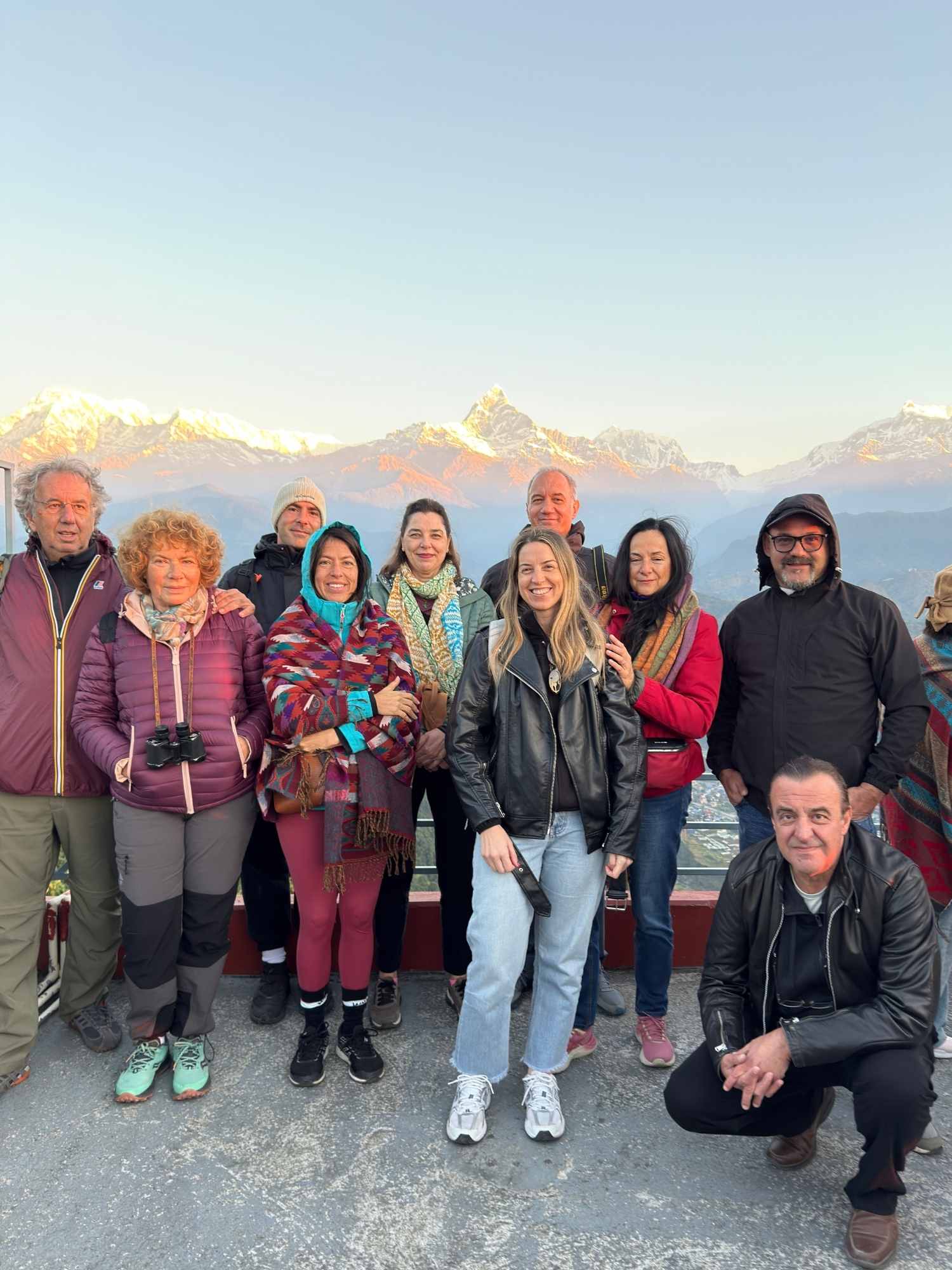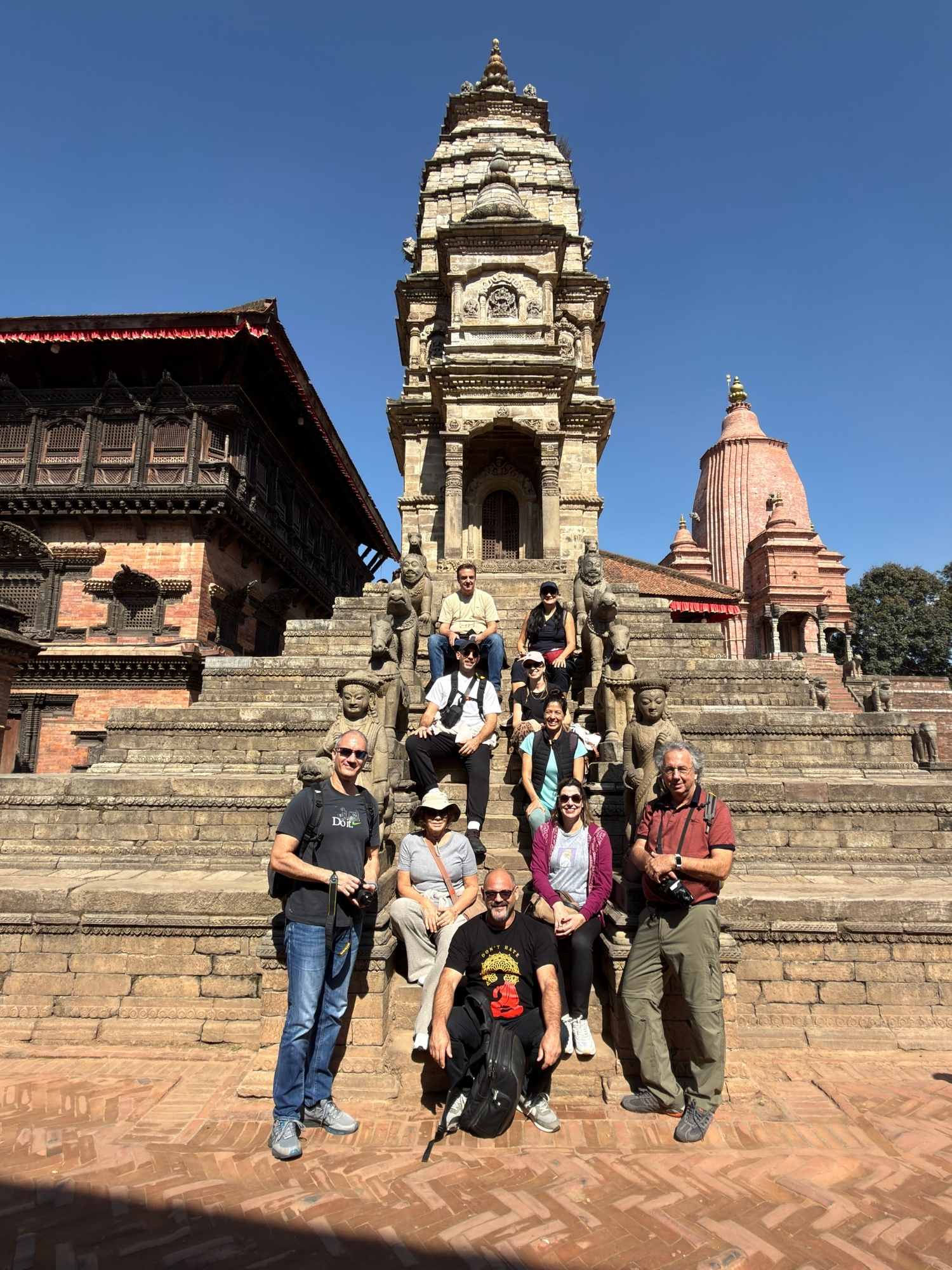
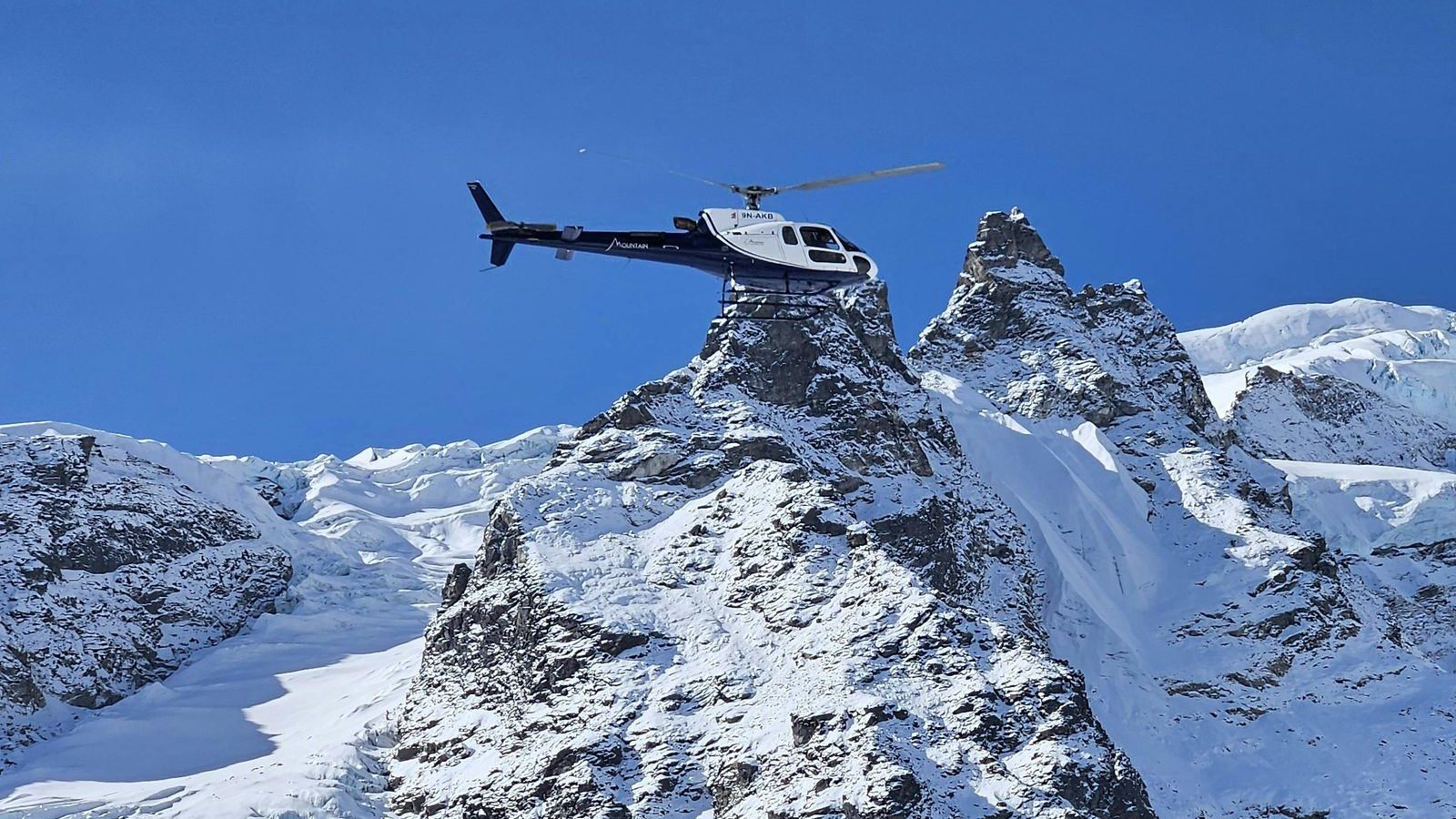
There is a particular silence that exists only at five thousand metres. It is not the absence of sound — it is the active hush of a world that has chosen not to speak. Snow does not crunch beneath your boots; it sighs. The wind does not howl; it breathes. And then, far below the ridge where you stand, the rotor of a Bell 407 begins to thump back to life, and the silence breaks in the most thrilling way imaginable.
This is heli-skiing in Nepal. And no, it does not yet appear on the radar of most people who think they have seen everything.
For decades, the global heli-skiing canon belonged to British Columbia, to Alaska, to a handful of Italian valleys and a few discreet operations in Iceland. The Himalayas, with their thin air and tectonic drama, remained the preserve of mountaineers in down suits, not skiers in cashmere base layers. That has changed. The world's most demanding travellers — the ones who measure luxury not in thread counts but in altitudes the rest of the world cannot reach — have discovered that the snow falling on the leeward slopes of Annapurna, Dhaulagiri and Manaslu is among the most extraordinary powder on earth.
This is not skiing. This is descent into legend.
Why Nepal Has Become the World's Most Coveted Heli-Skiing Frontier
There are mountains, and then there are the Himalayas. Skiing one of the descents off Mount Annapurna IV is not the same kind of experience as carving a chute in Whistler. The proportions are different. The light is different. The very idea of what a mountain is, in the human imagination, is rewritten the first time you stand at the start of a four-vertical-kilometre run with the entire spine of the Annapurna massif framing your visor.
Three forces have converged to make Nepal the most thrilling — and most exclusive — heli-skiing destination of the late twenties.
The first is geography. The country sits at the intersection of the Tibetan plateau and the subtropical Indian subcontinent, which means winter storms roll in dry, deposit snow at extraordinary altitudes, and leave the slopes in conditions that the technical community calls "high-altitude cold smoke" — light, dry, blisteringly fast powder. There is nothing quite like it on the continental snowfields of North America.
The second is access. The world's most respected high-altitude helicopter operators — flying B3e and H125 airframes engineered specifically for the work — can now place a skier at six thousand metres and recover them at the valley floor in the same morning. This was, until very recently, simply not possible at scale. It is also not cheap, and that is precisely the point.
The third is exclusivity. There are no resorts here. No lift queues. No après-ski strip. No condominium developments. The mountains belong, for the few weeks of the season, only to those who have paid for the privilege of disappearing into them. For our Ultimate Journey clients, that singular ownership of place is the substance of true luxury.
The Geography of the Himalayan Powder Belt
Nepal's heli-skiing terrain is not concentrated in a single resort area, as it would be in the Alps or in the Selkirks. It is dispersed across the country's central and western ranges — and our role, at Elysian Himalaya, is to deliver our guests to the precise zones where the conditions, the light and the security align on any given morning.
The Annapurna Sanctuary. A natural cirque ringed by seven peaks above seven thousand metres, the Sanctuary offers what veteran heli-pilots call the most consistent winter powder in the country. Descents off the lower flanks of Hiunchuli and Annapurna South are technical, photogenic and — critically — sheltered from the high-altitude winds that scour the more exposed lines further north. The Manaslu Region. Less famous than Annapurna and Everest, the Manaslu massif (8,163m) is what insiders quietly call "the connoisseur's mountain." The terrain to its southeast — a series of broad, lightly populated valleys above Sama Gaun — has emerged in recent seasons as the most reliable heli-skiing landscape in Nepal, with deep snow accumulations from late December through early March. Dhaulagiri and the Kali Gandaki Corridor. For the most experienced skiers — and only for them — the descents off the eastern shoulder of Dhaulagiri offer continuous vertical drops that simply do not exist anywhere else in the world. These are not commercial runs. They are negotiated, route by route, on the morning, by guides who have spent decades reading these mountains. The Khumbu Approach. For those who wish to ski in the literal shadow of Mount Everest, a small number of operators now offer single-day heli-ski excursions to the southern flanks of the Khumbu region. The skiing is, by Himalayan standards, modest. The view is anything but.The Anatomy of a Day on the Mountain
A heli-skiing day in Nepal is unlike a day on any other mountain on earth. It begins not in a chalet but in a private suite at Temple Tree Resort in Pokhara — or, for our ultra-discreet clientele, at a remote luxury lodge above the lake, where breakfast is served at six and the helipad is forty paces from the door. The Himalayas, in early morning, do something peculiar to the light. The peaks turn first apricot, then white-gold, then the pure cold white of high glaciation. By seven you are in the air.
The flight itself is part of the experience. There is no acclimatisation transit. You rise from the lakeshore to seventeen thousand feet in the space of fifteen minutes, watching terraced rice paddies fall away into pine forest, then into rhododendron, then into the bare rock-and-snow architecture of high altitude. You are deposited, with your guide and one or two others, on a ridge that no human has touched since the last storm. You stand for a moment in the silence I described at the beginning of this piece. And then you push off.
A typical morning yields four to six descents, each between eight hundred and fifteen hundred vertical metres — though on rare days, when the snowpack and weather conspire, runs of two thousand metres are possible. Lunch is served at altitude, often inside the helicopter itself: hot soup from a thermos, fresh khaja from a Pokhara kitchen, perhaps a small flute of champagne for those who prefer to celebrate mid-mountain. The afternoon is for the photogenic descents, the ones you have come for, the ones that will, in years to come, live in your private mythology.
By four you are back at the resort. The sauna is warm. The masseuse is waiting. Dinner — eight courses, paired with wines that have been carefully selected for high-altitude palates — begins at seven thirty. By ten you are asleep, with the soft pulse of generator silence and the distant murmur of the lake outside your window.
This rhythm, repeated across four, five or seven days, is the spine of a Nepal heli-skiing journey. It is also, in our view, the closest thing to perfect winter travel that the modern world produces.
The Costs, Honestly
The question that every serious enquirer eventually asks is the financial one, and we believe in answering it without ceremony. Nepal heli-skiing, properly delivered, is not a budget proposition. The fully-bespoke, single-party experience that Elysian Himalaya curates for its clients — including private helicopter time, certified high-altitude ski guides, luxury accommodation, dedicated chef, support transport and all permits — typically begins at €18,000 per person for a four-day programme and can climb substantially higher depending on group size, exclusivity requirements and the breadth of the surrounding journey.
For comparison, a week of conventional heli-skiing in British Columbia at one of the leading lodges runs between €12,000 and €18,000. For roughly the same outlay, our clients receive not merely heli-skiing of equal or superior quality, but a complete cultural and visual journey through a country that the rest of the world is still discovering. A breakdown of the broader economics of luxury travel in this region is available in our detailed Nepal luxury trip cost guide.
This is not, we should be clear, the right journey for everyone. It is the right journey for the traveller who has skied the great resorts of the world and is now searching for a frontier. It is the right journey for the person who wants the mountain back to themselves. It is the right journey for someone who suspects that the deepest forms of pleasure are not those that the brochure can advertise.
The Window: When Nepal Skis
The Himalayan heli-skiing season is shorter than its North American counterpart and significantly more capricious. The principal months are mid-December through early March, with the most reliable window running from the second week of January through the third week of February. Earlier in the season the snowpack is still consolidating; later, the spring thaw begins and avalanche risk on the steeper aspects rises sharply.
Within this window, the best days are typically the three to five mornings following a major storm event — the so-called "blue-sky days" when fresh powder is everywhere, visibility is unlimited, and the helicopters can access lines that are otherwise simply not available. Our most experienced clients book a week, expecting four flying days within it. The flexibility is, in itself, a luxury. For a more detailed discussion of seasonal nuance, our editorial on the best time to visit Nepal is the natural companion to this piece.
The Safety Question, Addressed Directly
No conversation about Himalayan heli-skiing is complete without an honest discussion of risk. The mountains do not negotiate. The avalanche conditions on these slopes are managed by some of the most experienced high-altitude ski guides in the world — typically Canadian or Swiss-certified guides who have built their careers in commercial heli operations and now apply that expertise here — but the terrain is, by any measure, more serious than that of a commercial resort.
Our protocol is uncompromising. Every guest is fitted with avalanche transceiver, probe, shovel and airbag pack. No descent is initiated without the lead guide's assessment of the slope. Group sizes are kept to a maximum of four skiers per guide. The pilots flying our operations are typically former military aviators with thousands of hours of high-altitude experience, and they will turn the aircraft around without apology if conditions are not right. The right answer, in this terrain, is sometimes no descent at all.
This is part of why the journey is the price that it is. Real safety, at this altitude, is the work of decades of professional preparation. There are cheaper ways to ski in the Himalayas. We do not recommend them.
How We Build the Journey
When a client approaches us for a Nepal heli-skiing journey, our work begins with a quiet conversation. We do not, as a matter of philosophy, sell pre-packaged programmes; the entire point of Elysian Himalaya is that no two journeys are alike. The questions we ask are not the ones a typical travel agency would ask. We want to know what you have skied before, where the best day of your skiing life happened, what you would like to find at the end of it. We want to know whether you would like your wife or husband to join you for a cultural journey through Kathmandu and the Annapurna foothills while you ski, or whether they too will be on the helicopter. We want to know what you would like to be photographing — the descents, the panoramas, the after-light on the peaks — so that we can place the right cinematographer on your team.
From this conversation we build a bespoke design journey — a multi-page narrative of the trip we will deliver, accompanied by visual references, day-by-day rhythms, and a single transparent cost. The conversation is, in itself, part of the experience. It is, we believe, the only way to ensure that the finished journey is yours rather than a template.
You can read more about our philosophy of bespoke travel design in our note on why a private tour guide changes everything — though the heli-skiing journey is, by its nature, one of the most intricately curated experiences we deliver.
The Quieter Reason for Going
There is the obvious reason for a heli-skiing journey to Nepal: the descents, the powder, the photographs, the boast at the next dinner party. And then there is the reason that, in our experience, becomes the real one after the fact.
When you stand alone at the start of a vast, untouched run, with the wind on your face and the entire western Himalayan range arranged across your sightline, something rearranges in you that does not rearrange in the same way at any of the world's groomed resorts. The mountain is not for you. The mountain is the mountain. Your descent does not change it. The privilege of being there — of moving through that landscape for a few perfect minutes — does not entitle you. It humbles you. And humility, in the lives of people who can afford whatever they wish, is the rarest and most valuable thing.
This is the substance of what we mean, at Elysian Himalaya, when we talk about experiential wealth. It is not about more. It is about deeper. The heli-skiing journey is one of the purest expressions of this principle that we know how to deliver.
A Final Word
The Himalayas were, until very recently, a place that one travelled to in order to climb, to walk, to seek out a monastery, or — for the most particular travellers — to be still in the presence of mountains that other mountains are measured against. They are now, also, a place that one can ski. Not at resorts. Not in lift queues. But in the only way the Himalayas would ever permit it: privately, with the mountain returned, for a few hours, to the silence it has held for ten million years.
If this is the journey you have been quietly wanting to take, we would be honoured to design it for you.
Begin the conversation →