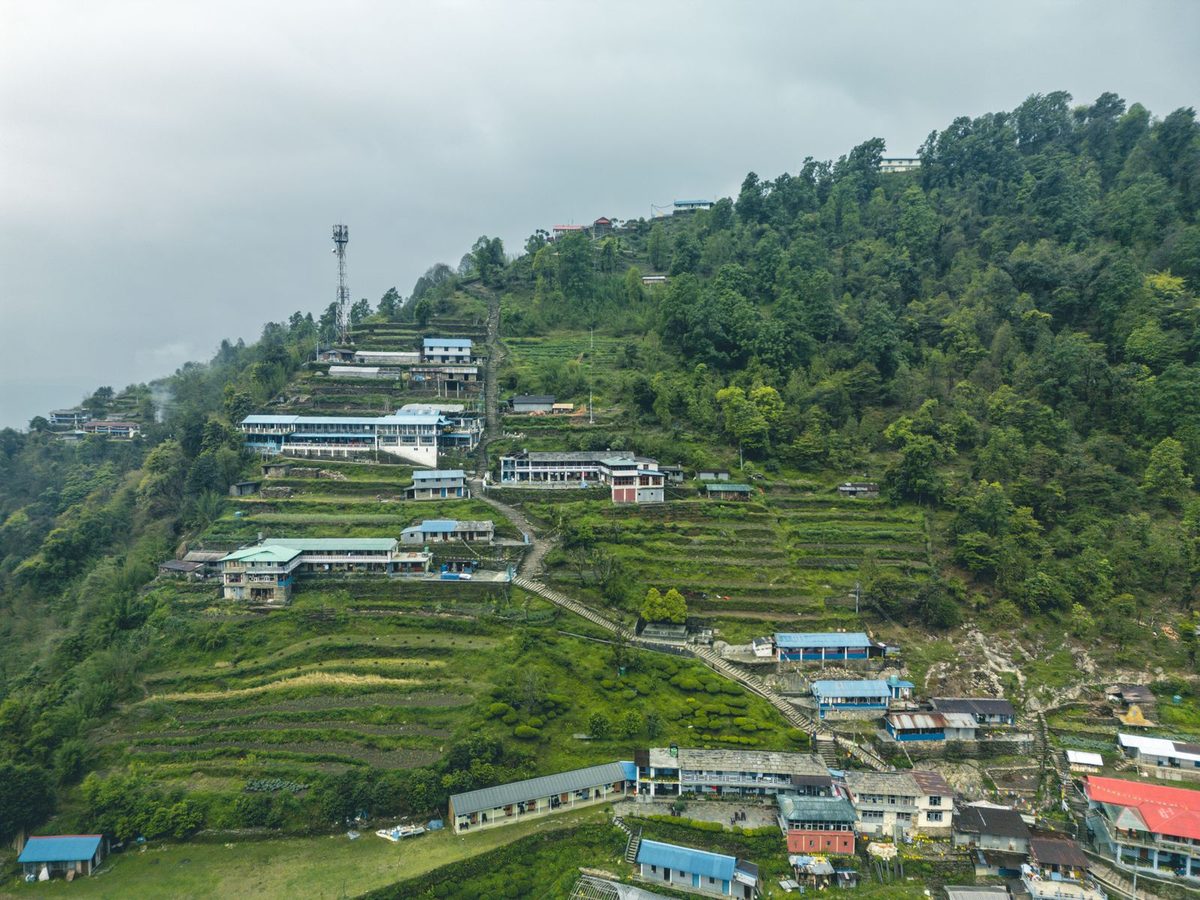
The wire transfer is the easier thing to do. It takes ninety seconds, it asks nothing of your calendar, and it is entirely honourable — I have made several myself since 26 August, and I would make them again. But I want to tell you what happens to it, and what happens instead to the money that arrives inside a suitcase in October, because the difference is not small and almost nobody outside this country ever sees it.
As of 5 September, more than 1,340 people have died in Nepal and close to 4,900 remain missing — the Nepal Police count, provisional, and revised as bodies are identified and people traced. Fifteen municipalities have been declared disaster zones for three months. Those are the figures, they belong to the authorities rather than to me, and I have set out the whole picture with its sources in the article I keep current on the Rasuwa flood. This piece is about something narrower and less discussed: what your journey does, mechanically, to the household economy of a country in the middle of a very bad autumn.
The question I am actually being asked
Since late August I have had perhaps two hundred versions of the same message. The polite ones ask whether it would be inappropriate to come. The honest ones ask whether it would be obscene — whether there is something unseemly about arriving with a designed itinerary in a country that is burying people.
I understand the instinct entirely, and I want to answer it directly, because the instinct is wrong, and acting on it will hurt exactly the people it is trying to spare.
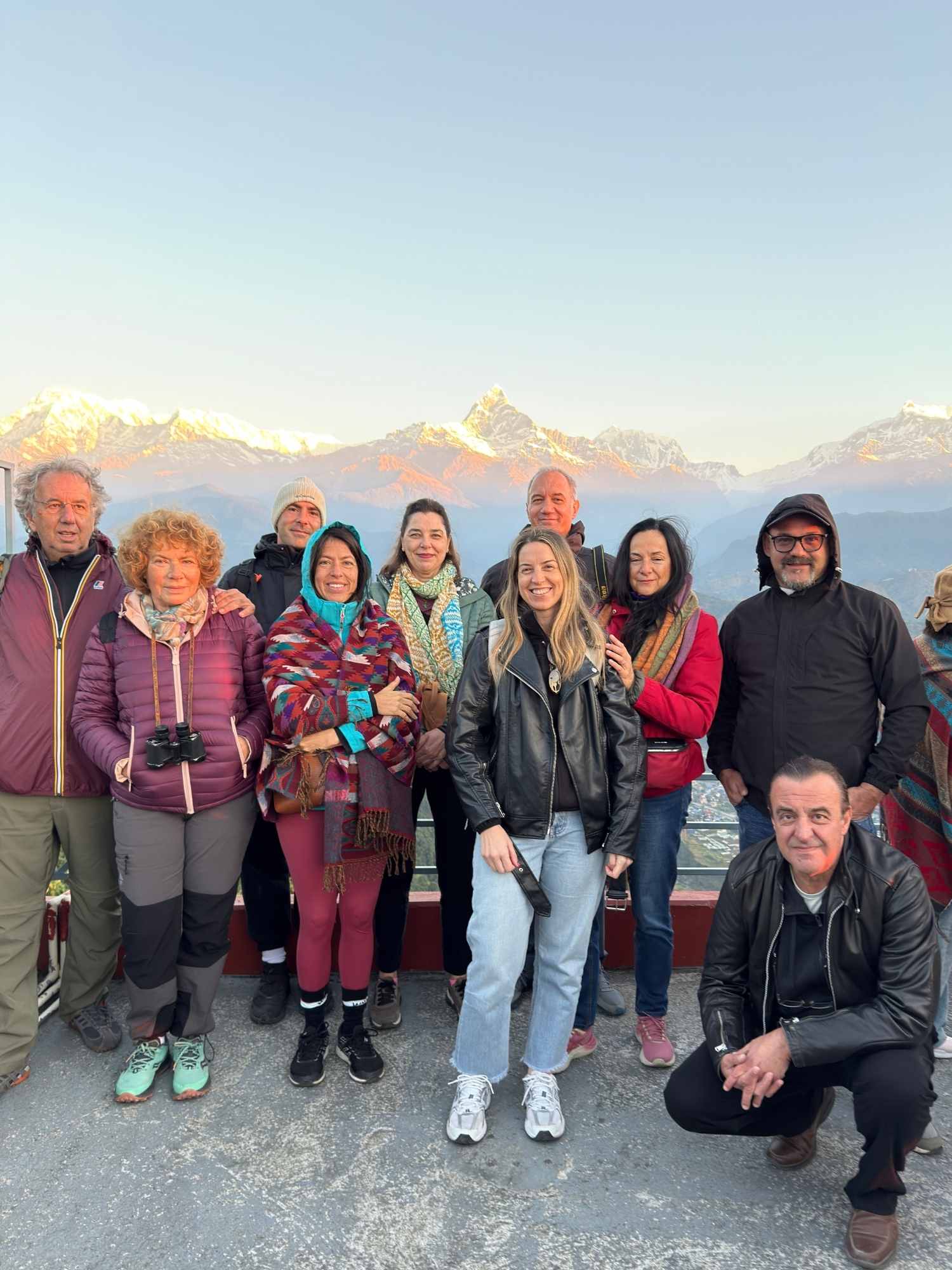
Nepal is not one place. It is a country the length of England laid across the highest mountains on earth, cut into separate worlds by river systems that have nothing to do with one another. On the morning the Lhende Khola came down the Bhote Koshi and took the road to Tibet with it, I was in Pokhara, a hundred kilometres away, and not one drop of rain fell beyond the ordinary monsoon. The shops on Lakeside were open. The flights went out on time. That distance is the single most important fact about this autumn, and it is the one thing a news bulletin cannot carry.
What a cancellation actually does, and to whom
I have watched this film before. After the 2015 earthquake, the world saw the footage and cancelled, and arrivals fell by roughly a third in the year Nepal needed them most. The donations came, and they mattered enormously, and they were spent. What did not arrive was the ordinary economy — and the ordinary economy is what pays for the winter.
Understand what a cancellation is at the receiving end. It is not a line in a spreadsheet at a head office in London. It is a guide in Syabrubesi who had four departures in October and now has none, a lodge family on a ridge with eleven empty rooms, a porter who is paid at the end of the week and buys school shoes with it, a driver whose vehicle is a loan he is still repaying. Tourism is 6.6 percent of this country's economy, and the autumn quarter is the one the entire mountain economy lives on. The former head of the Nepal Tourism Board has already warned that the damage to tourism will run six to seven months at least. That is the whole season, and the whole season is what carries these households through to spring.
There is a second cost that never appears in any ledger. When a country in the middle of its grief watches the world stay away, it learns something about its standing. When someone comes anyway, it learns something else. Nepalis remember which one happened. They will tell you about it twenty years later, on a trail, unprompted.
Where the money in a private journey actually goes
This is the part I would most like you to take away, because it is specific and it is checkable.
Money given to an emergency fund enters a system: it is pooled, allocated, administered, audited and eventually spent, mostly on rescue, shelter and rebuilding. That work is necessary and I would not have you stop. But it is finite by design. It ends when the emergency is declared over.
Money spent on a well-designed journey never enters a system at all. It disperses on contact, into a chain of individual hands, and each of those hands spends it locally within days:
- The licensed guide, who is paid per day and who has just lost a season's worth of Langtang departures.
- The porters, paid at the end of each stage, in villages where cash income has almost no other source in autumn.
- The family that owns the four-room lodge on the ridge, whose entire annual revenue is earned between late September and late November.
- The driver, the cook, the kitchen boy, the woman selling apples where the trail turns towards the pass.
- The domestic airline seat, the hotel housekeeper, the workshop that fixes the vehicle, the school that receives the fees three weeks later.
A single group arriving in October is a winter for several households, and not one of them has to apply for it, qualify for it, or wait for it to be disbursed. That is the whole argument, and it is why I say that travel is the help that lasts.
Why the private, designed version does more, not less
There is a tidy assumption that the frugal traveller is the ethical one. In Nepal it is largely the reverse, and the reason is structural rather than moral.
A journey booked through an international operator on a fixed group departure leaves the majority of its value offshore before it ever reaches Kathmandu. A journey designed here, staffed here and supplied here does not. When we build one of our Classic journeys, the guide is Nepali and licensed, the operator is Nepali, the lodges are family-held wherever a family holds one, and the vehicles and aircraft are chartered from Nepali companies. The proportion that stays in the country is not marginally higher. It is a different order of magnitude.
Scale matters too. A private journey of two or four people employs, in practice, more Nepalis per traveller than a group of sixteen does — a dedicated guide rather than a shared one, dedicated porters, a driver who is not also serving eleven other itineraries. And because it is private, it can be routed by hand, away from what is closed and towards the places that need the arrivals most.
What "responsible" has to mean this autumn
The word is worn thin by use, so here is exactly what it means in our practice for the rest of 2026. Every line of this comes from the current status article, which I keep up to date because the picture moves.
- We route around Rasuwa entirely. The Rasuwa district, the Langtang valley, Gosaikunda and the banks of the Trishuli and Bhote Koshi are closed. It is a disaster zone and entry is prohibited. Travelling into a live search area helps nobody and obstructs the crews doing the work. No exceptions, no quiet detours, no "just to see".
- We move a cancelled Langtang rather than refund it. Annapurna, Everest and Manaslu are open and operating normally. If your Langtang trek is gone, take one of those — and insist on keeping the same guide and the same local operator. The guide who lost a season then does not lose it. This one substitution is the single most useful thing a traveller can do this autumn.
- We fly Kathmandu to Pokhara rather than drive it. The Prithvi Highway remains closed at Krishnabhir, where roughly 200 metres of road subsided. A 350-metre temporary track has been under construction since 4 September, with a seven-to-ten-day estimate on site and a government target of reopening within September — but until a reopening is official, we treat that road as closed. Domestic flights are running normally and without interruption.
- Licensed guides and Nepali operators only. Mandatory here since 2023, and now a safety matter as well: these are the people who know which trails moved.
- Insurance with helicopter evacuation and high-altitude cover, without exception. We insist in an ordinary year. This year it is not negotiable.
- We do not build the disaster into the itinerary. No visits to affected villages, no photographs of damage, no volunteering day arranged for the emotional benefit of the visitor. Nepal has more than 21,000 soldiers, police officers and rescue workers deployed. It does not need spectators, and it does not need untrained hands.
What is open, plainly
Because this is the question underneath every other question, here it is as of 5 September, and it has not been softened:
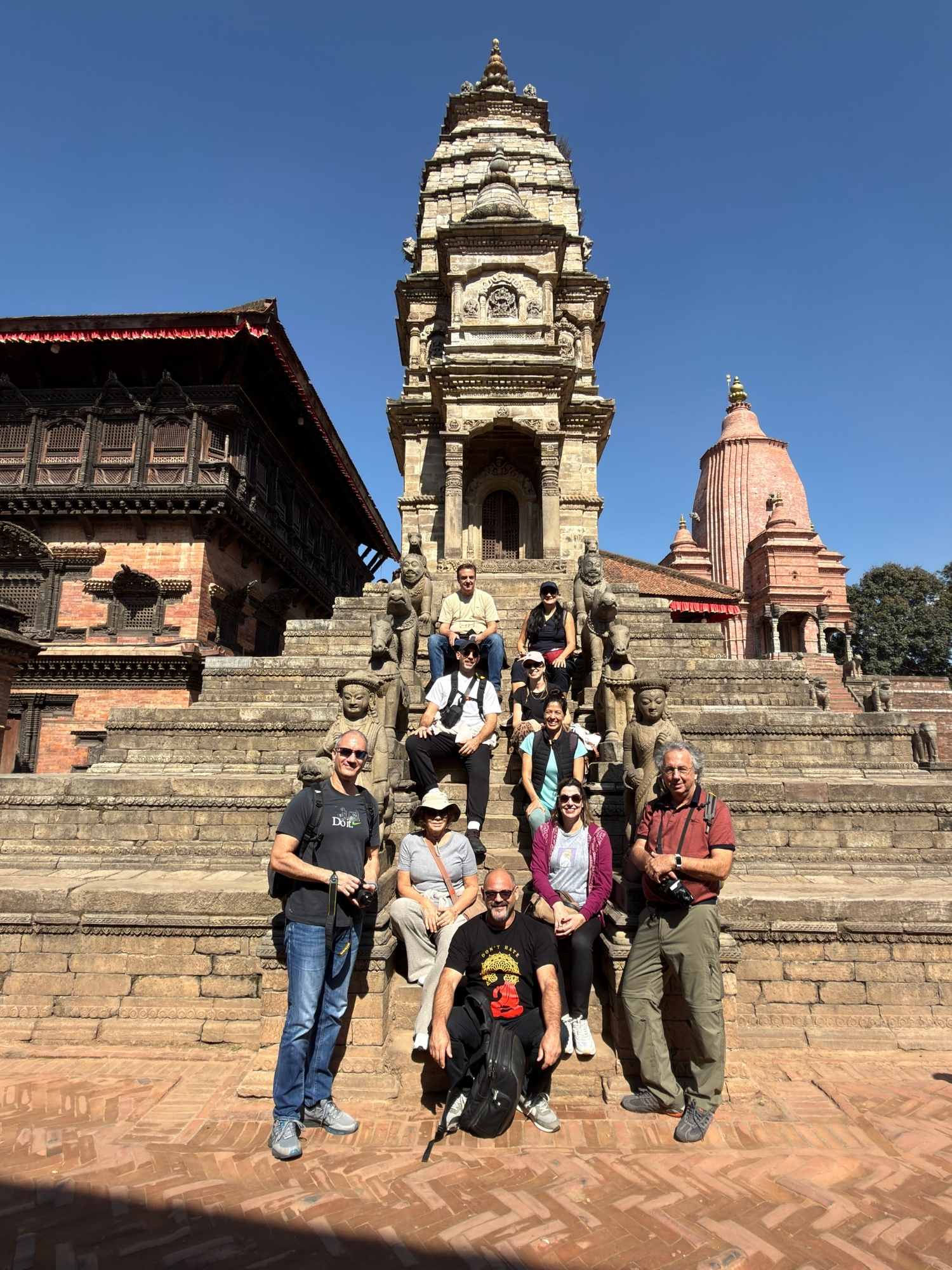
Kathmandu, Pokhara and Chitwan National Park are open, with hotels, monuments, safaris and restaurants operating normally. The Everest region, including Base Camp and Gokyo, is open, with trails, lodges and the flights to Lukla running normally. The Annapurna region — Base Camp, the Circuit, Poon Hill — is fully operational. The Manaslu Circuit is open; it sits on the Budhi Gandaki, a different river system, so the trail itself is untouched, though the access road is worth asking about before committing. Domestic flights are normal.
Closed: the Rasuwa district, Langtang, Gosaikunda, the Trishuli and Bhote Koshi corridors, and the land crossings into Tibet at Rasuwagadhi and Tatopani. The Kathmandu–Pokhara road is closed at Krishnabhir. Those are not negotiable and we will not design around them creatively. If something is closed, it is closed.
If you would like to see how the open regions fit together into a single journey, the destinations are the place to start, and our Premium journeys lean on domestic aviation even in ordinary years — this autumn that design choice simply matters more than usual.
On the awkward question of cost
It comes up in every one of these conversations, and I will answer it the way I always do, which is honestly rather than evasively: a journey of this kind is costed only once it has been designed, because no two are the same. The route, the season, the number of travellers, whether a road is replaced by an aircraft, how many days are given to the walk rather than taken from it — each of those changes the shape of the thing entirely. If you would like a figure, that conversation starts on our design a journey page, and it starts with your dates rather than with a brochure.
What I can tell you without knowing anything about your plans is where the value lands, and I have set that out above. This autumn, that is the number that deserves your attention.
If you cannot come this year
Then send, and send well. The guidance from everyone working on the ground is consistent: send money rather than goods, because a parcel of clothing costs more to land here than the clothing is worth, and send it only through official channels. The Prime Minister's Disaster Relief Fund, the Nepal Red Cross Society, the IFRC and CARE are all working in the affected districts, and I have linked each of them, with the reasons, in the status article.
And then come next year. The mountains will still be here, the guides will remember, and the help will still count. There is no expiry date on arriving.
Questions travellers are asking
Is it appropriate to take a luxury journey in Nepal right now?
Yes, in the regions that are open, and provided it is designed to keep its value in the country. The objection assumes that restraint helps. It does not: an empty October transfers nothing to anybody. The one genuinely inappropriate thing is to travel into the disaster zone itself, which is closed and where entry is prohibited.
Does a private journey really help more than a group tour?
In Nepal, generally yes — for structural reasons. A journey designed, staffed and supplied locally retains far more of its value in the country than a fixed international departure, and a private party employs more people per traveller. What matters is not the label on the itinerary but where the money is paid and to whom.
I had booked Langtang. What is the responsible thing to do?
Move it to Annapurna, Everest or Manaslu, and keep the same guide and the same local operator. Do not refund it if you can help it. Langtang will reopen — rebuilding the road to Syabrubesi is a matter of months, not weeks — and the person who guided you there deserves not to lose the intervening season.
Should I add a volunteering day or visit an affected village?
No. Please do not. The response is being run by more than 21,000 deployed personnel who need room to work, and the affected districts are closed. The useful contribution is economic and it is made in the regions that are open.
Can I combine a journey with a donation?
Of course, and many do. Give through the official channels listed in the status article, then travel, and understand that the two do different jobs: the donation pays for the emergency, the journey pays for the year after it.
Come, and let it be designed properly
I have lived here long enough to know what the next six months will cost the people around me, and I can see the mountains from my window while I write that sentence. October and November remain the finest weeks of the Nepali year — the monsoon clears, the air washes out, the trails dry — and this year they will be quieter than they should be.
If you would like Nepal seen properly this autumn, with Nepali guides, with the money staying in the valleys it is earned in, and with every closed road honestly named rather than quietly crossed, begin here. If you would like to know who is writing to you and why a Greek is doing it from Pokhara, the story is on the founder page.
And if you do not travel with us, travel with someone. Book a Nepali operator, any Nepali operator. The point was never who takes you. The point is that you come.