The first thing you notice is the silence. Kathmandu is only thirty kilometres behind you, but up here on the ridge the horns and the dust and the bargaining have simply stopped. A cockerel calls from somewhere below the terrace. Somebody in the village is sweeping a courtyard with a broom made of twigs. The air is cold enough to see your breath, and the coffee in your hand is the only warm thing for a mile.
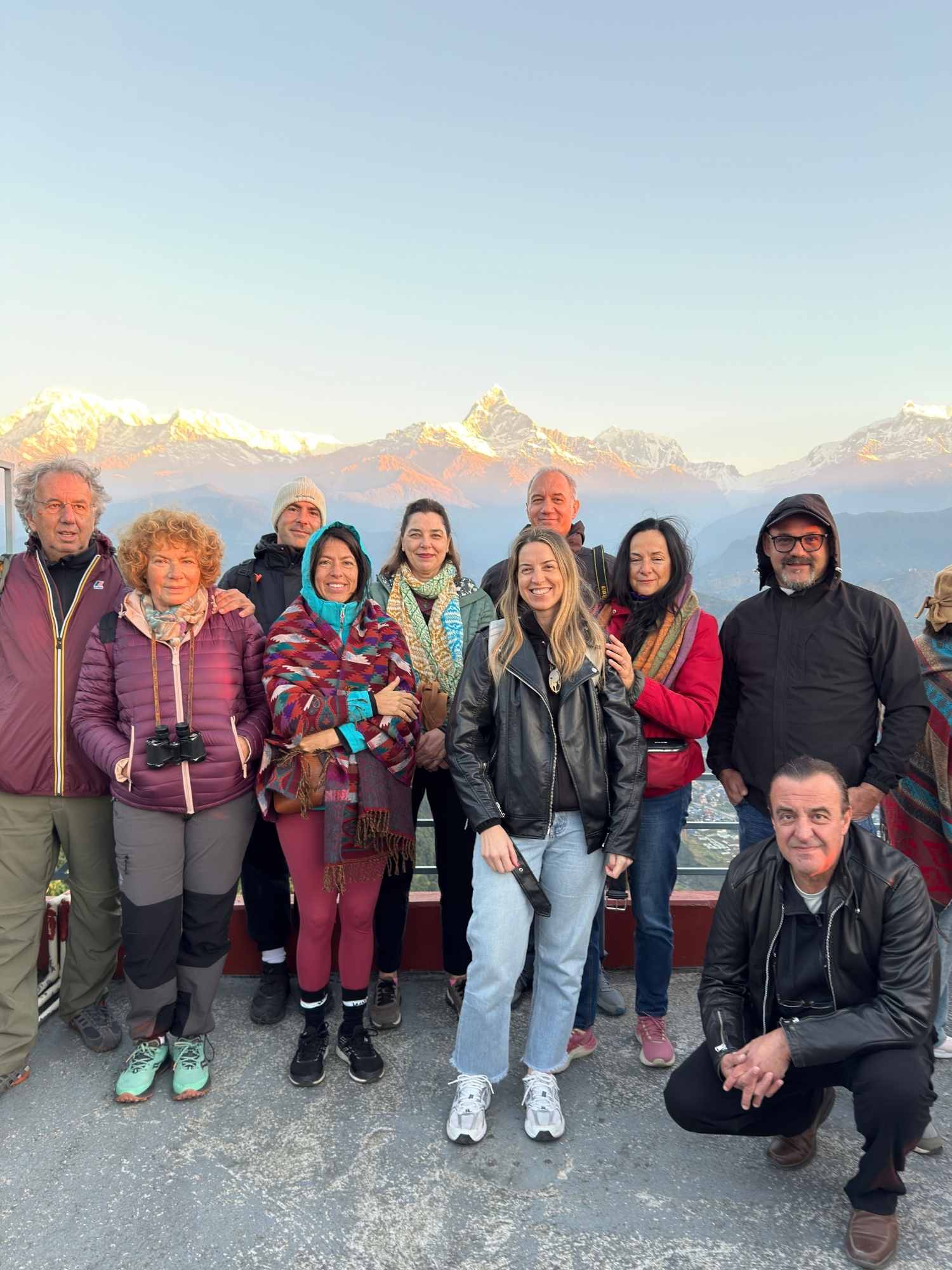
Then the light comes. It does not arrive from behind you, the way it does in the valley. It arrives in front of you, on the snow. Across the whole northern horizon a wall of peaks turns from grey to rose to white, one summit at a time, while the terraced hills below are still in shadow and the valleys are still full of cloud. For twenty minutes nobody on the terrace says anything at all.
This is Dhulikhel. It sits on the eastern rim of the Kathmandu Valley at around 1,500 metres, and it is one of the very few places within easy reach of the capital where the high Himalaya fills the view rather than hiding behind it. For most travellers it is a name on a road sign. For us it has become one of the most useful places in Nepal: the pause between the city and the mountains, and very often the part of the journey our guests talk about longest.
Why Dhulikhel, and Not Simply Another Night in Kathmandu
Every Himalayan journey we design begins in Kathmandu, and for good reason. The valley holds seven World Heritage monument zones, the finest Newar architecture in the world and a living religious life you will not find anywhere else. But Kathmandu is also loud, crowded and, for the first few days after a long-haul flight, exhausting.
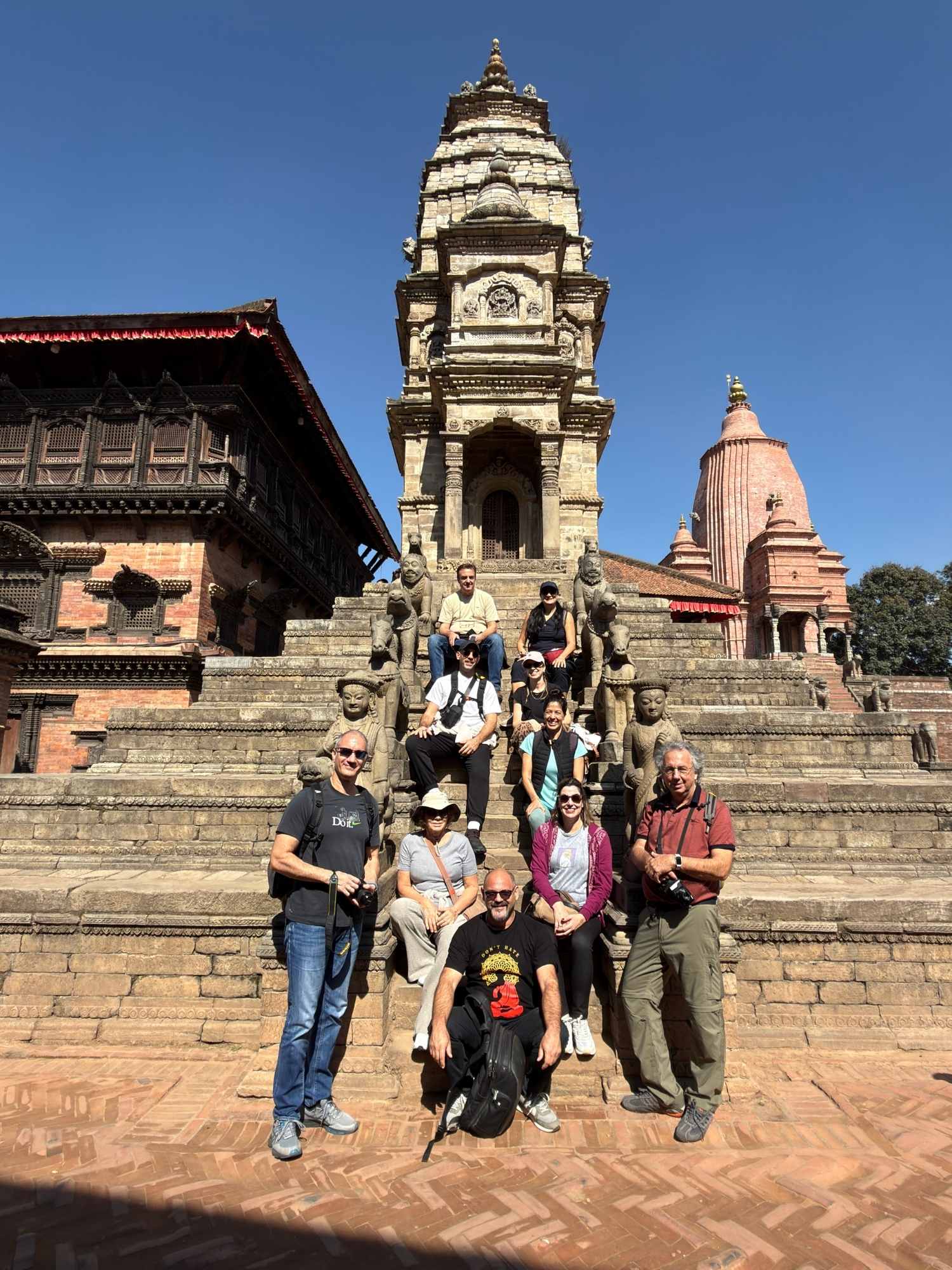
Dhulikhel solves a problem most travellers do not realise they have. It gives you the mountains without the altitude. At around 1,500 metres it is barely higher than Kathmandu, so there is nothing to acclimatise to. It is close enough to the valley that you lose almost nothing in transfers. And it is far enough away that the city disappears completely. You can spend the morning at Bhaktapur's Durbar Square, and by late afternoon be sitting beside a pool on the ridge, watching the snow peaks turn gold.
It also works at the other end of a journey. After a trek, or after a week in the high country, very few people want to go straight back into the traffic of the capital. Two nights on the rim, with a massage, a long lunch and nothing on the calendar, is the gentlest possible way to come down from the mountains before the flight home.
The view, named
On a clear morning the panorama from Dhulikhel runs for well over a hundred kilometres. Your guide will name the peaks for you, but the ones to look for are Dorje Lakpa, with its long, elegant summit ridge; Gauri Shankar, the twin-headed mountain that is sacred to both Shiva and Parvati; and Numbur, further east, which the Sherpas of Solu consider the home of a protective deity. On the clearest days of the year, sharp-eyed guides insist they can pick out the Everest massif as a faint shape far to the east. I have seen it once, and I am still not entirely sure.
The Old Town Most Visitors Never Walk
Almost everyone who comes to Dhulikhel stays on the ridge. Very few walk down into the town itself, which is a pity, because old Dhulikhel is one of the most intact Newar towns outside the valley.
For centuries it sat on the trade route between the Kathmandu Valley and Tibet, and the wealth of that trade is still visible in its brickwork. The old bazaar is a tight grid of three- and four-storey houses with carved wooden windows, small pagoda temples at every crossing and stone water spouts where women still wash vegetables in the morning. There are shrines to Harisiddhi, to Bhagwati and to Narayan, their wooden struts carved by craftsmen who learned the same trade as the masters of Patan. None of them is famous. All of them are in daily use.
We walk it early, with a guide who grew up in the area, before the shops open and while the town is still doing its own business. It takes perhaps two hours. You will see more ordinary Newar life in those two hours than in two days in Thamel.
Namobuddha: The Hill of the Tigress
About fifteen kilometres beyond Dhulikhel, on a forested ridge to the south-east, stands a hill that Nepalis count among the most sacred Buddhist sites in the country. Most visitors to the country have never heard of it.
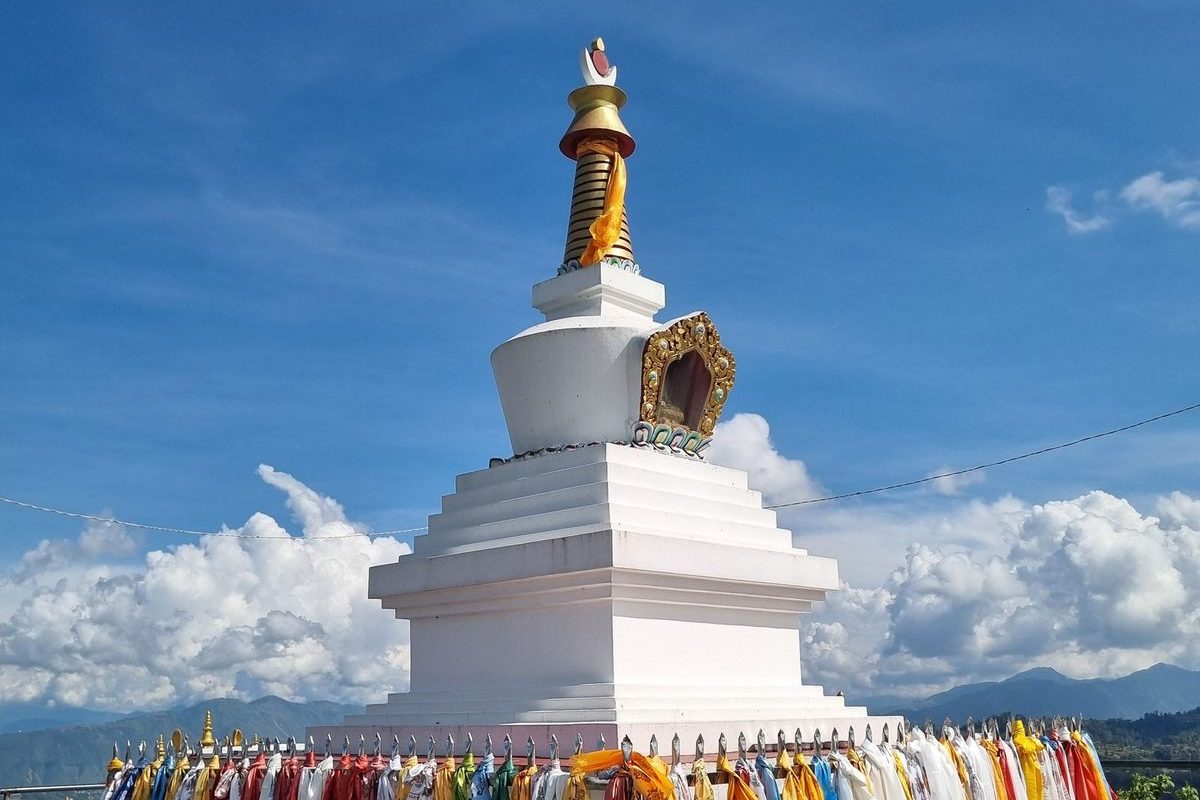
The story of Namobuddha comes from the Jataka tales, the accounts of the Buddha's earlier lives. A young prince called Mahasattva, out walking in these hills with his brothers, came across a tigress so weak with hunger that she could no longer feed her cubs. Moved beyond reason by her suffering, he cut his own skin, let her drink his blood until she had the strength to eat, and gave her his body so that she and her cubs might live. The stupa that stands on the hill today is said to hold his remains, and a small carved panel nearby shows the prince and the tigress together.
Above the stupa, on the crown of the ridge, sits the Thrangu Tashi Yangtse Monastery, a large and beautiful Tibetan Buddhist monastery with gilded roofs, painted halls and a large community of resident monks, many of them young. If you arrive in the late afternoon you will hear them chanting. If you arrive at dawn, you will find the hill wrapped in prayer flags and almost entirely empty.
Walking to Namobuddha
The classic way to reach Namobuddha is on foot from Dhulikhel, through villages, terraced fields, pine forest and small farms where you will be offered tea more than once. At a gentle pace it takes most of a morning. It is not a trek; it is a long, beautiful walk with a monastery at the end of it, and your vehicle waits at the top so that nobody has to walk back. For guests who prefer not to walk at all, we drive up and spend the time at the monastery instead.
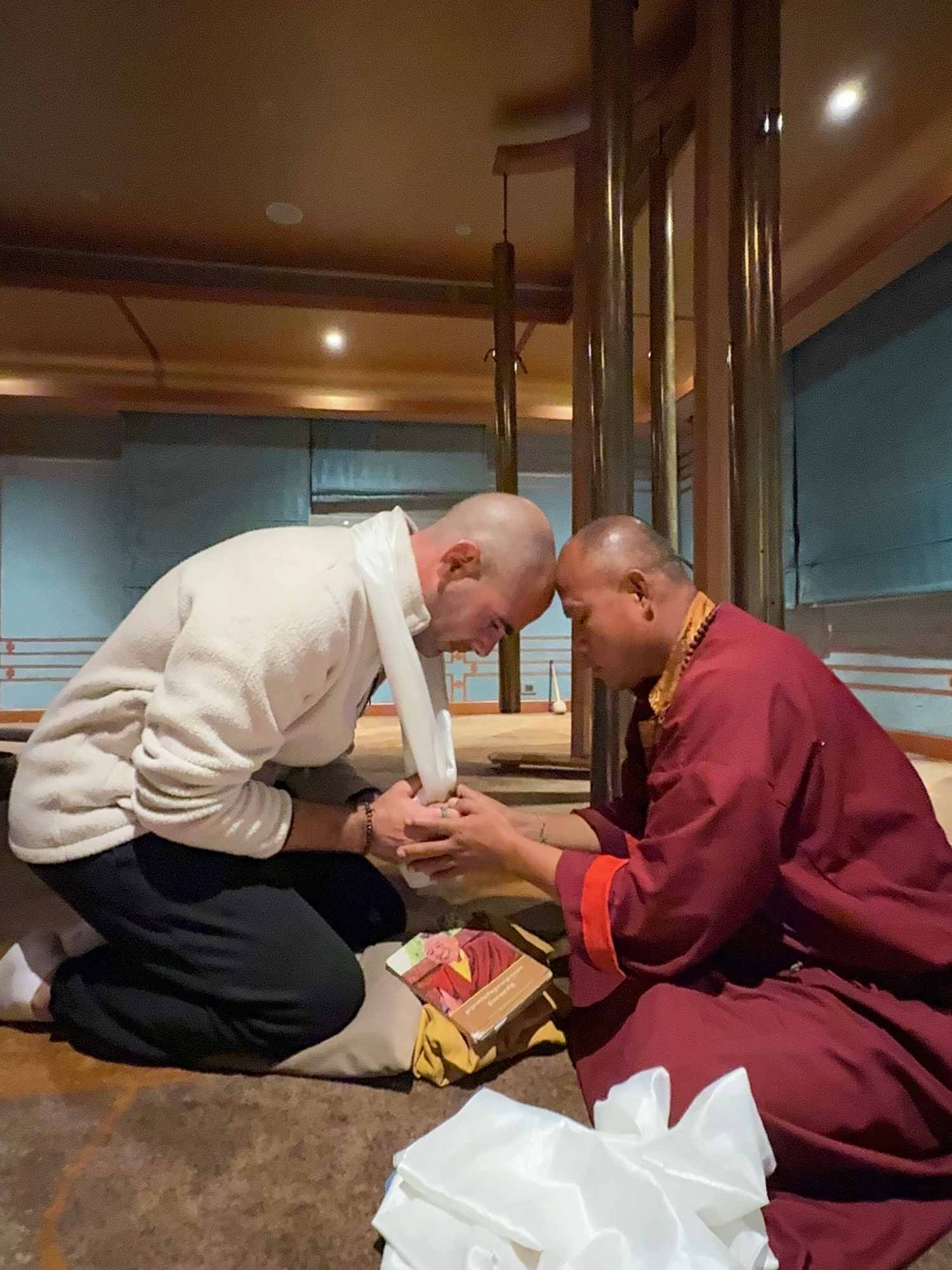
We usually arrange lunch on the hill, and on request a private audience with one of the senior monks or a short guided meditation. It is the kind of hour that is impossible to plan for and very hard to forget.
Panauti: A Medieval Town at the Meeting of Two Rivers
Below Namobuddha, where the Roshi and Punyamati rivers meet, lies Panauti. If Dhulikhel is the quiet alternative to Kathmandu, Panauti is the quiet alternative to Bhaktapur, and for some of our guests it has become the highlight of their time in the valley region.
Panauti is old, even by Nepali standards. Its central temple, Indreshwar Mahadev, is a three-tiered pagoda generally dated to the late thirteenth century, which would make it one of the oldest surviving temples of its kind in the country. Its roof struts are carved with figures of extraordinary delicacy. Around it the town is a maze of brick lanes, sunken water tanks, small shrines and ghats along the rivers, where cremations still take place as they have for centuries.
Panauti has no large hotels and very few tourists. What it has is a sense of being entirely itself. We walk it with a local historian, and when the season allows we time the visit to coincide with one of the town's festivals, when the chariots come out and the whole community gathers in the squares.
Where to Stay: The Resorts on the Rim
There are not many genuinely fine places to stay around Dhulikhel, and that is part of its appeal. The ridge has not been overbuilt. The two properties we use most often could hardly be more different, and the choice between them shapes the whole character of the stay.
Dwarika's Resort, Dhulikhel
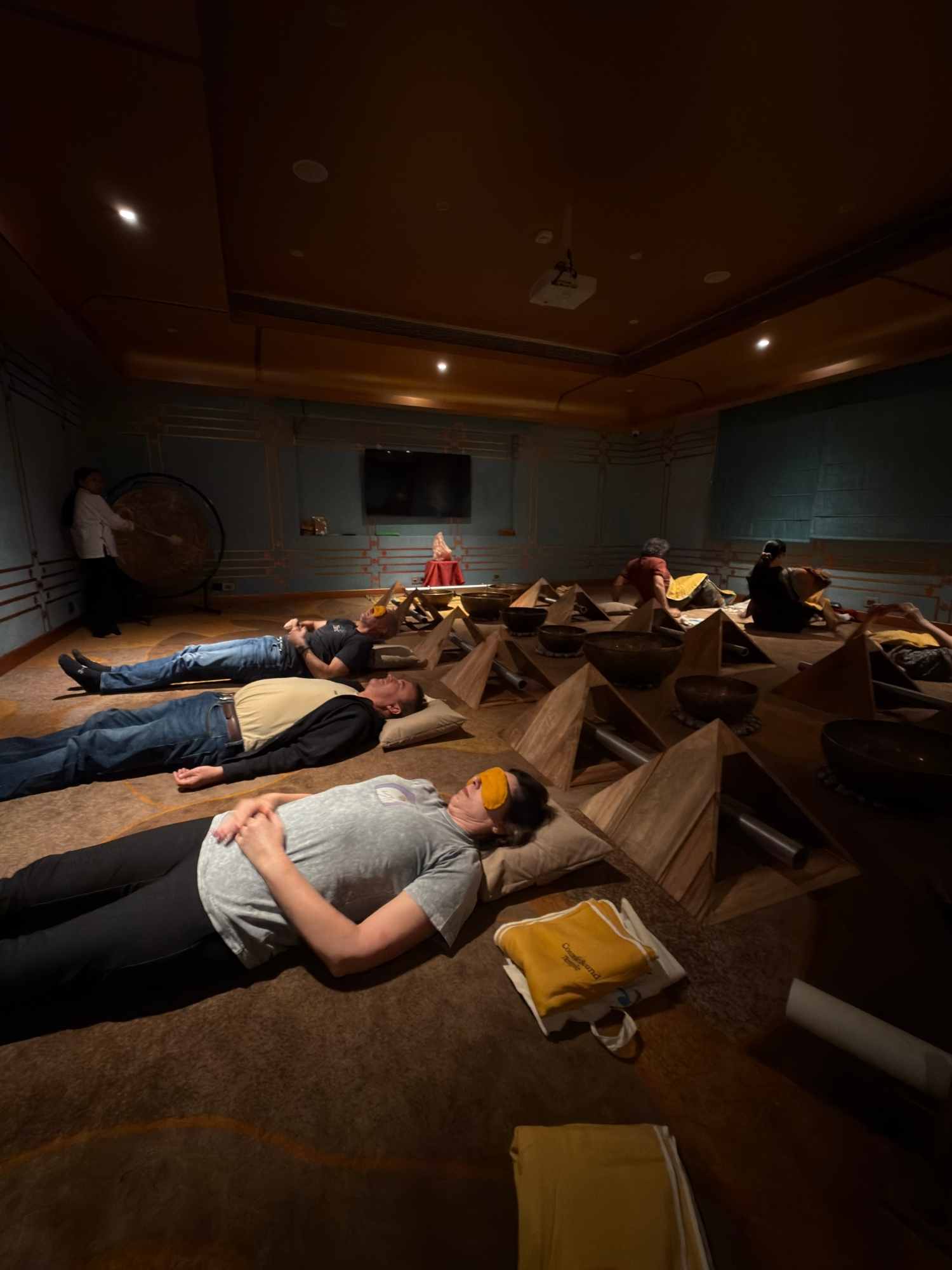
The country sister of the celebrated Dwarika's Hotel in Kathmandu, this is a wellness resort in the most serious sense of the word. It is set in extensive grounds on the hillside, built in brick, stone and wood in a style that draws on Newar architecture, and designed around ideas taken from the Vedic and Buddhist traditions. The heart of it is the Pancha Kosha spa, where treatments are drawn from Himalayan healing traditions, and the programme of yoga, meditation and quiet that surrounds it.
It suits travellers who want to be looked after, who want to sleep well, eat well and do very little for a day or two. Our guests on longer journeys often use it as the place where they recover from a trek, or where they arrive and slow down before one. It also features in several of the itineraries in our guide to wellness retreats in Nepal.
Dusit Thani Himalayan Resort, Dhulikhel
Further along the ridge towards Namobuddha, the Dusit Thani brings a Thai sensibility to the Himalayan hills: villas, an infinity pool that appears to empty straight into the view, a Devarana wellness spa, and the kind of service that anticipates rather than responds. It is the newer of the two, and it has quickly become a favourite for celebrations. In October 2026 it was named the leading wedding resort and runner-up for leading luxury resort at the South Asian Travel Awards.
It suits couples, families and anyone who wants space, privacy and a pool with the Himalaya in it. Its position, a short distance from Namobuddha, also makes the dawn walk to the monastery exceptionally easy.
Which one?
As a rule of thumb, we suggest Dwarika's for guests who are coming to rest and restore, and the Dusit Thani for those who are coming to celebrate. But the honest answer is that it depends on the rest of the journey, the time of year and the people travelling. That is a conversation we enjoy having.
How We Design a Stay in Dhulikhel
A stay on the rim is never a stand-alone product for us. It is a chapter, and it works best when it is placed carefully within a longer story. A few of the ways we use it:
- The soft landing. Two nights in Dhulikhel immediately after arrival, before the city. Guests recover from the flight with the mountains in front of them, then come down into Kathmandu rested and ready to enjoy it.
- The pause between valley and mountains. Two or three days in the valley's heritage sites, then Dhulikhel, Namobuddha and Panauti, then the flight west to Pokhara or north to the high country. This is the structure of many of our Classic journeys.
- The recovery. After a trek in the Everest or Annapurna regions, two nights of spa, sleep and long lunches before the flight home. Our Premium journeys are often built this way.
- The quiet celebration. An anniversary, a proposal, a significant birthday. A private dinner on a terrace with the snow peaks catching the last light, arranged down to the candles and the musician.
- The ridge walk. For active guests, a two-day walk along the rim from Nagarkot through Changu Narayan and on to Dhulikhel and Namobuddha, sleeping in the best rooms on the ridge each night while the luggage travels separately.
Whatever the shape, the details are the same. A private guide who knows the area intimately. Early starts timed to the light. A driver who waits. A table reserved where the view is best. And, above all, enough time for nothing to happen, which is the whole point of coming here.
When to Visit Dhulikhel
The mountain views from Dhulikhel depend entirely on the sky, so timing matters more here than almost anywhere else in the valley.
October and November are the finest months. The monsoon has cleared, the air is washed clean, and the peaks are visible from dawn until late morning on most days. The festivals of Dashain and Tihar fall in this season too, and the villages around Dhulikhel and Panauti are at their most festive. December to February brings cold, clear mornings and some of the sharpest views of the year, with fewer visitors on the ridge. Evenings are chilly, which is precisely when a fire, a blanket and a long dinner are most welcome. March to May is the season of rhododendrons and warm afternoons. The views are hazier, particularly later in spring, but the walks to Namobuddha are at their loveliest, the forest is in flower and the light in the evenings is soft and golden. June to September is the monsoon. The mountains spend most of their time behind cloud, but the terraced hills turn an astonishing green, and the resorts are at their quietest. For a purely restorative stay, it can be a surprisingly good choice.What Does a Stay in Dhulikhel Cost?
A stay on the rim is never priced on its own, because it is never designed on its own. It depends on which resort, which season, how many nights, whether you walk to Namobuddha or fly onwards to the mountains, and what comes before and after. A journey of this kind is costed only once it is designed, because no two are the same. If you would like a figure, that conversation starts on our design a journey page.
Frequently Asked Questions
Where is Dhulikhel?
Dhulikhel is a historic Newar town on the eastern rim of the Kathmandu Valley, in Kavrepalanchok district, roughly thirty kilometres east of Kathmandu. It sits at around 1,500 metres and faces the Himalaya to the north.
Can you see the Himalaya from Dhulikhel?
Yes. On clear days, particularly in October, November and the winter months, the view takes in a long stretch of the central and eastern Himalaya, including Dorje Lakpa, Gauri Shankar and Numbur. Mornings are clearest.
What is the best luxury resort in Dhulikhel?
The two finest properties are Dwarika's Resort Dhulikhel, a wellness resort built around Himalayan healing traditions, and the Dusit Thani Himalayan Resort Dhulikhel, near Namobuddha, which was recognised as the leading wedding resort at the South Asian Travel Awards in October 2026. The right choice depends on whether you are coming to rest or to celebrate.
How many nights should I spend in Dhulikhel?
Two nights is the minimum we recommend, so that you have one full day for Namobuddha and Panauti and two chances at a clear sunrise. Three nights allows for a genuinely restorative stay.
What is Namobuddha?
Namobuddha is among the most sacred Buddhist sites in Nepal, a hilltop stupa marking the place where, according to the Jataka tales, Prince Mahasattva gave his body to a starving tigress. The Thrangu Tashi Yangtse Monastery stands above it.
The Morning That Stays With You
There is a particular moment on the terrace at Dhulikhel, a minute or two after the first light touches the highest summit, when the whole range seems to be lit from inside. Then the sun reaches the hills, the valleys begin to clear, and somebody brings more coffee. It is not dramatic. It is simply one of the most beautiful things I know, and it happens every clear morning, a short distance from the noise of Kathmandu.
I live in Nepal, and I still find reasons to go back to the rim. If you would like to know how a Greek came to be designing journeys here, that story is on my founder page. If you would like a morning like this built into your own journey, with the resort, the walk to Namobuddha and the light all arranged around you, begin your design here.