Almost every serious enquiry that reaches my desk contains the same sentence, in some form: we have about ten days.
Ten days is what a working life allows. It is two weekends and the week between them, the length of leave a person with real responsibilities can take without their absence becoming an event. And it is, as it happens, very close to the correct amount of time for Nepal — provided you understand what ten days here can hold, and, far more importantly, what it cannot.
The badly designed version of this trip exists in enormous quantity. You can find it on a hundred websites: Kathmandu, Pokhara, Chitwan, a mountain flight, a hotel with a marble lobby, four internal flights, and a schedule that has you in a vehicle before six in the morning on six of your ten days. It is not a fraud. Everything on it happens. But at the end of it you have seen Nepal the way you see a city from a taxi window — comprehensively, and not at all.
This is the ten-day itinerary I actually build, and the reasoning underneath it.
Why Ten Days Is the Right Number
Nepal is small on a map and enormous in practice. The country is roughly 800 kilometres end to end, but it climbs from 60 metres above sea level in the southern plains to 8,849 at the summit of Everest, and that vertical distance is what governs everything: the roads, the flying weather, the acclimatisation, the light.
The practical consequence is that Nepal punishes greed. A traveller who tries to add a fourth or fifth region to ten days does not gain a region — they lose two mornings to airports for each one they add, and mornings are the entire product here. The Himalaya is visible, reliably, from roughly six until ten. After that the valley haze rises and the mountains withdraw. Whoever controls your mornings controls your journey.
So the architecture of a good ten days in Nepal is not a list of places. It is a decision about how many times you are willing to move, and what you are protecting in exchange. My answer, after two decades of building these: three bases, three moves, and not one alarm clock set for the sake of logistics rather than beauty.
The Shape of the Ten Days
Before the detail, the skeleton — so you can see the logic before the pleasure:
- Days 1 to 3 — the Kathmandu Valley. Arrival, recovery, and the densest concentration of living heritage in Asia.
- Days 4 to 6 — Upper Mustang. Over the Himalaya into the Tibetan plateau, the walled city of Lo Manthang, and a landscape most travellers do not know Nepal contains.
- Days 7 and 8 — Pokhara and the Annapurna foothills. The mountains at close range, the lake, and the first genuinely unstructured day of the trip.
- Days 9 and 10 — the lowlands, or the deliberate return. Either the subtropical forest of Chitwan or Bardia, or two unhurried final days back in the valley.
Three regions. Three transitions. Everything else is depth rather than breadth — and depth is what people actually remember.
Days 1 to 3: The Kathmandu Valley, Entered Properly
You will land in the early afternoon, tired, and the single most valuable thing I can give you on day one is nothing to do. No temple, no briefing, no welcome dinner with a programme. A courtyard, a bath, an early meal, and sleep. Guests who are pushed on their first afternoon spend their second day paying for it.
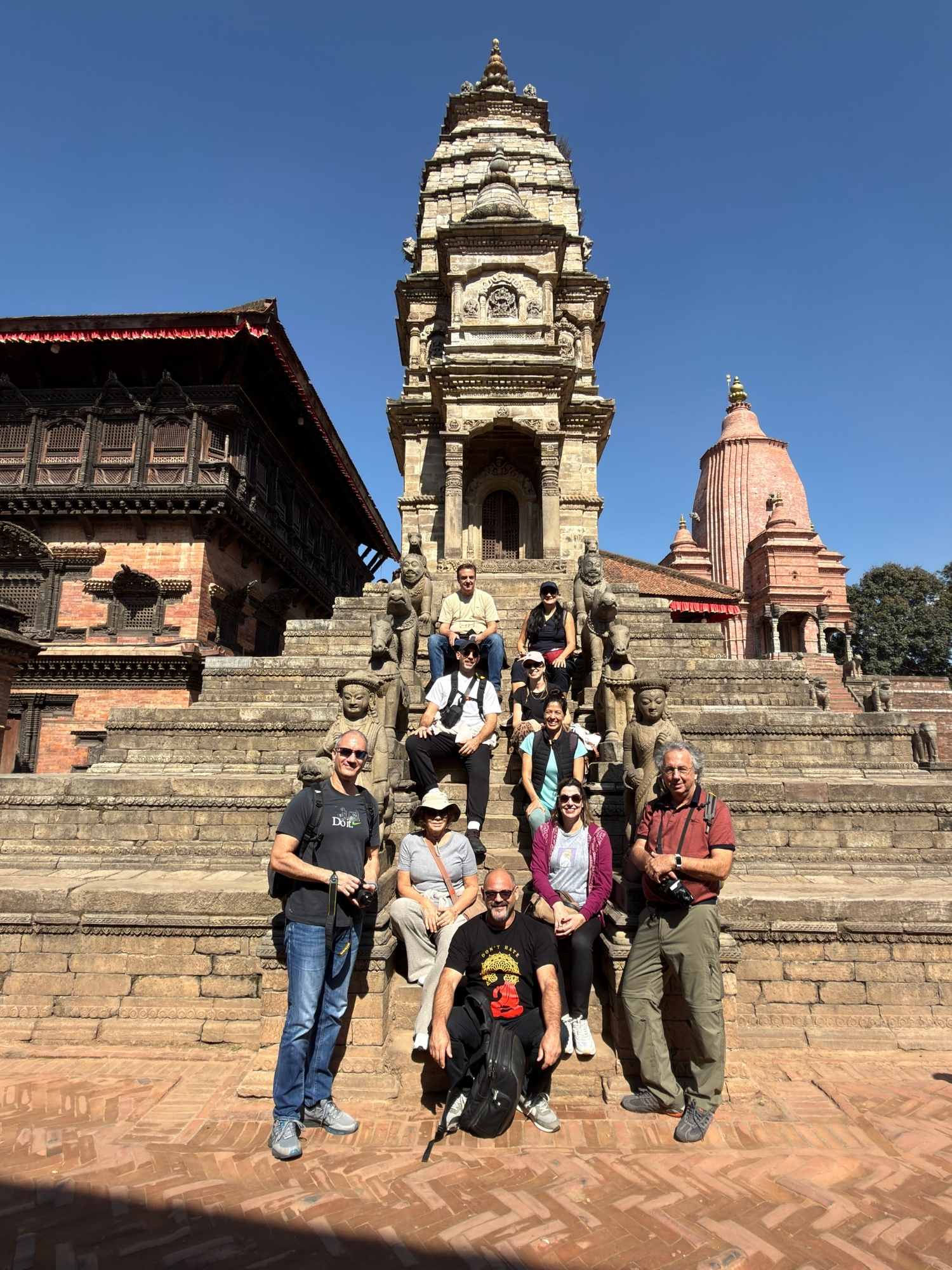
Day two belongs to Patan and Bhaktapur, not to a checklist of Kathmandu. The Kathmandu Valley holds three former royal cities, and the two that are not the capital are the ones that still work as cities rather than as monuments. In Patan we go early into the Durbar Square while the brass workers are opening their shutters, then into the metalworking courtyards behind it where families have been casting Buddhist figures by the lost-wax method for six centuries. In Bhaktapur, ideally, you stay the night — because Bhaktapur after the day visitors leave, when the square empties and the light goes orange on the brick, is one of the great quiet experiences in South Asia. Day three is Boudhanath at dawn and Pashupatinath at dusk, which are the two ends of the valley's spiritual grammar. Boudhanath — the vast white stupa of the Tibetan community — at six in the morning, walking the kora clockwise with several hundred people who are not performing anything for you, is worth more than any interior you will be shown all week. Pashupatinath in the evening, with the aarti on the riverbank, closes the day at the other pole: Hindu, fiery, unsentimental about mortality.Somewhere in these three days we place the meals that matter. Newari cuisine is one of the least exported great kitchens in Asia and it deserves a proper table with someone who can explain it, which is a theme we take much further in our writing on Nepal's luxury food experience. A fuller treatment of the capital itself sits in the insider's guide to luxury Kathmandu.
Days 4 to 6: Upper Mustang, Beyond the Rain
This is the decision that separates a good ten days from an ordinary one.
Upper Mustang was a forbidden kingdom until 1992 and remains a restricted area today, entered on a permit that is deliberately expensive and deliberately limited. Geographically it sits behind the Himalaya, in the rain shadow of Annapurna and Dhaulagiri, which means it is high desert: ochre and grey and violet, wind-carved cliffs full of cave dwellings, whitewashed monasteries, and a Tibetan Buddhist culture that survived intact precisely because nobody could reach it.
It also means Mustang is dry when the rest of Nepal is not — the single most useful fact in Nepali trip planning, and the reason this itinerary works even in the monsoon months when conventional wisdom says stay home.
Day four is the crossing: Kathmandu to Pokhara, then into the Kali Gandaki gorge — the deepest gorge on earth, measured between the Annapurna and Dhaulagiri massifs that stand on either side of it — and up to Kagbeni, the medieval gatehouse village at the entrance to the restricted zone. Done by scheduled flight and road it takes most of a day. Done by private helicopter, it takes ninety minutes and is one of the finest flights available anywhere in the world. Day five is Lo Manthang, the walled capital, and it does not disappoint. Four hundred metres of mud-brick wall, a royal palace, three fifteenth-century monasteries with murals that specialists travel from Europe to study, and roughly a thousand residents. We go into the gompas with someone who can read them, not merely point at them. Day six is the one guests bring up years later: the sky-caves of Chhoser, the Luri gompa with its cave stupa, or simply a long slow morning on the plateau with a table set somewhere absurd and nothing scheduled after it. The full case for this region is laid out in our guide to Upper Mustang as a luxury journey.Days 7 and 8: Pokhara and the Annapurna Foothills
You come down from 3,800 metres to 820, and the change in the body is immediate — thicker air, warm evenings, oxygen you had forgotten was a pleasure.
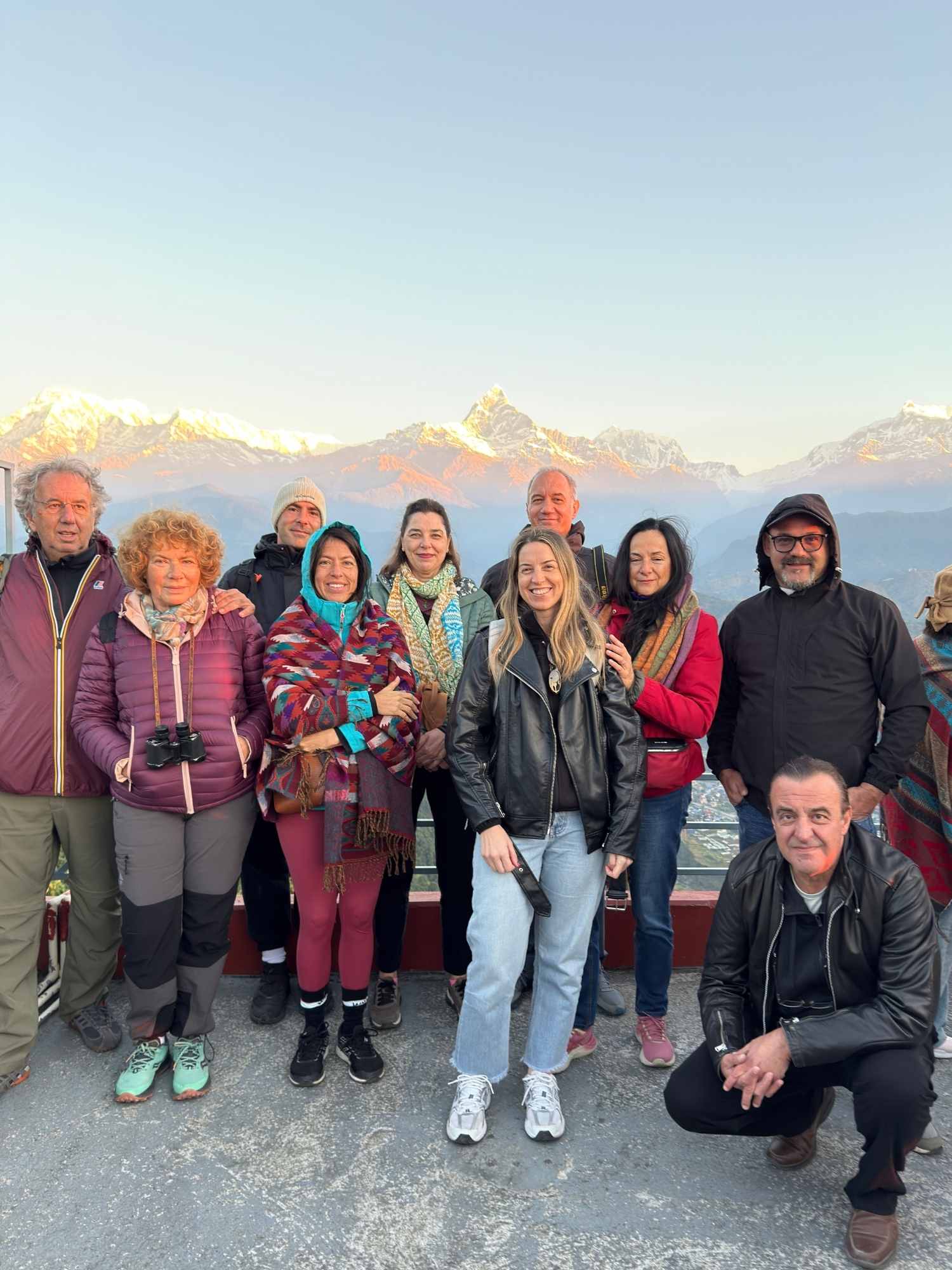
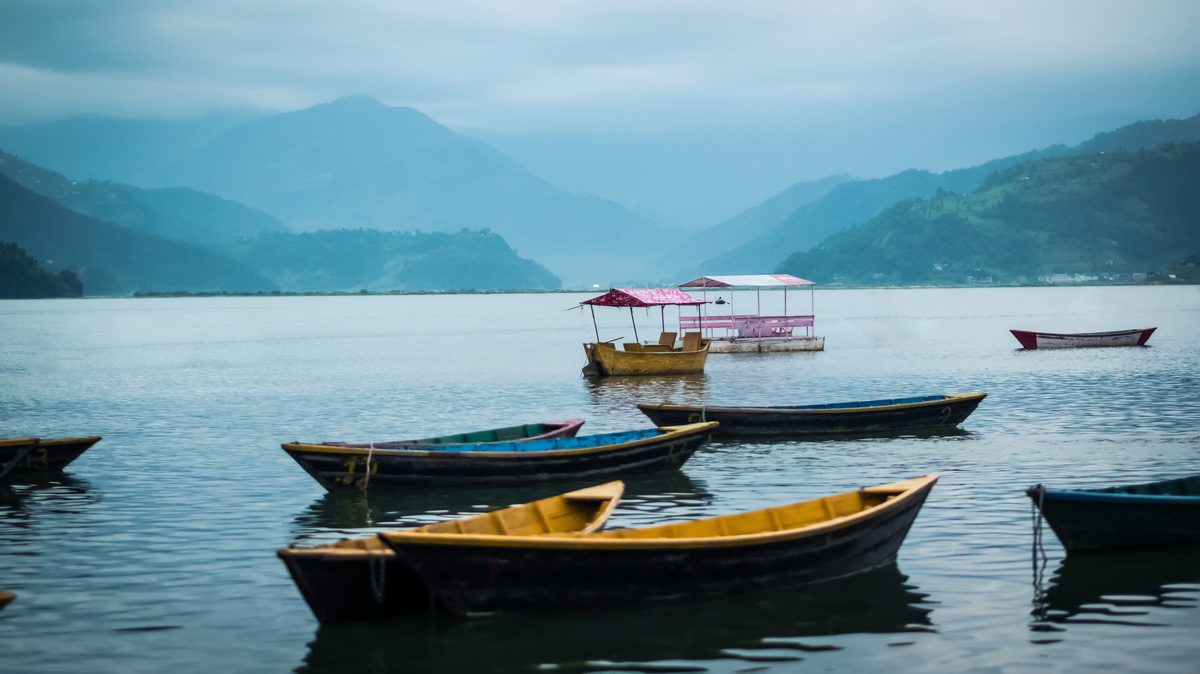
Pokhara is where Nepal exhales. Phewa Lake, wooden boats, and Machhapuchhre — the fishtail peak, still unclimbed and legally unclimbable because it is held sacred — standing almost vertically above the town at a distance that photographs consistently fail to convey.
Day seven should start with the mountains and end with nothing at all: Sarangkot before dawn for the Annapurna range taking first light, breakfast afterwards rather than before, and then an afternoon that is genuinely yours. Paragliding off the ridge if you want the adrenaline, a boat across the lake to the far shore if you do not. Day eight is the walking day, and I put it here deliberately. Two nights at a properly run lodge in the foothills — Dhampus, or the ridges above Sarangkot — will give you the Himalayan morning that people trek for two weeks to obtain, at 1,700 metres, with a bed and a bath at the end of it. For most travellers on a ten-day journey this is the right trade, and our piece on Nepal's finest luxury lodges explains why.Days 9 and 10: The Lowlands, or the Deliberate Return
Here the itinerary forks, and the honest answer depends on who you are.
If you want a third landscape, go south to the terai. Chitwan and — better, if you can spare the extra flying — Bardia are subtropical forest and elephant grass, one-horned rhinoceros, gharial crocodile, and a genuine chance of Bengal tiger in Bardia. Two nights is the minimum that makes the flights worthwhile. It is a completely different Nepal, and the contrast is the point. See our Chitwan luxury safari guide for what the days actually look like. If you have travelled hard, do not add a fourth region. Return to the valley, take a heritage house in Bhaktapur or a hillside room at Nagarkot for the last two nights, buy the things you noticed on day two and did not buy, and have the final dinner somewhere with a view of the ridge you flew over on day four. I have never had a client regret this version. I have had several regret the other one.How the Ten Days Change by Tier
The itinerary above is a spine. What changes across our three tiers is not the destinations — it is the friction removed and the access granted.
On a Classic journey, the ten days run on scheduled flights and excellent private ground transport, with the best boutique heritage properties in each place, a private guide throughout, and the mornings protected. It is a beautifully run version of this trip.
On a Premium journey, the Mustang leg becomes partly airborne, the accommodation moves to exclusive-use and top-suite level, a travelling chef joins for the remote sections, and the day-eight lodge is booked out rather than booked into.
On an Ultimate journey, the helicopter is yours for the duration. Kathmandu to Lo Manthang directly; breakfast landed on a plateau at 4,000 metres; the Everest range added on a morning that would otherwise be a transfer. Ten days with private rotary access is, functionally, fourteen days for anyone else — which is exactly why it exists.
When to Travel These Ten Days
October and November are the finest weeks of the Nepali year — post-monsoon clarity, comfortable temperatures, the great festivals of Dashain and Tihar, and mountain views that make people quiet. Book eight to twelve months ahead, without exception. March to early May is the second window: warm, hazier at low altitude, and spectacular above 3,000 metres, with rhododendron forests in full flower across the foothills. December to February is cold, empty and startlingly clear. If you dislike crowds more than you dislike cold, this is quietly the best-value window of the year. June to September is the monsoon everywhere except where this itinerary spends its middle — which is the entire argument for Mustang. The green season now grows at double digits annually for exactly this reason. The complete picture is in our season-by-season guide.What a Ten-Day Nepal Luxury Itinerary Costs
Honest figures, per person, based on two travelling together, and excluding international flights.
A well-designed Classic version of these ten days — private guiding throughout, the best heritage and boutique properties, all internal flights, Mustang permits, and full ground support — typically runs €5,500 to €8,500.
The Premium version, with exclusive-use accommodation, a travelling chef on the remote sections, and one or two helicopter legs replacing the longest transfers, sits at €11,000 to €16,000.
The Ultimate version, with dedicated helicopter access across the itinerary, full private-camp capability in Mustang and the highest available suites throughout, begins around €22,000 and rises according to how much of the country you would like to treat as walking distance.
Those numbers are explained line by line in our breakdown of what a luxury trip to Nepal really costs, and the wider set of regions you might substitute is at destinations.
The Three Mistakes People Make With Ten Days
They add a fourth region. Every additional region costs two mornings and buys one afternoon. The arithmetic never improves. They fly at the wrong hour. Nepal's mountain airstrips work in the morning and deteriorate after midday. An itinerary that puts flights in the afternoon to protect a sightseeing morning is an itinerary that will strand you. Good design protects both by choosing fewer flights, not later ones. They treat the last day as travel. The tenth day is not a transfer day; it is the day the trip becomes a memory. Give it a view, a table and two spare hours.Begin
The autumn 2026 window — the clearest air of the year, Dashain and Tihar, and the Mustang plateau at its most golden — is the one people ask for, and it is arranged personally, months in advance. The heritage courtyards worth staying in hold four rooms, not four hundred.
Tell me what your ten days need to do: whether they are a first encounter with Asia, a returning traveller's correction of a rushed first visit, or something being marked. I will build them around the mornings, and everything else will follow. If you would like to know why a Greek has spent his life designing journeys in the Himalaya, my story is here.
Let us begin designing yours. Ten days is enough. It simply has to be the right ten.