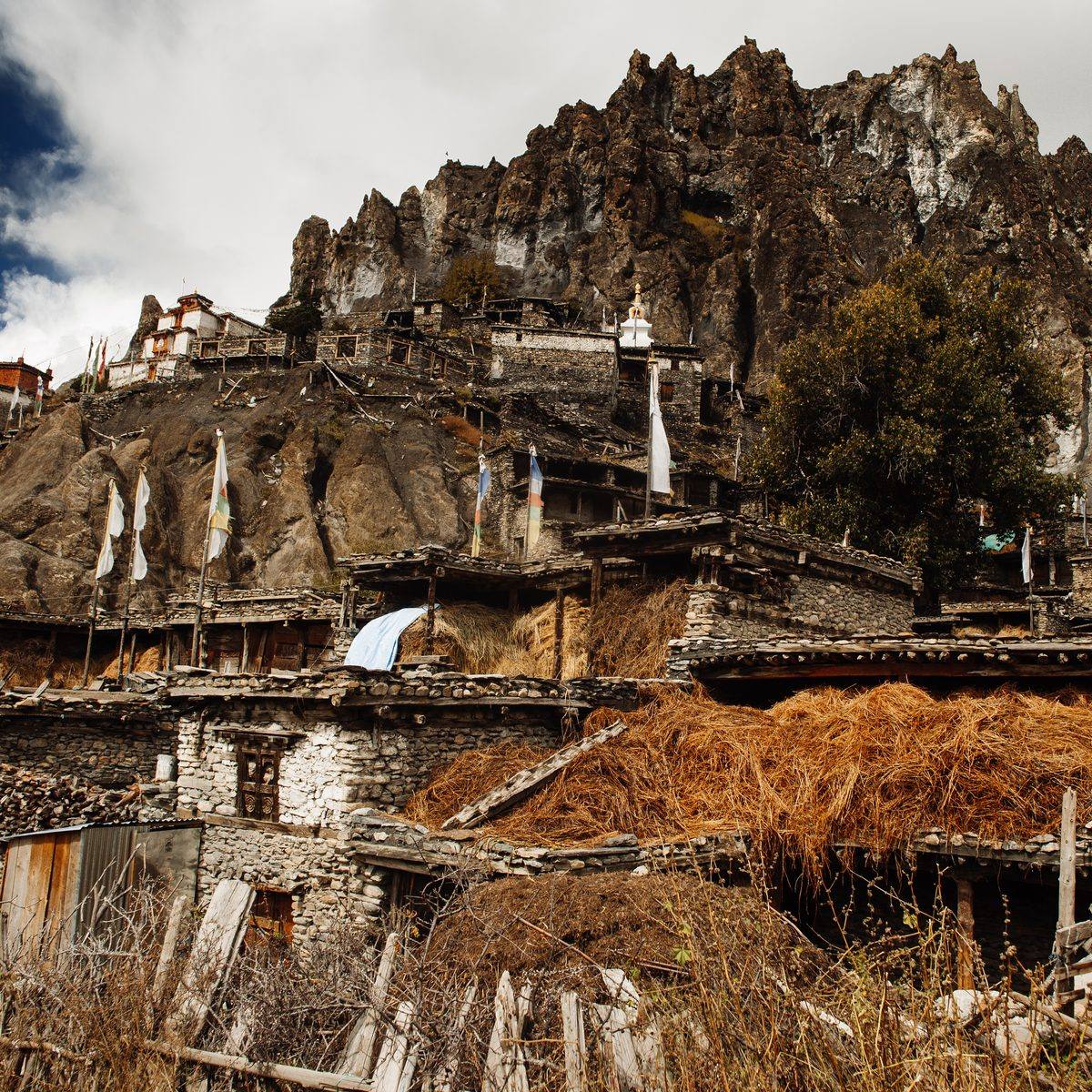
There is a moment, somewhere between the high meadows above Koto and the medieval gate that marks the entrance to Naar, when you realise that the Nepal you thought you knew has been a kind of overture. The crowded trails of the Annapurna Circuit lie just hours behind you — and yet they belong to another world entirely. The path narrows. The cliffs rise. And then, almost imperceptibly, the air changes. It is drier here, more mineral, more austere. The valley begins to feel less like a geographical feature and more like a held breath.
Welcome to Naar Phu — the most discreet, most exclusive, and arguably the most quietly miraculous luxury trek that Nepal has yet revealed to the world.
The Last Hidden Kingdom of the Annapurna
For decades, the Annapurna Circuit has been Nepal's grand classical symphony — a trail walked by hundreds of thousands, its tea houses charted, its lodges reviewed, its passes photographed from every possible angle. But just off the main route, behind a single unremarkable signpost near the village of Koto, lies a doorway into something else entirely.
Naar Phu remained closed to all foreign travellers until 2002. Even today, it is one of Nepal's restricted areas, requiring a special permit, a registered guide, and the kind of logistical orchestration that excludes the casual wanderer almost by design. There are no roads here. No mobile reception. No tea houses in the sense most trekkers understand the term. There are two villages — Naar and Phu — each home to a few hundred people of Tibetan descent, living lives that have changed remarkably little in five hundred years.
To walk into Naar Phu is to walk into the kind of Tibet that exists nowhere else on Earth anymore. Not a curated version. Not a museum piece. The real, breathing, prayer-flag-fluttering, yak-bell-ringing thing.
Why This Trek Belongs in a Class of Its Own
There are luxury treks in Nepal that overwhelm with grandeur — Everest Base Camp, Upper Mustang, Kanchenjunga. Each magnificent in its own register. Naar Phu plays a different note. It does not seek to astonish. It seeks to refine — to strip away noise until what remains is a kind of distilled, almost monastic experience of the Himalaya.
This is the trek for the traveller who has already seen the great vistas and now wants what comes after. The traveller who has stood at Everest Base Camp and asked, quietly, what else? The answer, increasingly, is this hidden valley.
Several elements set Naar Phu apart:
The permit system creates genuine exclusivity. Restricted area permits limit the number of trekkers, and the logistics required to mount a luxury expedition here naturally restrict it further. On most days in the high season, you will encounter fewer than a dozen other travellers in the entire valley system. In low season, you may walk for hours seeing no one. The cultural depth is staggering. Naar and Phu were established as Buddhist enclaves connected directly to the great monastic universities of Tibet. The gompas here — Tashi Lhakhang in Phu, the cliff-perched monasteries above Naar — are working religious institutions with monks, lineages, and ceremonies entirely uninterrupted by modernity. To attend a morning puja here is to step into the same sound and motion that has filled these halls since before the European Renaissance. The landscape is structurally different. Naar Phu sits in the rain shadow of the Annapurnas, which gives it a stark, almost lunar quality — high desert, ochre cliffs, scattered junipers, and behind it all, the great white-tooth ridges of Pisang Peak, Kang Guru, and the Himlung Himal massif. Photographers describe it as Mustang's geological cousin with a fraction of the visitors. The physical demands are real but manageable. This is not Manaslu Circuit. It is not Three Passes. The trek is moderately challenging — you cross the Kang La pass at 5,320 metres if you exit toward Manang — but with proper acclimatisation and the right team, it is accessible to any reasonably fit traveller in good health.An Elysian Naar Phu: How We Reimagine the Hidden Kingdom
The standard Naar Phu trek is austere by necessity. Local lodges in both villages are basic — homestays, really, with cold rooms, dal bhat suppers, and shared facilities. For most trekkers, this austerity is part of the experience.
For our travellers, the experience need not require austerity at all. We have spent years refining a way to travel into Naar Phu that preserves every ounce of the cultural and spiritual depth while removing every unnecessary discomfort.
Private Helicopter Lift to Koto
We begin where most treks end their second day — by flying directly to Koto via private helicopter from Pokhara, skipping the long jeep transfer and the lower valleys entirely. You step out of the helicopter onto the trailhead, ready to begin your walk into the restricted area within hours of leaving your suite at our Pokhara base.
A Mobile Luxury Camp That Travels With You
Because there are no luxury lodges in Naar or Phu — and would not be, by design — we travel with a complete mobile luxury camp. Cotton-walled tents with proper beds, sprung mattresses, down duvets, hot water bottles, and en-suite chemical conveniences. A separate dining tent where a chef trained in Kathmandu prepares meals that move between Nepali, Italian, and contemporary European cuisines depending on appetite and altitude. A small wellness tent for post-walk massages.
The result is a kind of camp that recalls the great expedition style of an earlier era — Hillary, Tilman, Shipton — but executed with the comfort and consistency of a fine boutique hotel.
A Guide Who Belongs to This Valley
We do not bring a generic Nepali guide and call it cultural immersion. For Naar Phu, we work exclusively with a small handful of guides born in these villages, men who left to be educated in Kathmandu and Dharamsala and returned to share their inheritance. Their access to monasteries, families, and ceremonies is the kind no permit can buy. To walk into Naar with one of them is to be received as a guest, not a tourist.
This kind of access — the personal, generational kind — is what we mean when we talk about bespoke Himalayan travel. It cannot be packaged. It can only be brokered by relationships built over years.
A Suggested Twelve-Day Rhythm
The Naar Phu trek can be done in eight days. We rarely recommend it in fewer than twelve.
- Days 1–2: Arrival in Pokhara. Private suite, recovery, briefing dinner with your guide.
- Day 3: Helicopter to Koto. Walk to Meta (3,560m). First night in mobile camp.
- Day 4: Walk to Phu village (4,080m). Evening orientation with local elder.
- Day 5: Acclimatisation day in Phu. Visit Tashi Lhakhang Gompa. Private audience with the resident lama.
- Day 6: Cross to Naar village (4,110m). Walk past Phu's ancient ruins and across high pasture lands.
- Day 7: Rest day in Naar. Cliff monastery visit, family-hosted lunch, photography session.
- Day 8: Walk to high camp below Kang La (4,750m).
- Day 9: Cross Kang La pass (5,320m) — descend to Ngawal, rejoin the Annapurna Circuit briefly.
- Day 10: Walk to Manang. Optional cultural stop at Braga Monastery.
- Day 11: Helicopter from Manang back to Pokhara. Recovery suite, spa.
- Day 12: Pokhara to Kathmandu. Departure or extension.
This rhythm allows for proper acclimatisation, two genuine rest days inside Naar and Phu themselves, and time for the cultural depth that is the real reason to come here.
What You Will Carry Home
Most travellers describe Naar Phu using a vocabulary they did not have before they arrived. Silence, they say. Time slowing down. A feeling of having stepped sideways out of the century.
These are not exaggerations. The valley is genuinely silent — no engines, no electricity hum, no aircraft overhead. The villages function on a calendar that is partly Tibetan Buddhist, partly agricultural, and entirely indifferent to the Gregorian. Mornings begin with the deep low sound of conch shells calling monks to puja. Evenings end with butter lamps and the soft clatter of yaks settling for the night.
What you will carry home, if you let it, is the recognition that this kind of life still exists somewhere on Earth. That somewhere behind the noise of your ordinary days, there are people whose entire worldview is constructed around the slow turning of prayer wheels and the proper observance of seasons.
This is what we mean by experiential wealth. Not luxury for its own sake. Luxury as a vehicle for access — to places, to people, to ways of being — that would otherwise remain entirely closed to you.
Practical Matters
Best season: April–May and September–October. Naar Phu is in the rain shadow, so the monsoon disruption is less severe than elsewhere in Nepal, but autumn remains optimal. Permit requirements: Restricted area permit (USD 100 for the first week, USD 15 per day thereafter), ACAP permit, and TIMS card. We handle all permits as part of the journey. Physical preparation: Moderate cardiovascular fitness sufficient for six to seven hours of mountain walking at altitude. We provide a structured pre-departure training programme as part of the journey design. Altitude: Maximum sleeping altitude approximately 4,750m at high camp. Maximum walking altitude 5,320m at Kang La. Acclimatisation built into the schedule. What it costs: From €18,500 per traveller for the full twelve-day journey, including helicopter transfers, mobile luxury camp, all permits, dedicated guide team, and Pokhara base accommodation. Ultimate-tier extensions available.The Last Word
There is a particular kind of traveller who has already seen most of the world's grand stages and now seeks something quieter, harder to reach, and more entirely their own. If that is you — if Mustang felt revelatory and you sensed there must be more — then Naar Phu is your next chapter.
This is not a trek you book on a website. This is a journey designed in conversation, fitted to your pace, your interests, your sense of what makes a Himalayan experience worth the time it takes. To begin that conversation, start designing your journey — or read more about the way we work in the words of our founder.
The forbidden kingdom is still there. The gate is still narrow. But it does open, for those who know how to ask.